What Charter Companies Don’t Tell You When You Book a Boat in July

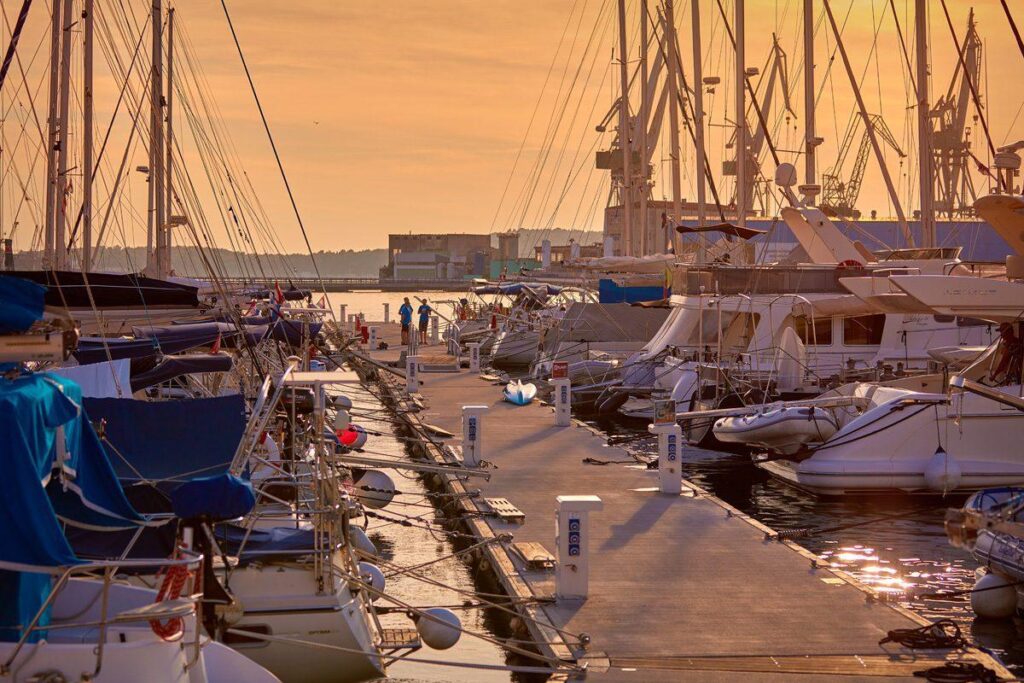
The peak season charter brochure describes crystal water, available berths, flexible itineraries, and unhurried mornings. These things are true. What the brochure does not mention is that approximately 40,000 other boats have made the same plan, for the same islands, in the same two-week window.
Understanding the real conditions of a Mediterranean high-season charter — before you sign the contract — changes both what you book and what you actually experience.
The Marina Availability Problem
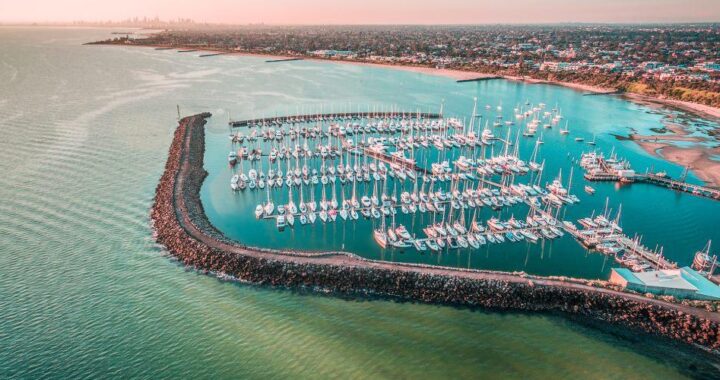
In Croatia, Greece, and the Balearics, the most desirable overnight marina stops in July and August operate at or above capacity from around 4 PM onwards. This is not an occasional inconvenience — it is a structural reality of peak season sailing.
According to the ACI Marina Network, which operates 22 marinas along the Croatian coast, advance berth reservations are strongly recommended during peak season. The informal rule among experienced charterers: if you are not tied up by 4 PM, you are choosing between an undesirable berth, anchoring out, or motoring to the next island as darkness approaches.
What this means in practice: the spontaneous itinerary — “we’ll see where we end up each night” — requires either very early arrivals or genuine comfort with anchoring. Both are fine. But not knowing this in advance produces rushed afternoons and frustrated evenings.
Bareboat vs. Crewed: The Distinction Nobody Makes Clearly
The charter industry presents this choice as: bareboat if you can sail, crewed if you cannot. This is incomplete.
The more useful distinction: bareboat if the pleasure is in the sailing itself; crewed if the pleasure is in the destination. These are different experiences using the same vessel.
A bareboat charter requires at least one person with demonstrated sailing competence and the confidence to make weather decisions, manage mooring, and navigate the specific waters you’re entering. The Royal Yachting Association and equivalent bodies publish qualification frameworks that most Mediterranean charter companies recognise as minimum requirements for bareboat hire. An honest conversation with your charter operator about your group’s actual experience level — before booking — saves significant stress on the water.
A crewed yacht removes these responsibilities and replaces them with a different experience: a local captain managing passages, local knowledge applied to anchorage selection and restaurant recommendations, provisioning handled. The tradeoff is cost and, for some sailors, the loss of the feeling of actually going somewhere rather than being taken.
What “Verified” Actually Means
One of the genuinely confusing parts of charter booking is understanding what verification claims mean in practice. A boat listed as “verified” may mean: the charter company has confirmed it exists. Or it may mean: the vessel has been surveyed within 12 months, carries current insurance, and maintenance records have been reviewed. These are not equivalent.
Similarly, “licensed skipper” has different meanings across jurisdictions. In Croatia, a skipper must hold a skipperska dozvola issued by the Croatian Ministry of Maritime Affairs. In Greece, equivalent documentation is required by the Hellenic Ministry of Maritime Affairs. Asking to see specific licence documentation is not impolite. It is the correct question.
Newer platforms building crew verification into their infrastructure — with background checks, licence confirmation, and genuine review systems — are addressing what has historically been a gap that travellers encounter only after something goes wrong.
The Real Cost of a Charter
Charter prices are quoted as weekly base rates. This number understates the actual cost of the week by 30–50% in most cases.
Additional items typically not included in the base rate: mandatory check-in and check-out fees, end-cleaning charges, security deposit (typically €1,500–€3,000 held on a card for the duration), provisioning, marina fees (€80–€200 per night for a 40-foot boat in peak season in Croatia or Greece), fuel, and — on crewed charters — the APA (Advance Provisioning Allowance), which typically runs 25–35% of the base rate on top.
None of this is hidden. It is disclosed in booking terms that most people do not read carefully enough. Budget honestly and the week remains excellent value. Budget on the base rate alone and the Sunday return becomes stressful.
FAQ: Mediterranean Charter Booking
How far in advance should I book a Mediterranean charter in July or August? For quality availability — both in terms of vessel condition and preferred size — booking 6 to 9 months in advance is standard for peak season. The best bareboat inventory in Croatia and Greece is typically reserved by February or March for July and August departures.
What licences do I need to bareboat charter in Croatia? A valid ICC (International Certificate of Competence) or recognised national sailing licence, plus a VHF radio operator’s licence. The Croatian Ministry of Maritime Affairs publishes the full list of recognised foreign certificates on its official website.
What is an APA and how much should I budget for it? An Advance Provisioning Allowance is a cash fund provided by the guest at the start of a crewed charter to cover running costs — fuel, food, marina fees, and other expenses. It is typically 25–35% of the base charter fee. Unused APA is returned at the end of the trip; additional costs beyond the APA are charged to the client.
What is the difference between a flotilla and an independent charter? A flotilla is a group of charter boats sailing together under the loose supervision of a lead boat with a professional crew. It suits first-time charterers or those unfamiliar with the destination. An independent charter gives complete itinerary freedom but requires sufficient crew competence to navigate independently.
Can I charter a boat in the Mediterranean without any sailing experience? Yes, by booking a fully crewed charter where a licensed captain manages all navigation. You participate as a passenger and guest rather than crew. Some companies also offer “learn to sail” charters where instruction is built into the itinerary.
What happens if the weather prevents sailing on my charter? Most charter contracts do not provide refunds for weather-related delays that fall within normal operational parameters. Weather cancellation clauses typically only activate for severe weather advisories issued by official meteorological services. Trip insurance covering weather disruption is available and worth considering for peak season bookings.
How do I verify that a charter company is legitimate? Check for membership in recognised industry associations: the European Boating Industry association, national charter associations (in Croatia, the Croatian Charter Association), or verification through established booking platforms that conduct operator vetting as part of their listing process.