The Fishing Village That Became a Charter Hub — and What It Lost in the Transition

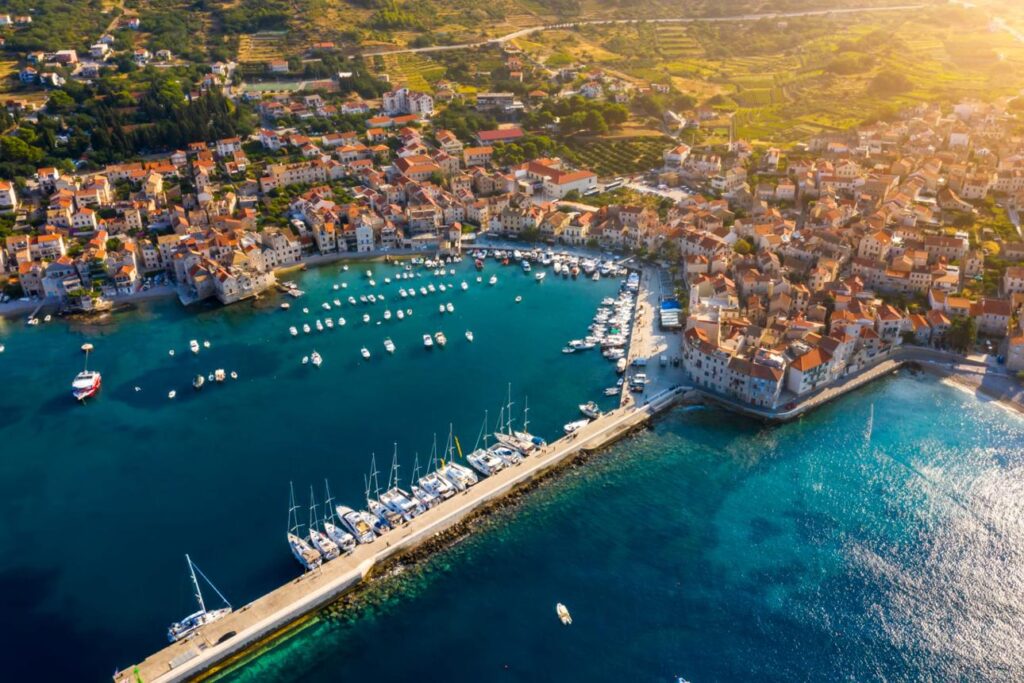
Komiža, on the western coast of Vis — the outermost inhabited Croatian island, a closed military zone until 1989 — has a year-round population of approximately 1,500 people. In July, it hosts roughly ten times that number on any given weekend.
The transformation happened within a decade. When Croatia joined the EU in 2013 and the charter industry expanded its geographic reach, Vis became the destination for charterers seeking somewhere that felt undiscovered. The irony in this — the act of seeking undiscovery being the mechanism of discovery — is not lost on the people who live there year-round.
What Komiža Was
The island’s economy was, through most of the twentieth century, centred on sardine fishing and the processing industry surrounding it. At its peak, the Neptun factory employed most of Komiža’s working population. The distinctive wooden fishing boats — the gajeta falkuša, now recognised as UNESCO intangible cultural heritage — were built on the island and are still occasionally seen in the harbour, increasingly as aesthetic objects rather than working vessels.
The fishing economy began declining in the 1970s as industrial methods reduced the viability of artisanal fleets. The factory closed. The island’s population, which had peaked near 5,000 in the nineteenth century, fell to its current level through emigration. What remained was the harbour, the infrastructure, the knowledge of the water, and a community with a relationship to the sea defined by extraction and work rather than leisure.
What Charter Tourism Brought
The first charter operators found in Vis something genuinely valuable: a harbour with architectural integrity, a fishing village aesthetic that had not yet been retouched for tourism, and geography — 48 kilometres from Split — that made it feel like a real destination rather than a day trip.
According to Eurostat tourism data, Croatia’s nautical tourism sector has grown significantly since EU accession, with overnight stays in nautical tourism facilities increasing year on year through the 2010s. Vis absorbed a disproportionate share of this growth relative to its infrastructure.
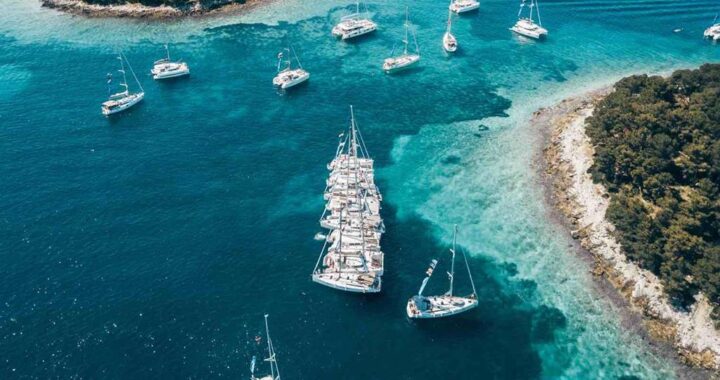
What followed was predictable in retrospect. Property prices rose. Apartments converted to short-term rental. The konoba that had served fishermen’s lunches for thirty years became a restaurant with a curated wine list and a boat-day clientele. The harbour filled through summer with catamarans on weekly turnovers, their rhythm visible in the Sunday afternoon changeover that locals have named simply “the rotation.”
The Tension That Remains
What makes Vis worth attention rather than just elegiac description is that the coexistence is still alive. There are still families who fish commercially. There are still year-round residents who use the harbour for purposes other than charter departure. The ratio has shifted, but the community has not yet completed the conversion that has fully overtaken some other Adriatic islands.
The question nautical tourism poses to every Komiža across the Mediterranean is whether the infrastructure built to serve it also serves the community, or merely passes through it. Digital platforms moving into the water economy have a choice that is often underestimated at this stage: design economic flows that circulate through local operators — fuel suppliers, family konobas, local maintenance crews — or design flows that extract value outward to distant charter companies and international booking platforms.
That choice is being made now, by companies still small enough to make it deliberately.
What September Reveals
After the charter fleet returns north, the harbour quiets. The restaurants that opened in May close by mid-October. The year-round population re-establishes its rhythm. The gajeta that spent the summer as a photographic subject is hauled out again. Whether this seasonal contraction is a sustainable rhythm or a holding pattern before full conversion depends partly on planning decisions and partly on how money flows through the island when the boats arrive.
Fishing villages that survive the tourism transition tend to be those where someone, at some identifiable point, made a deliberate decision about what they wanted to keep.
FAQ: Nautical Tourism and Coastal Communities
What is nautical tourism and how does it affect local communities? Nautical tourism refers to travel and leisure activities centred on water — sailing, boating, charter experiences, marina stays. Its economic impact on coastal communities includes revenue from provisioning, accommodation, food and drink, and services, but also pressures on housing costs, infrastructure, and the character of local life when growth exceeds the community’s absorption capacity.
Is Vis Island in Croatia overcrowded for sailing? Vis remains less developed than Hvar or Brač, but peak season (July–August) brings significant charter traffic to Komiža and Vis Town. May, June, and September offer meaningfully quieter conditions while delivering the same landscape and sailing quality.
What is a gajeta falkuša? A traditional wooden fishing boat from Vis Island, recognised for its distinctive red sail and construction techniques passed down through generations of island boatbuilders. It is listed as UNESCO intangible cultural heritage and remains a symbol of Komiža’s maritime identity.
How has EU membership affected Croatian nautical tourism? Croatia’s EU accession in 2013 opened the country to significantly increased charter activity from Western European operators and individual charterers. The removal of administrative barriers to vessel movement, combined with increased investment in marina infrastructure, accelerated the growth of the sector substantially.
Are there islands in the Adriatic that have avoided overdevelopment? The Kornati archipelago (105 uninhabited islands forming a national park) and the Lastovo archipelago (also a nature park) remain among the least developed accessible sailing destinations in the Adriatic. Vessel entry fees and park regulations limit commercial activity, though anchoring is freely available.
What happens to small fishing communities when charter tourism dominates? The pattern observed across Mediterranean coastal communities — rising property prices, conversion of long-term to short-term rental stock, shift from productive to service economies — is consistent and well-documented. The communities that maintain the most resilient identities tend to be those with active year-round local economies, geographic isolation from day-trip tourism, or deliberate planning protections.