A Neuroscientist Took a Week Off Work and Rented a Sailboat. What Happened Next Surprised Her.

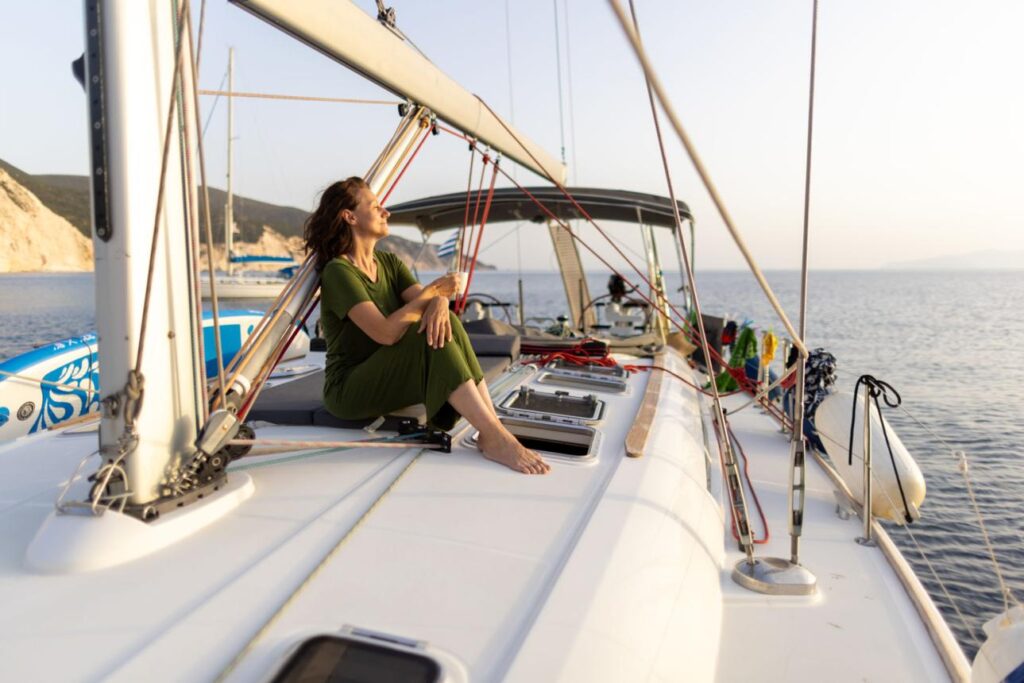
Dr. Cassandra Wei was not, by her own description, someone who believed in vacation as a recovery tool. She studied cognitive overload and burnout at a research university. She had read every paper on attention restoration theory, on the psychophysiology of stress, on the measurable impact of natural environments on human neurological function. She had written several of those papers herself.
She still worked 70-hour weeks and took four days off in 2023.
In the spring of 2024, a colleague bet her a dinner that she could not take one full week away from email, screens, and work — not at a resort where the infrastructure of distraction is simply replaced by the infrastructure of service, but somewhere genuinely removed. Her colleague suggested a sailboat charter off the coast of Maine.
Dr. Wei, who had never sailed, agreed to the bet primarily because she expected to win it.
What She Expected to Find
The research on blue space — the term environmental psychologists use for water environments — is not ambiguous. Studies published in the journal Health & Place and documented extensively by the European Centre for Environment and Human Health at the University of Exeter have consistently found that proximity to water produces measurable reductions in psychological distress, cortisol levels, and self-reported anxiety. The effect holds even after controlling for physical activity, social engagement, and economic factors.
Dr. Wei expected to find this. She expected to feel better. She expected her cortisol to drop and her attention to restore, the way the literature predicted. What she did not expect was the specific mechanism — or how completely it blindsided her.
What Actually Happened
“The first day was genuinely uncomfortable,” she said in a conversation about the experience that circulated in academic wellness circles. “I kept reaching for my phone. I kept wanting to check things. The discomfort was almost physical.”
This is documented. The early phase of digital withdrawal produces measurable psychological discomfort — restlessness, difficulty concentrating, a specific anxiety that researchers associate with interrupted task completion. Most vacations don’t fully interrupt it because the phone stays on and the email is only a tap away.
On a sailboat off the coast of Maine, there is no strong signal. The task completion urge has nothing to complete. And something specific happens when that urge finds no outlet: it dissipates. Not gradually, but in what Dr. Wei described as “an almost audible internal shift” somewhere around hour thirty.
“The technical term is attention restoration,” she said. “The practical experience is just — quiet. Internal quiet that I hadn’t experienced in years.”
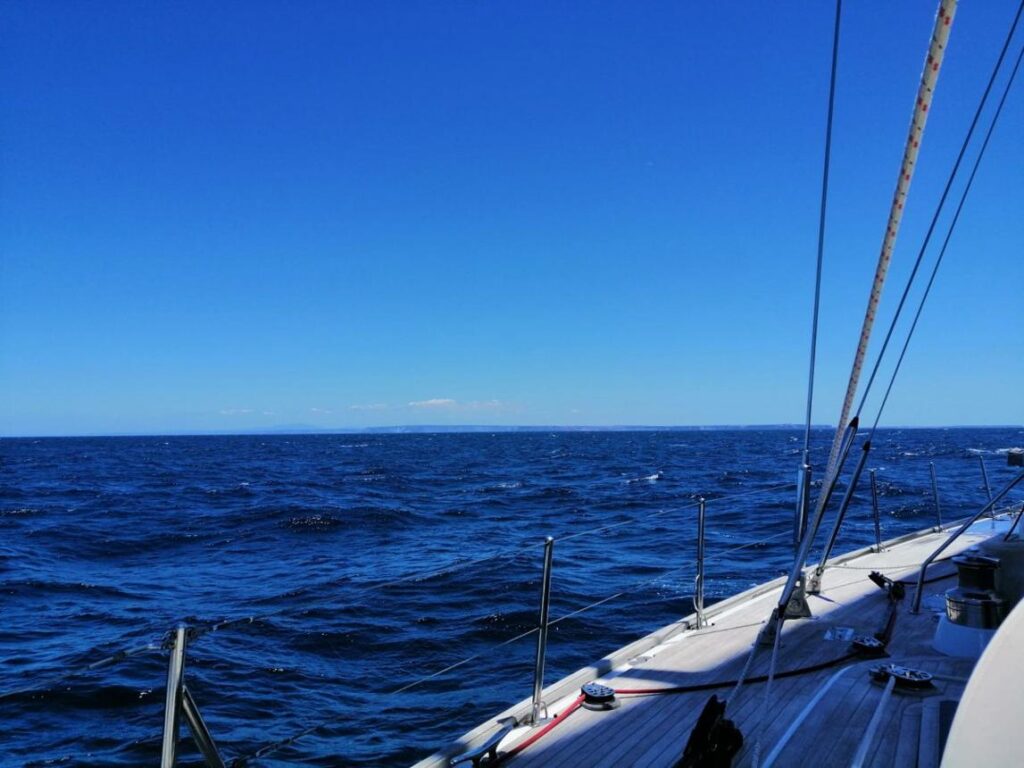
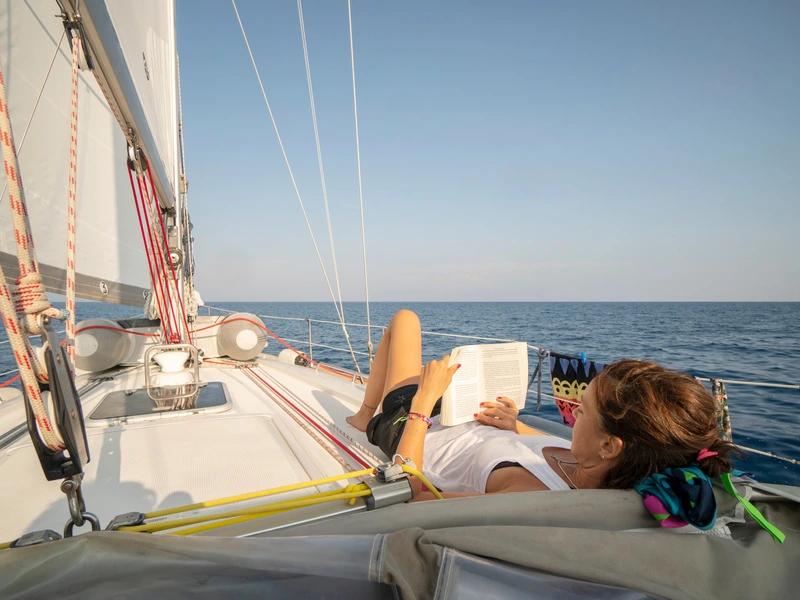
By day three, she was noticing things. The quality of light on the water at specific times of day. The sound the boat made in different wind conditions. The patience required to catch the right wind angle. She was, she said, genuinely present — not performing presence, not practicing mindfulness as a scheduled activity, but actually and involuntarily there in the way that the environment demanded.
By day six, she said, she understood something about burnout that her research hadn’t fully captured: the restoration requires not just absence of stress but presence of something that requires your full attention without being threatening. The sea provides this in a way that almost nothing in modern professional life does.
What This Means for the Rest of Us
Dr. Wei’s experience is illustrative rather than representative. Not everyone will experience the same sequence or the same timeline. But the underlying mechanism she describes — the enforced attention shift that water environments produce, particularly in a sailing context — is consistent with what researchers have been documenting for years and what regular sailors describe colloquially as why they keep going back.
The research from the University of Exeter found that coastal residents report significantly better mental health outcomes than inland populations even after controlling for income, education, and social factors. A week-long sailing charter, several researchers have noted, is essentially compressing the most potent elements of that coastal environment into a concentrated dose.
What is changing in 2026 is access. A week-long sailboat charter in Maine, New England, the Chesapeake Bay, or the Pacific Northwest is more bookable, more findable, and more affordable — particularly for groups splitting the cost — than most people who need it most realize. A four-person group sharing a crewed week-long sailing charter in New England pays, per person, approximately what they would spend on a mid-range hotel for the same period.
Dr. Wei, incidentally, lost the bet. She stayed offline for the full week. She has rented a sailboat in Maine every summer since.
FAQ: Sailing and Mental Health Recovery
Does sailing actually help with burnout and stress?
Research from the University of Exeter’s European Centre for Environment and Human Health documents that water environments produce measurable reductions in psychological distress and anxiety. The combination of enforced digital disconnection, physical engagement, natural light cycles, and sensory attention that sailing requires makes it one of the more effective recovery environments documented in the literature.
How long does it take to feel the mental health benefits of a sailing vacation?
Research on attention restoration suggests the initial shift begins within 24-48 hours of removing digital stimulation, with more significant restoration occurring over 3-7 days. One-day boat trips produce measurable but shorter-duration benefits; multi-day sailing charters allow the full restoration sequence to complete.
Do I need sailing experience to benefit from a sailing vacation?
No. A crewed sailing charter provides all the environmental benefits of a sailing vacation without requiring the guest to manage the vessel. Many people find the complete absence of operational responsibility — simply being on the boat with nowhere specific to be — amplifies the recovery effect.
How much does a week-long sailing charter cost for a group?
A week-long crewed sailing charter in New England, the Chesapeake Bay, or the Pacific Northwest typically runs $3,000-6,000 for the vessel, split across the group. For four people, this is $750-1,500 per person — comparable to or less than a mid-range hotel stay for the same period in many coastal markets.
How do I book a sailing charter for a recovery or wellness trip?
Marina Boat App lists crewed sailing charters and day sailing options across US coastal markets, with operator profiles, reviews, and direct booking. Free to download and use.



frlkdergzmjnfumiwjoyinlgolqnqu
xvtizfytexjkmtwmkgmegkuwiweiqr