Your Boat Trip Does More for the Local Economy Than Your Hotel Stay. Here’s the Actual Math.

Coastal towns increasingly depend on visitor spending that never shows up in a typical “tourism dollars” headline. A single charter booking ripples through a local economy in ways most travelers never think about — and that’s exactly why it’s worth choosing.
Desk: The Blue Economy · Est. read: 5 min
When American travelers think about how their vacation spending supports a destination, they usually picture the hotel bill and maybe a few restaurant tabs. A single boat charter booking, it turns out, distributes money through a local coastal economy in a notably wider pattern than a typical hotel stay — fuel docks, bait and tackle shops, local marinas, independent captains, and small repair and provisioning businesses that exist specifically because charter activity sustains them.
The National Marine Manufacturers Association estimates the broader US recreational marine industry generates over $230 billion in annual economic impact and supports more than 650,000 American jobs — and a meaningful share of that activity is concentrated in exactly the kind of small coastal businesses that a single charter booking touches directly.
$230B+
Annual US recreational marine industry economic impact
650K+
American jobs supported by the marine industry
Direct
Income to individual captains via direct booking
Where the money from a charter booking actually goes
Unlike a large hotel stay, where a significant share of spending flows to a corporate chain headquartered elsewhere, a charter booking with an independent captain or small operator routes income directly to a local resident — someone who lives in, or near, the destination you’re visiting. That captain, in turn, spends locally on fuel, dockage, maintenance, and provisioning, creating the kind of repeated local economic circulation that Condé Nast Traveler has highlighted as a defining feature of genuinely sustainable, community-supporting tourism.
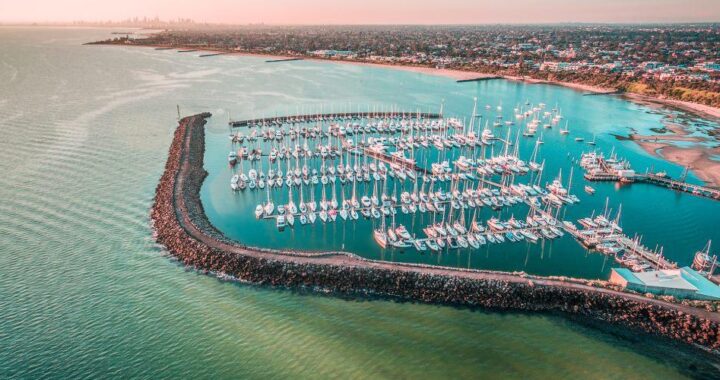
This pattern is particularly visible in smaller coastal towns where a handful of fishing-charter and tour-charter captains represent a meaningful share of the local working waterfront’s economic activity — towns where, without charter tourism specifically, the traditional working marina infrastructure would struggle to remain financially viable at all.
A hotel stay supports a building. A charter booking supports a person — one who lives in the town you’re visiting, and who spends what you pay them right back into that same local economy.
Why this matters more in smaller destinations
In major tourist hubs like Miami or San Diego, charter tourism is one economic input among many. In smaller coastal communities — fishing towns along the Gulf Coast, smaller harbors in New England, working waterfronts in the Pacific Northwest — charter activity is frequently one of the primary mechanisms keeping a traditional working marina economically viable in the face of rising waterfront property values and competing commercial pressure.
Choosing to book directly with an independent local captain, rather than exclusively through a large commercial operator headquartered elsewhere, has a measurably different impact on exactly the kind of small coastal community that travelers say they want to support when surveyed about sustainable and community-conscious travel choices.
How travelers can actually choose this, intentionally
The challenge has historically been knowing which captains are independent local operators versus large commercial fleets — from a generic search result, the distinction isn’t obvious. Platforms like Marina Smart make this visible by design: every booking connects a traveler directly with an individual captain or small operator, with transparent information about who you’re actually booking with, rather than routing through a layer of brokers or large commercial intermediaries that obscure where the money actually goes.
For a traveler who wants their vacation spending to genuinely support the place they’re visiting, a direct charter booking is one of the more measurable ways to do exactly that.
Frequently Asked Questions
How much does the recreational marine industry contribute to the US economy?
The National Marine Manufacturers Association estimates the US recreational marine industry generates over $230 billion in annual economic impact and supports more than 650,000 jobs, with significant concentration in coastal community small businesses.
Does booking a private charter support the local economy more than a hotel stay?
Booking directly with an independent local captain routes income more directly to a resident of the destination, who in turn spends locally on fuel, dockage, and provisioning, compared to hotel spending where a share often flows to a corporate entity headquartered elsewhere.
How can I tell if I’m booking with a local independent captain versus a large company?
Direct booking platforms that connect travelers with individual captains typically provide transparent information about who operates the vessel, distinguishing independent local operators from large commercial fleets that may be harder to identify through generic search results.