Why Fishermen Go to Bed at 8PM — And What That Tells Us About How We Live Wrong

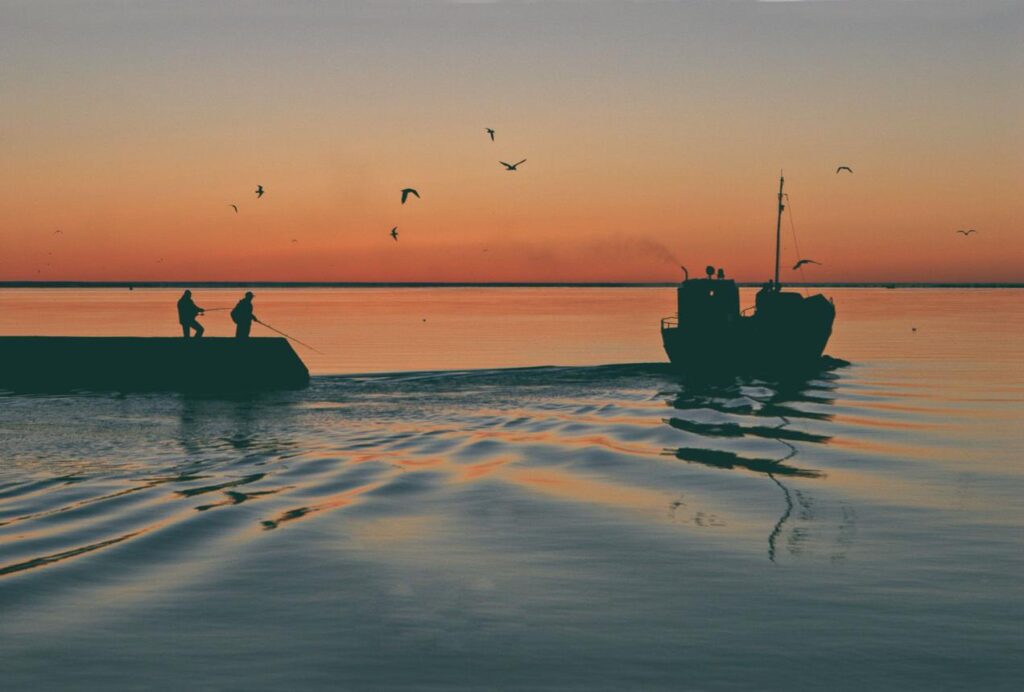
In every working fishing village around the Mediterranean, from the Adriatic coast of Croatia to the Atlantic ports of Portugal, there is a rhythm that visitors find quietly unsettling. By nine in the evening, the harbour is largely still. The men who work the boats have been asleep for an hour. By three in the morning, the lights are on and the engines are running.
This is not a quaint tradition. It is a precise biological adaptation to the demands of the sea — and it contains a lesson about human sleep that most of us have completely lost.
The Fisherman’s Clock
Commercial fishing in the Mediterranean operates on tidal patterns, seasonal fish behaviour, and weather windows that care nothing for human social schedules. The best fishing happens at specific times — often before first light, in the hour after dawn, or in the late afternoon when surface temperatures shift. To be on the water at the right moment, you leave when the fish dictate, not when it is socially convenient.
The result is a sleep schedule built entirely around natural light and biological necessity. Fishermen across Mediterranean communities typically sleep between 8-9PM and wake between 3-4AM — aligning almost perfectly with what chronobiologists call the ancestral human sleep pattern, before artificial light extended the evening indefinitely.
Research published by the American Academy of Sleep Medicine has consistently shown that sleep quality, not just duration, determines cognitive and physical recovery. The fisherman sleeping eight hours in darkness, waking with natural light, is getting qualitatively different rest than the urban professional sleeping eight hours after three hours of screen exposure.
What Coastal Communities Understand About Time
As we explored in The Rhythm of Coastal Living, Mediterranean coastal communities have historically organised life around natural cycles rather than clock time. The fishing village takes this to its logical extreme — the sea sets the schedule, biology follows, and social life adapts around both.
The consequence is a community where the productive hours are morning, the social hours are early afternoon, and the evening is genuinely quiet. Visitors from cities find this disorienting. Researchers who study longevity find it instructive.
The Blue Zones research documented by Dan Buettner — examining the world’s longest-lived populations — consistently identifies sleep patterns aligned with natural light as a common factor across Sardinia, Ikaria, and other Mediterranean coastal communities with exceptional longevity statistics. The fisherman’s 8PM bedtime is not an eccentricity. It is part of a system.
What We Have Lost
The invention of electric light in the late nineteenth century decoupled human sleep from natural darkness for the first time in history. Over the following century, average sleep onset time in industrialised countries shifted from approximately 9PM to nearly midnight — a three-hour compression of darkness exposure that affects melatonin production, cortisol regulation, and metabolic function.
The fisherman going to bed at 8PM is not sleeping more than the average urban professional. He is sleeping at the right time — and the difference in biological outcome is measurable.
We built a global economy on extending the productive day. The fishing village never participated. And the fishing village, metabolically speaking, was right.
What You Can Actually Do With This
The practical application is not to rearrange your life around fishing schedules. It is simpler: the Mediterranean coastal relationship with early darkness, morning light, outdoor meals, and physical work is not aesthetically romantic. It is physiologically functional. The lifestyle that produces the Instagram photographs of old men at harbour cafes at dawn is the same lifestyle that produces the longevity statistics that researchers keep returning to study.
Getting on the water — whether through a sailing trip, a charter week, or simply time near the coast as we explored in Why People Who Live Near the Sea Age Differently — is one of the few contexts in modern life where natural light cycles reassert themselves automatically. You wake with the light. You sleep when it is dark. The sea enforces what the city makes optional.
FAQ: Coastal Sleep Patterns and Human Biology
Why do fishermen wake up so early?
Commercial fishing schedules are dictated by fish behaviour, tidal patterns, and weather windows rather than social convention. The best catches typically occur around dawn or specific tidal moments, requiring departure before first light. Over generations, fishing communities have adapted sleep schedules to align with these biological and environmental rhythms.
Is sleeping early actually better for your health?
Research from the American Academy of Sleep Medicine and multiple chronobiology studies indicates that sleep timing relative to natural light cycles significantly affects sleep quality, hormone regulation, and long-term health outcomes. Sleep that aligns with natural darkness tends to produce better melatonin secretion and more restorative slow-wave sleep than equivalent duration sleep starting late at night.
What is the ancestral human sleep pattern?
Anthropological and chronobiological research suggests pre-industrial humans typically slept in two phases — an early sleep period beginning shortly after darkness, a brief waking period around midnight, and a second sleep until dawn. Electric light has compressed this into a single late sleep period that begins well after natural darkness and often ends after sunrise.
Why do Mediterranean coastal populations live longer?
Longevity researchers point to multiple interacting factors: diet high in fish, olive oil, and seasonal vegetables; daily physical activity integrated into work rather than exercise; strong social bonds; outdoor exposure to natural light; and sleep patterns aligned with natural cycles. No single factor explains the longevity advantage — it is the system that matters.
Can a sailing holiday genuinely improve your sleep?
Evidence suggests yes. Removal from artificial light environments, physical activity during the day, outdoor exposure to natural light cycles, and the psychological decompression of being at sea collectively support earlier, better-quality sleep. Many regular sailors report that their sleep normalises within two to three days of being aboard.