The Italian Coast Where Lunch Takes Three Hours and Nobody Apologizes For It

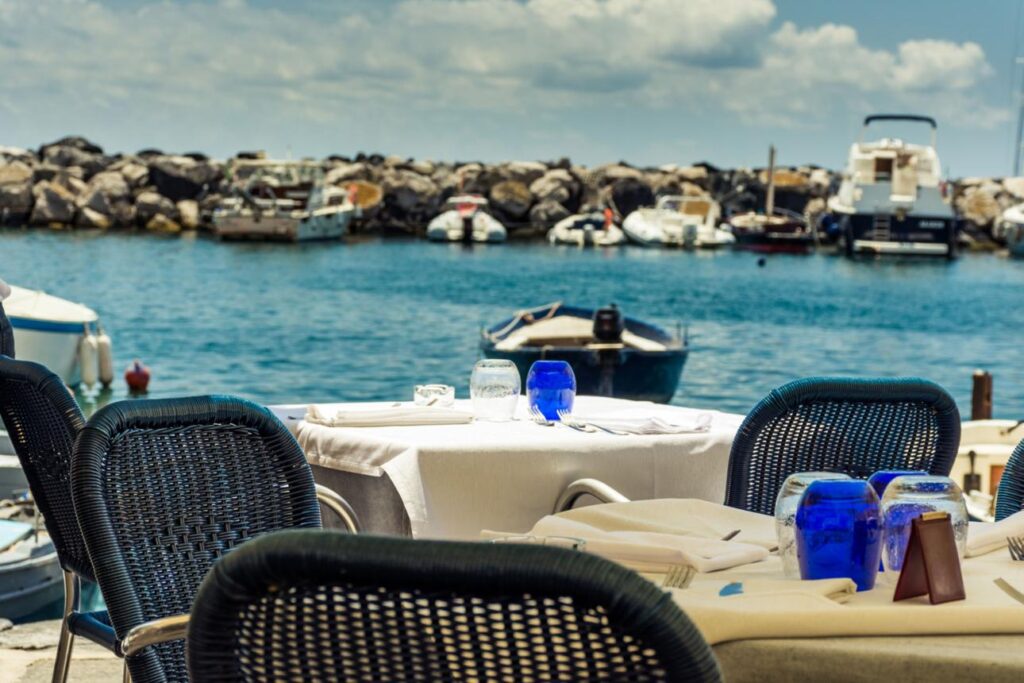
Arrive at a restaurant on the Cilento coast south of Naples at 1pm expecting a quick meal, and you will be quietly, politely, and completely reprogrammed.
The table is not turned at 2pm. There is no second seating. The owner is not hovering with the check. Lunch is not an interruption to the day — on this stretch of Italian coastline, lunch is the day’s primary architecture, and everything else is arranged around it.
What Three Hours Actually Contains
The structure is consistent enough to be almost ritualistic. Antipasti arrives without being rushed — local cheeses, cured fish, vegetables prepared that morning. A primo follows, typically pasta with seafood drawn from boats that docked hours earlier. A secondo, usually fish, grilled simply enough that the quality of the ingredient is the entire point. Fruit. Coffee. Often a digestivo that nobody asked for but everybody accepts.
According to Slow Food Italy, the organisation founded specifically in opposition to the acceleration of eating habits, this structure is not nostalgic theatre. It is a living culinary tradition with measurable effects on both food quality and the economics of small coastal restaurants that depend on ingredient sourcing rather than turnover speed.
The maths only works because the restaurant is not optimising for covers per hour. It is optimising for a different value entirely.
The Coastline Where This Survives Most Intact
The Amalfi Coast gets the photographs, but the Cilento coast — less developed, less discovered, stretching south from Salerno toward Calabria — preserves this lunch culture with less compromise toward tourist expectations. Restaurants in towns like Marina di Camerota and Palinuro operate on a rhythm that has not been substantially altered by international visitor volume, partly because the volume itself has remained lower than the Amalfi towns further north.
The Cilento, Vallo di Diano and Alburni National Park — a UNESCO-recognised area — has actively protected both the landscape and the agricultural and culinary practices within it, creating one of the few Mediterranean coastal regions where traditional food culture has not been substantially commercialised for tourism.
Why This Is Disappearing Elsewhere
The three-hour lunch requires conditions that are increasingly rare along developed Mediterranean coastlines: a restaurant owner who is not under pressure to maximise table turnover, a clientele that has built unhurried eating into their actual schedule rather than treating it as holiday indulgence, and a supply chain — local fishermen, local farmers — that has not been replaced by centralised food distribution optimised for speed and consistency.
Coastal towns that have fully transitioned to high-volume tourism — much of the French Riviera, parts of the Costa del Sol — have largely lost this structure. The restaurant turns tables because the economics of high rent and high volume demand it. The three-hour lunch survives specifically in places that tourism has not yet fully converted.
What It Reveals About How We Actually Want to Live
The appeal of the long Italian coastal lunch is not really about food, though the food is genuinely better for it. It is about a different relationship with time — one where the meal is not slotted between obligations but is itself the obligation, the thing the rest of the day organises around.
This connects to a broader pattern we have observed across Mediterranean coastal communities: a relationship with time that prioritises presence over efficiency. Visitors who experience it for a week on holiday often describe a sense of recalibration that outlasts the trip itself — a reminder that the urgency governing most modern eating is a choice, not a requirement.
For sailors and charterers exploring this coastline by water — increasingly easier to plan with platforms like Marina Smart connecting verified local crew with restaurant and provisioning knowledge — arriving by boat for a long coastal lunch is one of the more genuinely transportive experiences the Mediterranean still offers.
How to Find It
Seek out restaurants without printed English menus, in towns smaller than Positano or Sorrento. Arrive at 1pm rather than 12:30, when the rhythm has properly settled. And critically — do not ask for the check before the owner offers it. That is the signal that you have actually understood what you came for.
FAQ: Italian Coastal Dining Culture
Why do Italian coastal restaurants take so long to serve lunch?
Traditional Italian coastal dining follows a multi-course structure — antipasti, primo, secondo, fruit, coffee — that prioritises ingredient quality and unhurried eating over table turnover. This reflects both culinary tradition and an economic model where smaller, family-run restaurants depend on repeat local custom rather than high tourist volume.
Where in Italy is traditional long-lunch culture best preserved?
The Cilento coast south of Salerno, parts of Puglia, and smaller towns along Calabria’s coastline have preserved traditional dining rhythms more completely than heavily touristed areas like central Amalfi Coast towns or the French-influenced Italian Riviera, where high tourist volume has accelerated service expectations.
Is it rude to ask for the check quickly in Italian restaurants?
It is not considered rude, but it is unusual in traditional establishments, where the check is typically offered by the owner once they perceive the meal has concluded naturally. Asking immediately after the main course can read as a cultural mismatch with the establishment’s pacing.
What is Slow Food and how does it relate to coastal dining?
Slow Food is an international organisation founded in Italy in 1986 advocating for traditional food culture, local sourcing, and unhurried eating habits in opposition to fast food and industrialised dining. Its philosophy is closely connected to the traditional long-lunch culture still practiced in less commercialised Italian coastal regions.
How can sailors experience authentic coastal dining culture in Italy?
Chartering along less developed coastlines such as Cilento, rather than the most photographed Amalfi towns, and seeking restaurants without English-language menus or prominent tourist signage, generally produces a more traditional dining experience. Arriving by boat directly to small harbour towns often provides access to restaurants serving primarily local clientele.