The Rhythm of Coastal Living: What Seaside Communities Understand About Time

Across the Mediterranean, people who live near the water have long operated on a different clock — not slower, exactly, but more honest. What the rest of the world calls a lifestyle trend is simply how coastal communities have always lived.
Desk: Sea & Lifestyle · Est. read: 9 min
There is a moment that happens in almost every fishing village along the Adriatic, the Aegean, and the Ligurian coast: around midday, the harbourside empties. Boats are moored. The fish market is done. The café chairs face the water. A particular stillness descends that is not laziness and is not leisure in the way tourists understand it — it is something closer to operational wisdom. The sea has its timetable. Sensible people align with it.
This is the part that visitors from landlocked cities tend to misread. They see the pace of coastal life and interpret it as relaxation. What they are actually seeing is a different relationship with time — one shaped not by personal preference but by centuries of negotiation with tides, weather, and catch cycles. Coastal communities did not choose a slower life. They built their rhythms around natural systems that operate on their own schedule and wait for no one.
Coastal communities did not choose a slower life. They built their rhythms around natural systems that operate on their own schedule and wait for no one.
What “coastal time” actually means
The concept is not purely poetic. In practical terms, life by the sea has always been organised around a set of external constraints that no individual can override. Fishing windows are determined by tides and fish behavior, not office hours. Sailing passages are planned around wind patterns — the maestral in the Adriatic, the meltemi in the Aegean — which shift with seasons and can close a route within hours. Even leisure boating responds to afternoon winds that make the same anchorage glassy in the morning and rough by three in the afternoon.
This creates a relationship with planning that is fundamentally different from inland urban life. You cannot schedule your way around the sea. You can prepare, observe, and adapt — but control is always partial. Coastal communities developed a kind of attentiveness to environmental conditions that, as a side effect, produced a less rigid relationship with linear time.
The philosopher Albert Camus, who grew up in Algeria along the Mediterranean, wrote extensively about the particular consciousness that comes from living near the sea — the way the light, the salt air, and the daily contact with something indifferent and vast recalibrates human priorities. It is not an accident that Mediterranean philosophy, from the ancient Greeks through the Arab scholars of Andalusia, returned again and again to questions of the present moment, of presence itself, as the primary unit of a good life.
The architecture of the coastal day
Walk through any working marina town in Croatia, Greece, or southern Italy and you will notice that the day has a structure, but it is not the structure of industrial time. The early morning belongs to work — fishing boats leaving before dawn, fish markets operating by sunrise, provisioning done before the heat. Midday is a pause, not a vacation. The late afternoon revives: the water cools, the light changes, the terraces fill. Evening meals stretch past ten.
This is not a recent lifestyle choice. In the Croatian town of Vis, which remained closed to foreign tourists until 1989 due to its military status, the daily rhythms of the fishing community were preserved in an almost archival state. When tourism arrived, visitors consistently described the local pace as “extraordinary” — not understanding that what they were experiencing was simply a pre-industrial relationship with time that had survived, intact, in isolation.
The architect Sou Fujimoto, discussing what makes coastal settlements different from planned cities, noted that they tend to grow in response to natural topography rather than grid logic — which means the movement through them is curved, layered, and responsive rather than efficient. You do not walk through a fishing village in a straight line. You follow the harbour edge, cut through a courtyard, stop because the view opened unexpectedly. The built environment encodes the same attentiveness to circumstance that coastal life demands.
Why this is becoming economically relevant
The recent explosion of interest in slow travel, in experience over amenity, in places where visitors can “actually feel something” — this is not a trend generated by the travel industry. It is demand catching up with something coastal communities have always had.
According to the UN World Tourism Organisation, traveller surveys increasingly cite “authentic local atmosphere” and “connection to natural environment” as primary motivators — ranking above accommodation quality or accessibility in certain demographics. What people are describing, even if they don’t have the language for it, is coastal time. The feeling of a place that operates on its own logic.
The Mediterranean is the world’s most visited coastal region, receiving over 220 million visitors annually according to figures from the Mediterranean Tourism Foundation. A significant and growing segment of those visitors are not coming for beach infrastructure. They are coming for the quality of time that coastal communities represent — and are increasingly willing to pay premiums for access to places and experiences that feel genuinely embedded in that rhythm rather than constructed around it.
This creates a useful distinction for anyone operating in the coastal tourism economy. There is a market for convenience and comfort. And there is a separate, larger-margin market for authenticity of experience — for the early-morning fish market, the harbour dinner that starts at nine, the day organised around the weather forecast rather than the itinerary. The second market is harder to manufacture, which is precisely what makes it valuable.
What the sea teaches about attention
Sailors talk about something called situational awareness — the continuous monitoring of wind, weather, boat status, position, and surrounding traffic that experienced mariners develop as a kind of background consciousness. You are always reading the water. The horizon tells you something. A shift in wind direction registers before you consciously notice it.
This is not a nautical skill only. It is the same attentiveness that coastal communities developed over generations — the habit of reading the world carefully rather than projecting a predetermined schedule onto it. The fisherman who watches the colour of the water. The café owner who brings the umbrellas in before the afternoon wind arrives. The sailor who reads the sky at dawn before committing to a passage.
There is something here that is genuinely different from what most contemporary productivity culture teaches. Not slower, necessarily. But more present. The sea is unforgiving of inattention in a way that an office calendar is not. Living near it, and working with it, tends to produce people who are good at being where they are.
The fisherman who watches the colour of the water. The café owner who brings the umbrellas in before the afternoon wind arrives. The sailor who reads the sky at dawn before committing to a passage.
The threat to coastal time
It would be dishonest to write about this without noting that coastal communities are under pressure. Mass tourism, rising property costs, and the digitisation of remote work are importing inland rhythms into places that once operated by different rules. The fish market in Hvar closes earlier now — not because of tides, but because the space is more valuable as a café terrace. The multigenerational family that fished out of Kotor for decades has, in many cases, sold the boat and rents rooms instead.
This is not a morality tale. Economic pressure is real, and people have the right to improve their material circumstances. But it does raise a genuine question about what happens when the conditions that produced coastal time — the working harbour, the seasonal rhythm, the dependence on weather — are replaced by the infrastructure of tourism. Whether the thing visitors come to experience can survive the experience of being visited, at scale, is one of the defining tensions of Mediterranean coastal life today.
The European Commission’s Blue Economy report identifies coastal tourism as the single largest component of the maritime economy, generating over €183 billion annually. But it also flags the fragility of the social and ecological systems that underpin that value. The rhythm is the asset. Destroying the rhythm to monetise it is, in the long run, economically irrational — not just culturally lamentable.
What remains, and why it matters
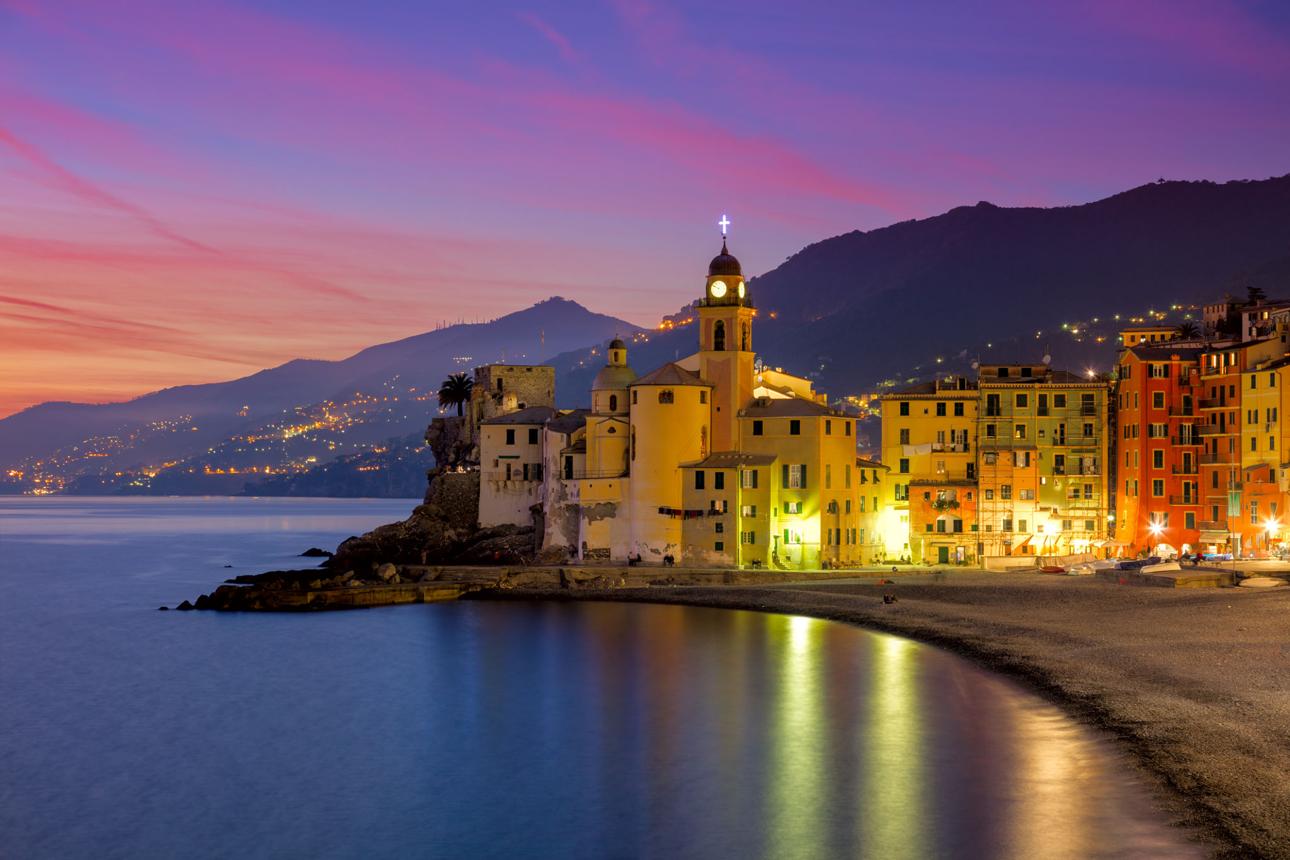
Despite everything, there are still places — enough of them — where coastal time survives more or less intact. The villages of the Pelješac peninsula. The working harbours of the Dodecanese. The morning routines of fishing families in Trapani. The evening passegiata along any provincial Ligurian seafront where the tourists are not yet thick enough to alter the local choreography.
These places matter not as tourism products, but as evidence. Evidence that there is another way to organise a day, a community, a life — one that is responsive to natural systems rather than resistant to them. Evidence that the clock is not the only measure of a well-used hour.
The growing interest in coastal living, in nautica, in the blue economy — this interest is not accidental. It is a recalibration. Something in people is looking for the water, and for what living near it offers: a different relationship with time, with attention, with the actual texture of the present moment. Coastal communities have always known how to give that. The question is whether, in the era of mass maritime tourism, they can afford to keep offering it — and whether the rest of us are willing to receive it on its own terms.
Frequently Asked Questions
What is “coastal time” as a concept?
Coastal time refers to the distinctive relationship with daily rhythm that develops in communities built around the sea. Unlike industrial urban schedules, it is shaped by tides, weather patterns, fishing cycles, and seasonal wind conditions — creating a more responsive, attentive approach to time rather than a strictly linear one.
Why do Mediterranean coastal towns seem to operate on a different schedule?
Because historically they had to. Fishing, sailing, and trade by sea all required alignment with natural systems — early-morning departures, midday pauses during peak heat, evening activity when the sea cooled. These patterns became embedded in social architecture over centuries and remain visible today even where the underlying economy has shifted toward tourism.
Is slow coastal living a lifestyle trend or something older?
It predates the concept of lifestyle entirely. What is now marketed as “slow travel” or “intentional living” is simply the ordinary rhythm of maritime communities that developed practical wisdom about working with natural cycles rather than against them. The trend is modern; the practice is ancient.
Which Mediterranean destinations best preserve traditional coastal rhythms?
Destinations with active fishing economies and limited mass tourism infrastructure tend to retain more authentic coastal rhythms. The Pelješac peninsula in Croatia, the Dodecanese islands in Greece, and less-visited coastal towns in southern Italy and Montenegro are frequently cited by travellers seeking genuine immersion in coastal life.
How does coastal living affect mental wellbeing?
Research published in journals including the International Journal of Environmental Research and Public Health suggests that proximity to water is associated with reduced stress, increased present-moment awareness, and higher reported life satisfaction. The attentiveness required by maritime environments may contribute to this effect beyond simple aesthetic pleasure.
Is mass tourism threatening traditional coastal rhythms?
Yes, in measurable ways. When tourism infrastructure displaces working harbours, fishing economies, and local commercial life, the conditions that produced distinctive coastal rhythms are removed. The European Commission’s Blue Economy framework identifies this as a tension requiring active management to preserve the social capital that underpins long-term tourism value.