Why the Sea Continues to Inspire Designers, Writers and Entrepreneurs

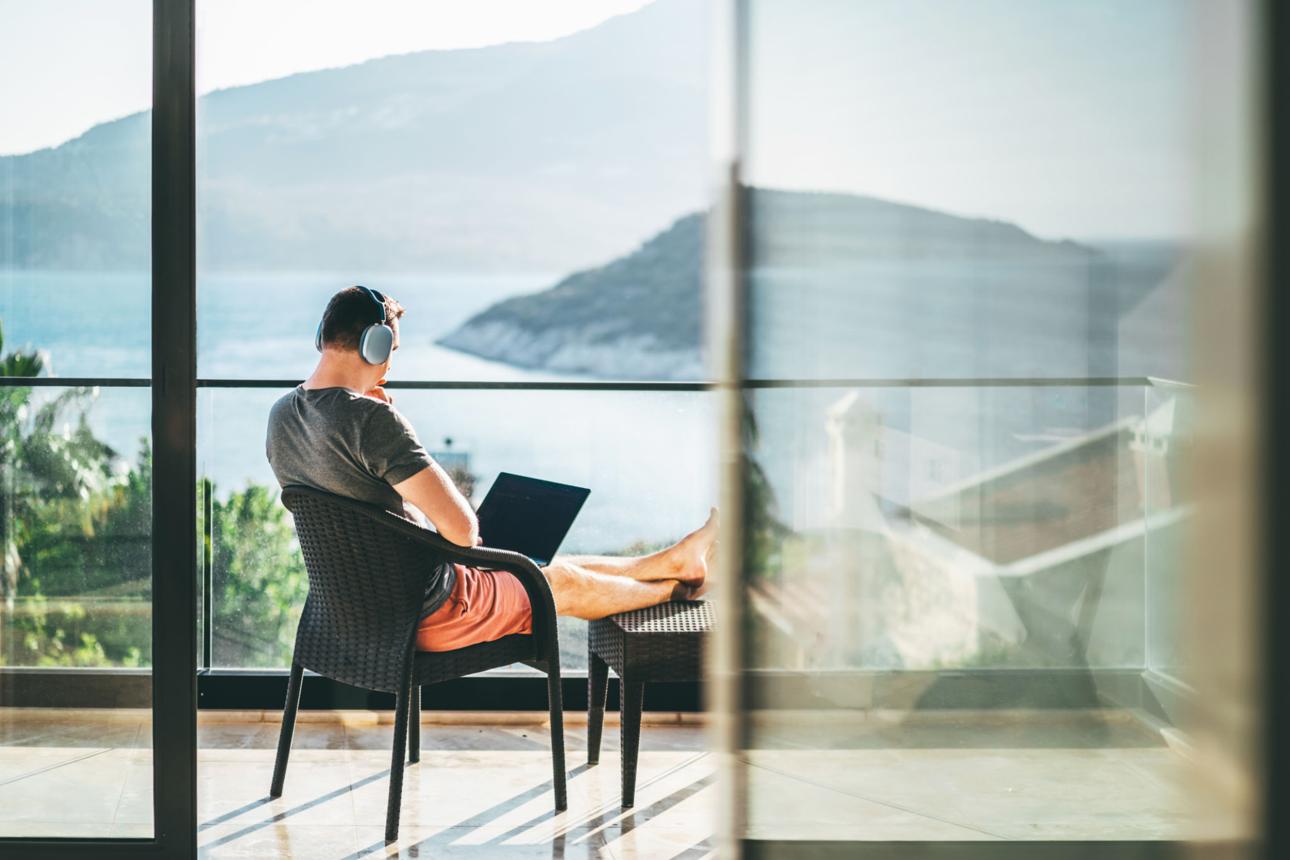
It is not aesthetics. It is not nostalgia. The sea does something specific to the human mind — and the people who build things have always known it.
Desk: Perspectives · Est. read: 6 min
The sea has inspired human creativity for as long as humans have built things worth remembering. The question worth asking is why — not as a romantic observation, but as a genuine inquiry into what coastal environments do to the minds that encounter them. The answer matters, because it explains not just a creative pattern but a structural advantage that the Mediterranean, above almost any other place on earth, still holds.
Designers, writers, and entrepreneurs who spend meaningful time near the water tend to produce different work than those who do not. This is not anecdote. It is a pattern visible across enough careers, disciplines, and centuries to warrant serious attention.
Why does the sea inspire creativity?
The sea inspires creativity primarily because it is a total cognitive environment — one that eliminates the usual scaffolding of distraction and forces a different quality of attention. The horizon demands presence. The wind shift that matters is the one happening now. The light over the water changes every twenty minutes in ways that are impossible to ignore.
Most creative work happens inside systems of competing noise — notifications, meetings, other people’s urgencies. The mind rarely gets to sit with a single idea long enough to understand it. The sea removes this. Not because it is peaceful (anyone who has been on open water in a building swell knows that “peaceful” is the wrong word), but because it is insistent. It crowds out everything else.
What the sea offers is not escape. It is a different cognitive environment — one that forces the kind of attention that open-plan offices and notification systems are specifically designed to prevent.
Research in environmental psychology, including work published by the American Psychological Association, consistently shows that natural environments — and blue spaces in particular — reduce cognitive fatigue and restore directed attention. The mechanism is not mysterious: when the mind is freed from the effort of filtering irrelevant stimuli, it becomes available for the kind of associative thinking that produces original ideas.
The design logic of the sea
Designers have always found something useful in nautical thinking. The reason is not aesthetic — it is structural. Boats impose a design philosophy by necessity: reduce, simplify, make each element do more than one thing. Everything on a well-designed vessel is there because it is necessary. Anything superfluous is weight, and weight has consequences.
This is design constraint in its purest form. The ten principles of good design articulated by Dieter Rams — as little design as possible, honest, long-lasting — read almost as a description of marine hardware. It is not accidental that Rams, like many German industrial designers of his generation, drew on nautical aesthetics not as decoration but as a functional philosophy.
Spending time in a working marina, or on a well-maintained boat, recalibrates your sense of what is necessary. This is useful for anyone who makes decisions about form.
What the sea teaches entrepreneurs about risk
The entrepreneurial relationship with the sea is different from the designer’s or the writer’s. It is less about aesthetics and more about the nature of uncertainty.
Sailing at any serious level involves making decisions with incomplete information, in conditions that change faster than your plans, toward outcomes you cannot fully control. You learn — quickly and without sentimentality — to distinguish between the risks worth taking and the ones that are simply reckless. The feedback is immediate and honest. The sea has no interest in your narrative about what should have happened.
This is a quality of thinking that is genuinely difficult to develop in environments where consequences are abstract and reversible. It is why a disproportionate number of founders with enduring companies have some version of a sailing story in their background — not because sailing is a leadership programme, but because it is one of the few remaining environments where reality consistently overrides wishful thinking.
The Mediterranean as a specific creative context
Not all coastlines are equal in what they offer. The Mediterranean is distinct — not simply as geography but as a cultural and intellectual inheritance. The civilisations that grew along its shores over three millennia were shaped by proximity to the sea in ways that affected their philosophy, commerce, and creative output. Greek geometry, Arab astronomy, Venetian trade architecture, Renaissance painting — all emerged from cultures defined by maritime life.
That inheritance is still present. The UNESCO-listed old city of Dubrovnik was designed around harbour logistics. The light over the Aegean that painters have described since antiquity is the same light available to anyone who sails there today. The quality of attention that the Mediterranean coastal environment demands — the reading of weather, tide, and wind — has not changed because the sea itself has not changed.
According to the UN World Tourism Organisation, the Mediterranean receives over 220 million visitors annually, making it the world’s most visited coastal region. A growing segment of that movement is not driven by beach infrastructure or resort amenities — it is driven by demand for the specific cognitive and sensory environment that Mediterranean coastal life offers. Travellers are increasingly able to articulate what they are looking for, even if they do not yet have precise language for it.
The Mediterranean is not simply a geography. It is one of the most potent creative environments on earth — and it remains largely accessible to anyone willing to get close enough to the water.
Why this matters now
The digital economy has made it possible to work from anywhere. It has not made all places equally conducive to doing good work. The coastal towns of Croatia, Greece, Italy, and Montenegro are experiencing an influx of designers, writers, and founders who are discovering — often without fully understanding why — that being near the sea changes the quality of their thinking.
This is an opportunity for the Mediterranean nautical economy to position itself not simply as a destination for leisure, but as an environment for serious creative and entrepreneurial work. The infrastructure is there: marinas, charter boats, coastal communities with centuries of knowledge about how to live well near the water. What has been missing is a coherent way to access it — to move between creative work and the sea without treating them as separate activities.
The people who built the best things have always known where to go when they needed to think clearly. The sea has not changed. Only the boats have.
Frequently Asked Questions
Why does the sea inspire creativity?
The sea functions as a total cognitive environment that removes ordinary distractions and forces sustained attention. Environmental psychology research shows that blue spaces reduce cognitive fatigue and restore the kind of associative thinking that generates original ideas. The constant demands of reading wind, light, and weather also train a quality of presence that most indoor environments do not require.
Which designers have been influenced by nautical thinking?
Dieter Rams is among the most frequently cited — his ten principles of good design share foundational logic with marine design philosophy: reduce to the essential, make each element functional, eliminate the superfluous. The influence runs through mid-century German industrial design and into contemporary product design culture, including Apple’s design language under Jony Ive.
Why do entrepreneurs find value in sailing?
Sailing provides immediate, honest feedback in conditions of genuine uncertainty — a cognitive environment that builds the capacity to make good decisions with incomplete information. Unlike most professional contexts where consequences are abstract, the sea provides real-time reality checks that are difficult to dismiss or rationalise away.
What makes the Mediterranean specifically inspiring compared to other coastlines?
The Mediterranean combines geographic conditions — particular quality of light, sheltered sailing waters, accessible coastal communities — with a three-thousand-year cultural inheritance built on maritime life. The civilisations that shaped Western philosophy, art, and commerce developed in direct conversation with this sea. That context is still present in the built environment, the social rhythms, and the landscape.
Is coastal creative work a growing trend?
Yes. The expansion of remote work has decoupled creative and entrepreneurial labour from fixed urban locations, and a growing segment of knowledge workers is actively choosing coastal environments for extended work periods. The Mediterranean is among the primary beneficiaries of this shift, particularly in Croatia, Greece, and Montenegro.
How does access to the sea affect quality of work?
Multiple studies in environmental psychology link blue space exposure to reduced stress, improved attention restoration, and higher reported creative output. Beyond the psychological mechanism, proximity to the sea also enforces a rhythm of work that many creatives find more sustainable than continuous urban productivity culture.