The Most Booked Boat Charter on the Bay Isn’t the Newest One. It’s From 1952.


There is a marina on the Chesapeake Bay where two boats leave the same dock on Saturday mornings. The first is a 2023 center console — 28 feet, twin outboards, GPS chartplotter, Bluetooth speakers, the kind of boat that every marina in America has three of. It rents for $550 for a half day. It is booked maybe twice a week through summer.
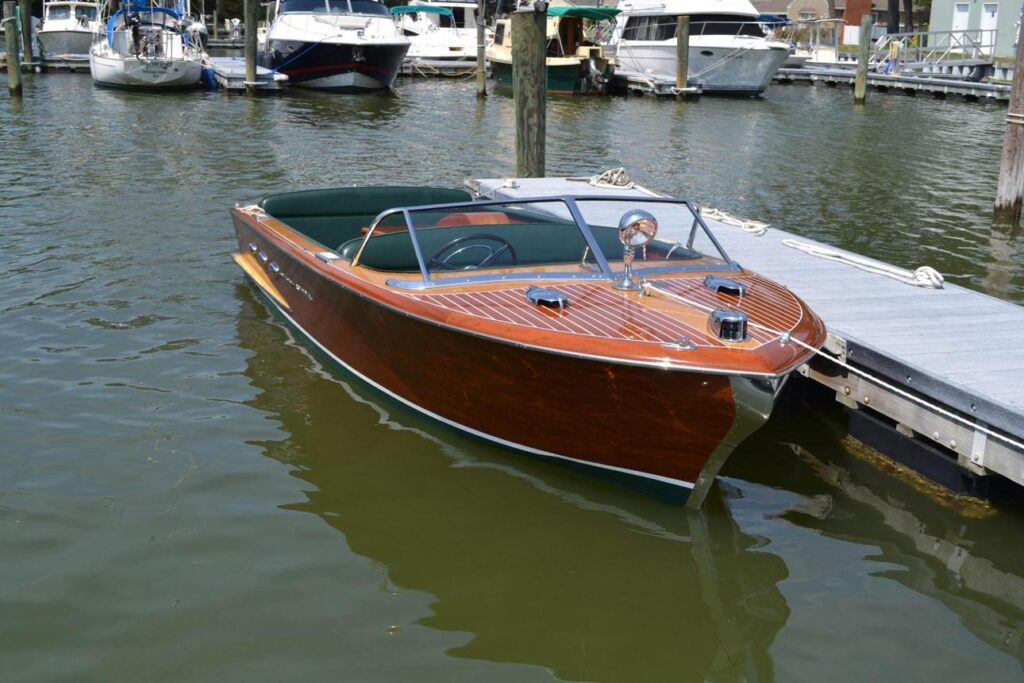
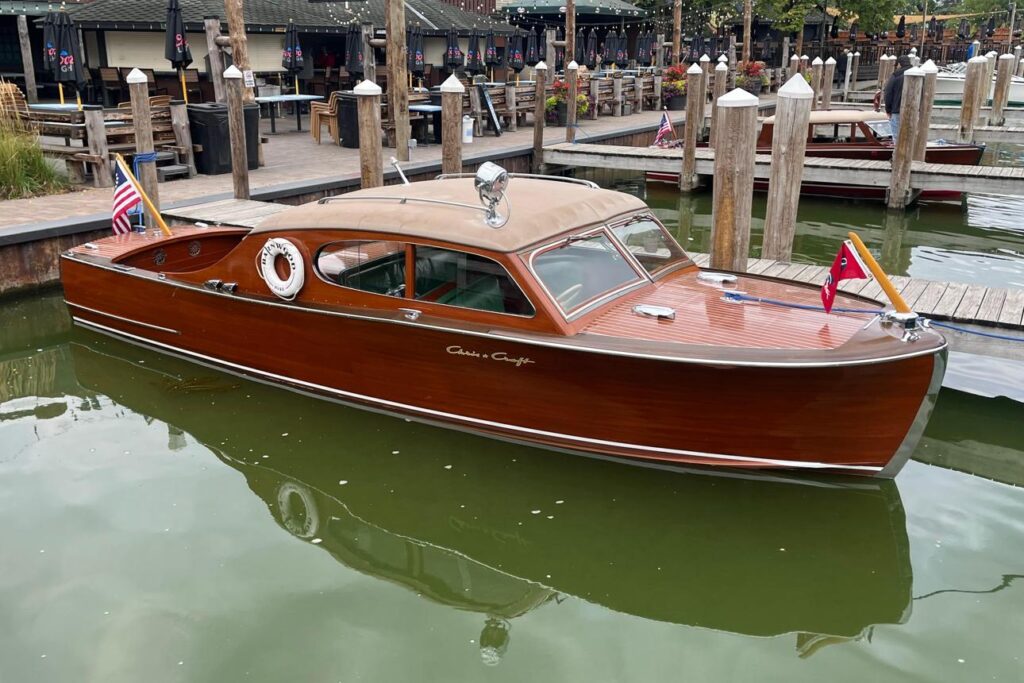
The second boat is from 1952. A Chris-Craft mahogany runabout, restored over two years to a condition that is arguably better than the day it left the factory. It charges $1,200 for the same half day. It has a waitlist.
If you want to understand what is happening in the American luxury boat charter market in 2026 — why the most sought-after private boat experiences are increasingly not the newest, fastest, or most technologically advanced vessels on the water — this is where the story starts.
What Happens When Someone Steps Onto a 70-Year-Old Boat
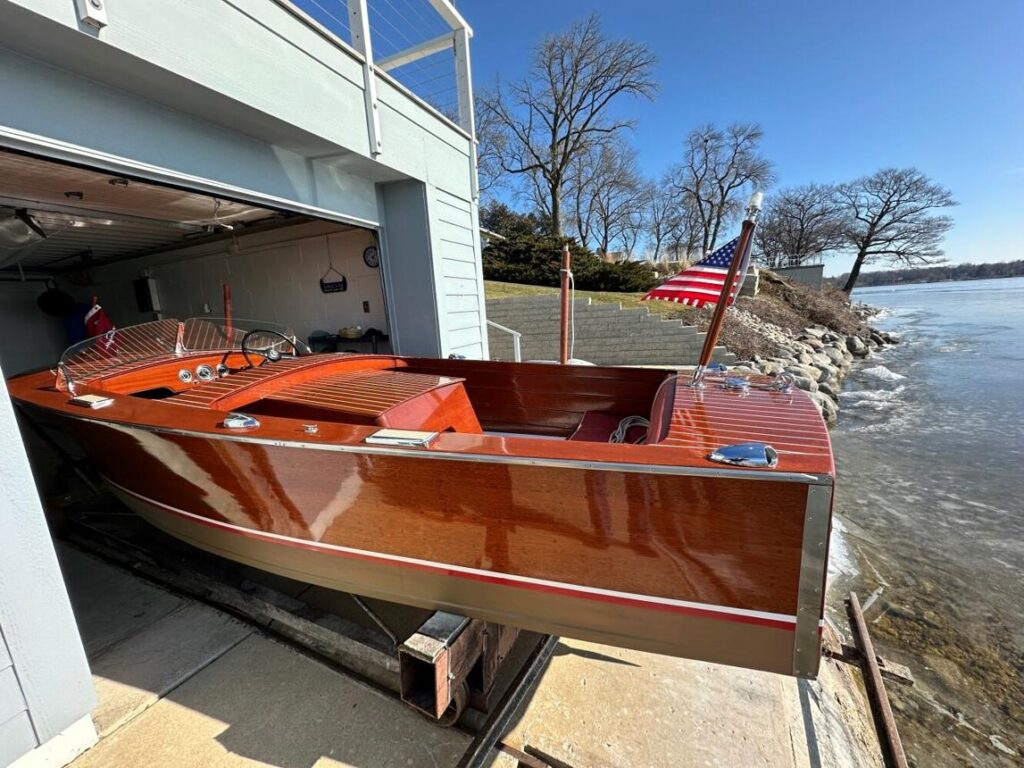
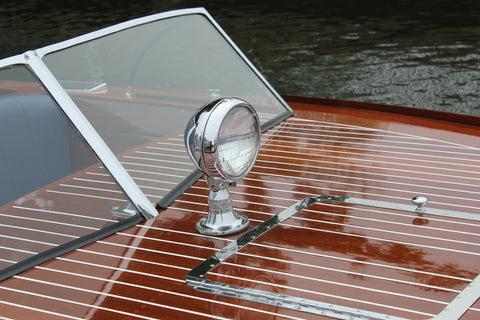
The reaction is consistent enough to be almost predictable. A couple walks down the dock toward a restored 1952 Chris-Craft. The mahogany hull catches the morning light in a way that fiberglass physically cannot. The chrome cleats are period-correct and polished to a depth that modern hardware doesn’t achieve. The captain — who has usually spent years on this specific restoration — says good morning from a teak cockpit that smells of varnish and salt water and something older than both.
Before the boat leaves the dock, before a single nautical mile has been covered, the guests are already having the experience they came for. They are already somewhere else in time.
This is the thing that no amount of contemporary boat design, no twin-engine performance package, no Bluetooth speaker system can replicate: the specific feeling of boarding a vessel that was built when American craftsmanship meant something different than it does now, and has been maintained by someone who understands what was lost when it stopped meaning that.
The modern center console sitting next to it on the dock is a superior fishing platform by every technical measure. It is faster, lighter, more fuel-efficient, and costs a fraction of what the classic runs to maintain.
It will never once make a passenger stop walking and just look at it.
The Economics That Don’t Make Sense Until They Do
Here is the part that surprises people who think about charter boat pricing in conventional terms. The vintage classic boat charter is not competing with other boat rentals near it. It is not competing with other private boat charters in its market. It is not really competing with anything, because there is nothing else quite like it within reasonable booking distance.
This is the Duhigg insight — the connection that isn’t obvious until it is: the scarcest luxury in the American boat charter market in 2026 is not yacht size, not captain experience, not destination exclusivity. It is genuine irreplaceability. The experience that cannot be found anywhere else, cannot be compared to anything else, and therefore cannot be shopped on price.
A standard boat rental — even a very good one — exists in a comparison market. Someone searching for a private boat charter near them will find three or four options at similar price points and choose based on marginal differences. A restored 1952 Chris-Craft exists outside that comparison entirely. The person who books it isn’t choosing it over a modern boat. They’re choosing it because there is no modern boat that offers what it offers.
According to Wooden Boat Magazine, which has documented the classic and vintage vessel market since 1974, inquiry volume for restored wooden boat charters has increased significantly in recent years — driven by what the publication describes as growing demand for water experiences that are “authentic rather than amenity-driven.”
The luxury boat charter market has spent twenty years competing on amenities. The vintage market is competing on something older and harder to manufacture.
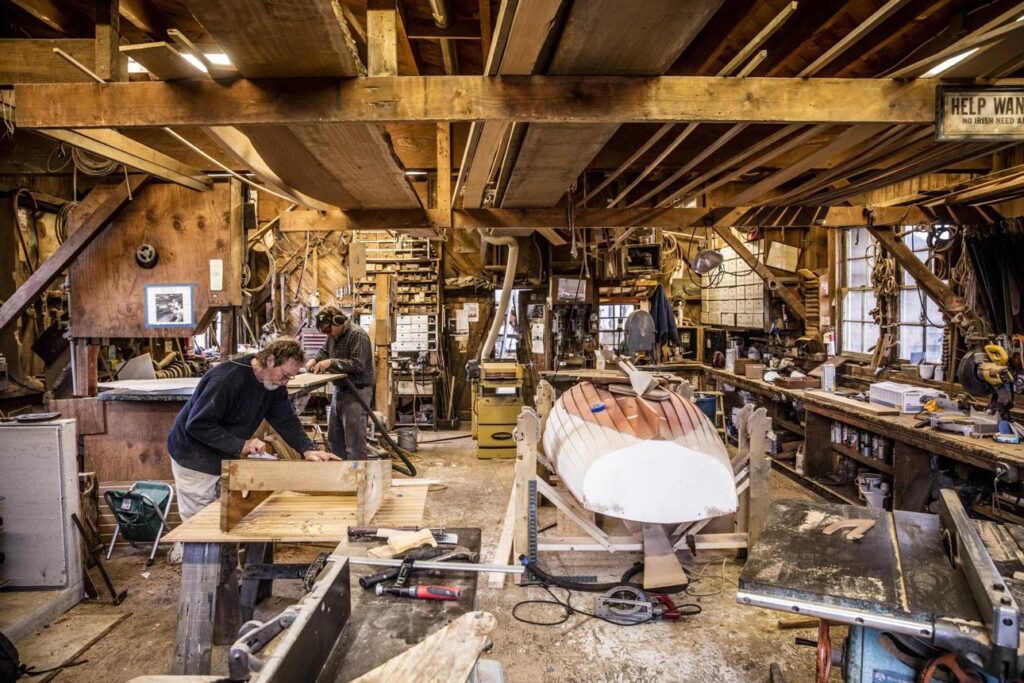
What “Rent a Boat” Means When the Boat Is From 1952
Most people who search “rent a boat” or “boat rental near me” are looking for something uncomplicated — a vessel for a day on the water, transportation to a destination, a platform for swimming and sunbathing. This is a legitimate and well-served market.
But embedded in that same search behavior is a smaller, higher-value segment of people who are looking for something more specific: the best boat trip they’ve ever taken. The bucket list water experience. The private charter that becomes the story from the trip rather than the backdrop to it.
This segment consistently overpays — relative to the commodity boat rental market — for experiences that feel unrepeatable. A sunset cruise on a restored wooden classic. A fishing trip on a vessel that the grandfather of the captain’s grandfather might have recognized. A private boat charter that photographs in a way that no modern hull achieves, because the lines of a 1950s runabout were designed by people who thought of a boat as an aesthetic object before they thought of it as a functional one.
Finding these experiences has historically been the problem. The operators who run vintage and classic boat charters are among the most passionate people in the water activity industry and among the least visible online. The restored 1952 Chris-Craft on the Chesapeake Bay doesn’t need a website to fill its waitlist — its regulars find new customers for it through sheer enthusiasm. But the traveler arriving in Annapolis for the first time, searching for the best boat trip near them on their phone the Thursday before their weekend, finds the modern center console because it has better SEO. Not because it’s the better experience.
Platforms like Marina Boat App — free on the App Store — are specifically working to surface these operators alongside standard boat rental and charter options, so the person searching for a unique boat experience or a luxury boat charter near them actually finds the restored classic rather than just the modern commodity.
What It Actually Costs — And What It Actually Returns
The restoration economics are real and worth understanding for anyone sitting on an inherited vintage hull and wondering whether the investment makes sense.
A 1950s wooden boat in structurally sound condition with systems that need updating costs $15,000-35,000 to bring to charter-ready standard. A hull that needs significant structural work — replanking, new frames, complete system replacement — runs $50,000-80,000. These are genuine numbers from the restoration community, not estimates.
The return, for operators who position the boat correctly in their market, is correspondingly strong. A vintage charter commanding $1,000-1,400 per half day, running four days per week through a six-month season, generates $96,000-134,400 in gross seasonal revenue. After marina fees, the maintenance reserve that wooden boats require, insurance at the commercial charter rate, and operating costs, realistic net figures run $50,000-75,000 annually for a well-run operation.
For a boat that cost $40,000 to restore and was otherwise going to rot in a garage, this describes a business that pays for itself in under two years and then generates meaningful income from an asset that is simultaneously appreciating as the supply of restorable vintage hulls continues to decline. Classic wooden boats are not being manufactured. The inventory is finite and shrinking.
The Thing That Doesn’t Show Up in the Business Plan
There is a version of this story that ends with charter revenue and booking platforms and net annual income. That version is accurate.
There is another version that is harder to put in a spreadsheet. The person who pulls the tarp off a 1952 Chris-Craft and decides to spend two years restoring it is not primarily making a financial decision. They are deciding that the specific relationship with craft and time and material that their grandfather embodied in that boat is worth preserving — not as an artifact in a museum, but as a living thing that goes on the water every Saturday morning and makes people stop walking and just look at it.
The market’s verdict, as expressed through waitlists and premium pricing and guests who rebook before they’ve finished the first trip, is that this decision was correct.
The grandfather who maintained that boat for thirty years with a care that the throwaway culture of the following decades couldn’t quite understand was not just maintaining a vessel. He was making an argument about what things are worth. The restoration is the counterargument to everyone who said to just let it go.
The fact that the counterargument also happens to generate $60,000 a year in net charter income is, depending on how you look at it, either a pleasant coincidence or evidence that the market has always known something about value that the throwaway era temporarily forgot.
FAQ: Vintage and Classic Boat Charter USA
Where can I find a vintage or classic boat charter near me?
Vintage and classic boat charter operators exist across major US coastal markets — Chesapeake Bay, New England, Florida, Pacific Northwest, and Great Lakes — but are often difficult to find through standard searches. Marina Boat Applists vintage charter operators alongside standard boat rentals, free on the Apple App Store.
How much does a classic or vintage boat charter cost?
Restored classic boat charters typically run $800-1,400 for a half day and $1,500-2,500 for a full day — a premium over standard boat rental pricing that reflects the irreplaceable nature of the experience rather than vessel size or performance.
What makes a vintage boat charter worth the premium over a modern boat rental?
A restored vintage boat offers a sensory and emotional experience — the mahogany hull, period-correct hardware, specific sound and smell of a rebuilt classic engine — that modern boat design cannot replicate. Customers consistently describe it as one of the best boat trips they’ve taken, precisely because it has no direct comparison.
What are the best vintage American boat brands for charter use?
Chris-Craft, Gar Wood, Century, and Lyman are the most sought-after American wooden boat manufacturers from the 1940s-1960s for restoration and charter use. Classic Boating Magazine and Wooden Boat Magazine maintain extensive resources on these vessels.
Can I turn my grandfather’s old boat into a charter business?
Yes, if the hull is structurally restorable. Restoration costs range from $15,000-80,000 depending on condition. A well-positioned vintage charter can generate $50,000-75,000 net annually, paying back restoration investment within two years in active coastal markets.
How do I list a classic or vintage boat as a charter on Marina Boat App?
Download Marina Boat App free from the Apple App Store, create a host profile, and list your vessel as a charter experience with photos, pricing, and availability. Zero commission charged to operators during the founding partner phase.