Uber Created the Gig Driver. The Next Decade Creates the Gig Captain.

There’s a labor category quietly forming at the intersection of the gig economy and the marine industry — and the people best positioned to fill it have spent years acquiring a credential that, until now, had limited commercial use.
Desk: Perspectives · Est. read: 5 min
When Uber launched in 2010, it didn’t invent driving. It took an existing, widely-held skill — operating a car — and built the infrastructure to monetize it flexibly, on demand, without requiring a taxi medallion or a full-time job with a livery company. The labor category it created, the gig driver, didn’t exist in its modern form before the platform did.
Something structurally similar is forming in the marine industry, and it centers on a credential that has existed for decades but historically had a narrow commercial application: the US Coast Guard Operator of Uninspected Passenger Vessel license, commonly known as the Six-Pack.
Why the Six-Pack license is becoming a gig-economy asset
Historically, a Six-Pack license meant one of two things: you ran your own small charter operation, or you worked as crew for an established outfit. Both paths required either capital (your own boat) or a long-term employment relationship. Neither matched the on-demand, flexible-hours model that has reshaped large parts of the American labor market over the past fifteen years.
What’s changed is the emergence of direct booking platforms that connect licensed captains with boat owners who have a vessel but lack a license, or who want occasional professional crew without a permanent hire. This is structurally identical to what Uber did to driving — taking a credentialed skill that previously required a fixed employment relationship and making it available on a per-trip, on-demand basis.
A licensed captain with no boat and a boat owner with no license used to have no efficient way to find each other. That is exactly the kind of matching problem platforms are built to solve.
The size of the labor pool this could activate
The US Coast Guard issues thousands of new OUPV credentials annually, and many holders use the license only occasionally or not at all, having obtained it for a specific job or opportunity that didn’t fully materialize. This represents a meaningful pool of underutilized, credentialed labor — similar in structure to the pool of licensed drivers that existed before ridesharing platforms gave them a flexible way to monetize the credential.
The National Marine Manufacturers Association has noted crew availability as a recurring constraint on charter industry growth, particularly during peak summer demand when boat owners and charter operators alike struggle to find licensed, available captains for short-notice bookings. A gig-style marketplace addresses exactly this mismatch: idle credentialed supply, concentrated unmet demand.
What this means for both sides of the market
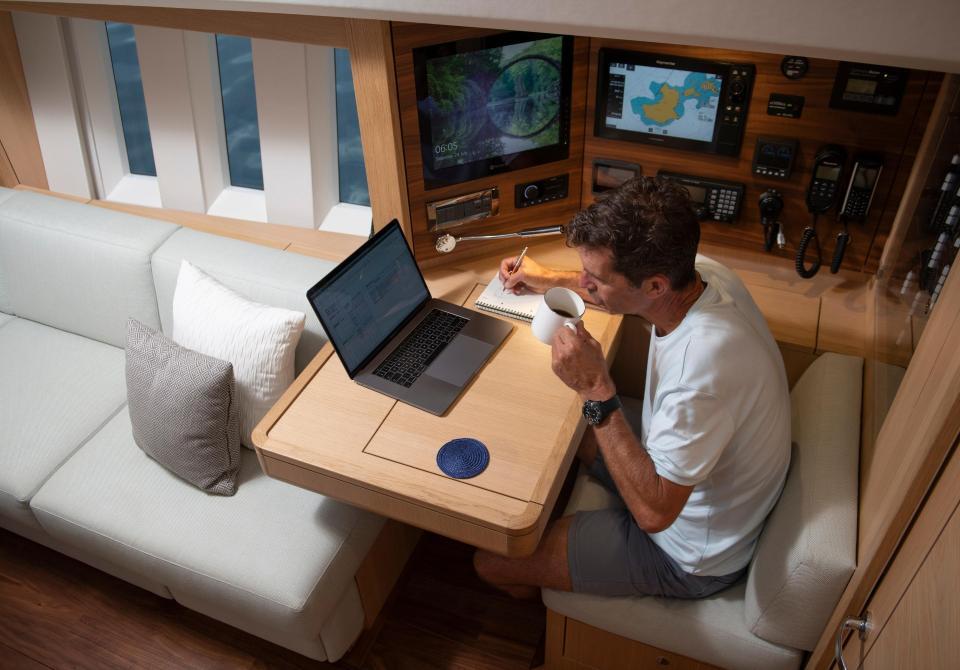
For boat owners, access to on-demand licensed captains lowers the barrier to commercial charter operation significantly — you no longer need to personally hold a license or commit to a full-time crew relationship to operate commercially. For captains, it means converting a credential that may have been earned years ago, for a specific job, into ongoing flexible income without requiring boat ownership or a permanent employer.
Platforms like Marina Smart are building exactly this connective layer — a verified network where boat owners and licensed crew can find each other directly, the same fundamental matching function that ridesharing built for drivers and riders, applied to a market that has had no equivalent infrastructure until now.
The gig driver took fifteen years to become a normal, unremarkable part of American labor. The gig captain is at year zero of that same trajectory — and the credential required to participate already exists, sitting quietly in thousands of wallets across the country.
Frequently Asked Questions
What is a Six-Pack license and how is it becoming a gig economy credential?
The Six-Pack license (formally the USCG Operator of Uninspected Passenger Vessel credential) allows carrying up to six paying passengers. Direct booking platforms are increasingly connecting license holders with boat owners on a per-trip basis, mirroring how rideshare platforms turned a driver’s license into a flexible income source.
Can a licensed captain work on someone else’s boat without owning a vessel?
Yes. A licensed captain can legally operate a charter on a boat owned by someone else, provided the vessel is properly registered for commercial use and insured accordingly. This arrangement is increasingly facilitated by platforms connecting boat owners with available licensed crew.
Why is there a shortage of available charter captains in the US?
Industry sources including the National Marine Manufacturers Association have identified crew availability as a recurring bottleneck, particularly during peak summer season, when demand for short-notice charter bookings exceeds the supply of captains readily matched to available vessels.