Why People Who Live Near the Sea Age Differently — And What the Rest of Us Can Learn From Them

People who grow up near the ocean don’t just look younger. They move differently, sleep better, and report lower levels of chronic stress than inland populations — and the science behind this is more specific than most people realize.
This is not a wellness trend. It is a pattern documented across cultures, continents, and centuries — from the fishing villages of Okinawa to the coastal towns of Sardinia, from the Adriatic islands of Croatia to the Atlantic coast of Portugal. The sea does something measurable to the human body and mind, and the people who live closest to it have been absorbing those effects their entire lives.
What the Research Actually Shows
A landmark study published in Health & Place analyzed data from 48 million people in England and found that coastal residents reported significantly better mental health than those living inland — even after controlling for income, age, and urban density. The effect was consistent and reproducible.
A separate analysis from the European Centre for Environment and Human Health at the University of Exeter found that people living within one kilometre of the coast were 22% less likely to report symptoms of depression or anxiety. The term researchers use is “blue space” — water environments that produce measurable psychological restoration.
The mechanisms are not mysterious. Salt air carries negative ions that increase serotonin levels. The sound of waves operates at a frequency that actively downregulates the nervous system. Natural light reflected off water exposure increases vitamin D synthesis. Cold water swimming — practiced routinely in coastal communities from Scandinavia to the Adriatic — has been shown to reduce cortisol and improve immune response.
What Coastal Communities Actually Do Differently
The health benefits of coastal living are not purely environmental. They are also behavioural — and this is where the lesson becomes transferable.
People who live near the sea tend to walk more, not because they are disciplined but because the environment invites it. They eat fish more frequently — not as a health choice but as a cultural default. They socialise outdoors rather than indoors. They sleep earlier because natural light cycles near open water are less disrupted by artificial environments.
In the Mediterranean coastal communities documented in Dan Buettner’s Blue Zones research, the common factors are not supplements or gym memberships. They are movement built into daily life, food sourced locally, and social connection that happens naturally around shared outdoor spaces — the harbour, the market, the waterfront promenade.
The sea is not the cause. It is the context that makes these behaviours inevitable rather than effortful.
Why This Matters for How We Think About Travel
Most people who visit coastal destinations experience a version of this effect for one or two weeks and then return to inland urban life wondering why they feel so much better on holiday. The answer is usually attributed to “not working” — but the research suggests the environment itself is doing significant work.
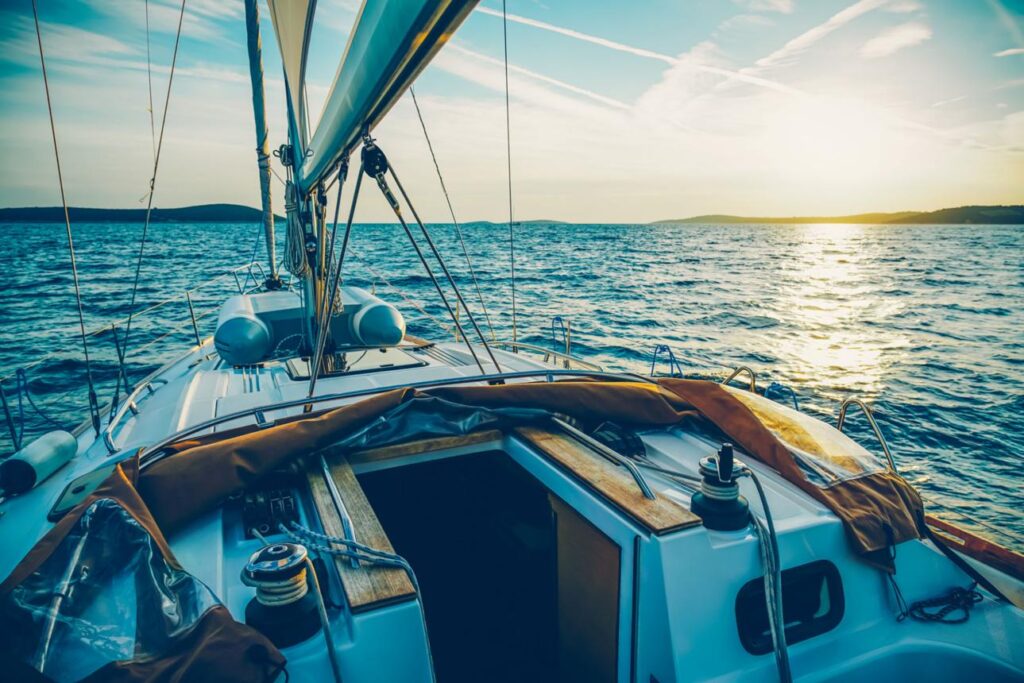
This reframing has consequences for how we think about nautical tourism specifically. A sailing holiday is not just leisure. It is an immersive exposure to blue space, physical activity, natural light cycles, fresh food, and social connection — compressed into a week. The World Health Organization has increasingly recognised blue space access as a public health consideration, not merely a tourism one.
Platforms like Marina Smart are building the infrastructure that makes water access easier — connecting people with boats, crew, and coastal experiences that were previously difficult to find and book. The long-term value of that infrastructure is not just commercial. It is about making blue space accessible to people who don’t live next to it.
What You Can Take Home
The honest answer is that you cannot fully replicate coastal living in an inland city. But you can import specific behaviours: cold water exposure, outdoor morning light, fish-based meals, evening walks near any available water — river, lake, canal. The effect is partial but real.
The deeper lesson from people who live near the sea is not about location. It is about the relationship between environment and behaviour — and how much of what we call “lifestyle” is simply the automatic output of where we spend our time.
FAQ: Coastal Living and Blue Space
Does living near the sea actually improve your health?
Yes — multiple large-scale studies, including research from the University of Exeter’s European Centre for Environment and Human Health, have found that coastal residents report better mental health, lower rates of depression and anxiety, and higher overall wellbeing compared to inland populations, even after controlling for socioeconomic factors.
What is “blue space” and why does it matter?
Blue space refers to water environments — ocean, rivers, lakes, canals — that have measurable psychological and physiological effects on humans. Research shows that proximity to blue space reduces stress hormones, improves mood, and promotes physical activity. It is increasingly recognised as a public health consideration.
Why do people seem happier on beach or sailing holidays?
The combination of natural light, physical movement, salt air, reduced artificial noise, and social connection in outdoor environments produces genuine physiological changes — lower cortisol, higher serotonin, improved sleep. It is not purely psychological.
Which coastal populations are known for longevity?
Sardinia (Italy) and Okinawa (Japan) are among the most studied — both are coastal communities with significantly higher than average rates of centenarians. The Adriatic islands of Croatia, particularly Hvar and Brač, have also been noted for elderly populations with high quality of life.
Can you get blue space benefits without living near the sea?
Partially. Cold water swimming in inland settings, regular exposure to rivers or lakes, and even looking at water have been shown to produce some of the same neurological effects as coastal living. The effect is dose-dependent — more exposure produces more benefit.
Is nautical tourism good for your health?
The evidence suggests yes. A sailing holiday combines blue space exposure, physical activity, natural light regulation, fresh food, and social connection — all factors independently associated with improved mental and physical health outcomes.
What do Mediterranean coastal communities eat that contributes to longevity?
The Mediterranean diet — olive oil, fish, legumes, seasonal vegetables, moderate wine — is well-documented in longevity research. But researchers note that the diet works in conjunction with an active outdoor lifestyle and strong social bonds, not in isolation.