The Berth Is the Cheapest Thing the Marina Sells

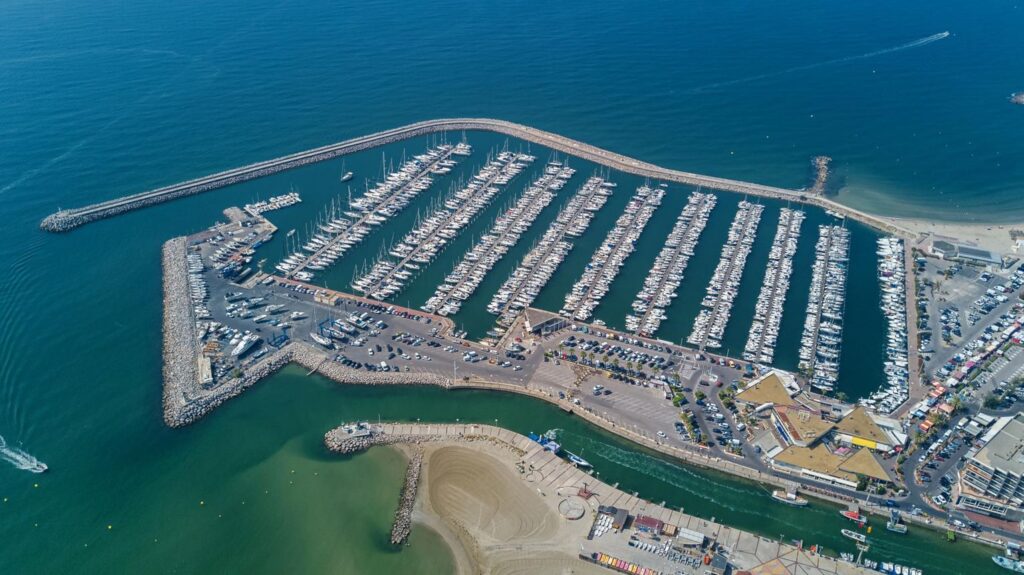
For most of the past fifty years, a marina’s revenue model was essentially a parking lot with water access. Boats arrived, paid a nightly or monthly berth fee, and the relationship between the marina and the vessel ended there. The marina took the parking money. Everything else — fuel, maintenance, provisioning, crew hire, insurance, equipment — was handled through a disconnected ecosystem of third parties operating in the marina’s vicinity but entirely outside its commercial reach.
This model persisted not because it was optimal, but because no alternative infrastructure existed to replace it.
That is beginning to change.
What a Marina Actually Controls
Consider what a marina operator has that no other business in the region possesses: a captive audience of boat owners with specific, predictable, high-frequency needs. Fuel. Electricity. Water. Maintenance. Cleaning. Provisioning. Crew hire. Insurance renewal. Equipment repair. And critically — a physical location that functions as the entry and exit point for every nautical experience the region offers.
This is not a parking lot. It is a commercial platform with a defined user base. According to the European Boating Industry Association, the European recreational boating market generates tens of billions in annual economic activity — the vast majority of which flows through or adjacent to marina facilities. The marina itself captures a fraction of what it enables.
The fuel supplier on the corner, the chandlery two streets away, the skipper hired through a WhatsApp group, the catering company provisioning the charter from a van — all of these represent economic activity that the marina’s berth fee made possible but that the marina never touches.
The SaaS Infrastructure Shift
Marina management software has existed for decades — primarily as berth scheduling tools for harbour masters. What is now emerging, particularly among more forward-thinking operators in Northern Europe and, increasingly, in the Mediterranean, is a different category of platform: one that treats the marina not as a parking facility but as the operational anchor of a local water economy.
The International Marina Institute has documented the growing interest among marina operators in digital revenue diversification, with ancillary services becoming a strategic priority for operators seeking to reduce seasonal revenue volatility.
The shift works as follows: when a boat owner books a berth through an integrated marina management system, that same interaction becomes the trigger point for connected services — a fuel pre-order, a cleaning booking, a crew request, a provisioning list. The marina moves from being the place the boat parks to being the commercial layer through which the entire stay is managed.
The economic implications are significant. A marina capturing 10% of the ancillary spend its berths generate is a structurally different business from one capturing only the berth fee. In a 200-berth marina with an active charter clientele, that difference is the gap between a marginal operation and a genuinely profitable one.
Why Mediterranean Marinas Are Behind
The Mediterranean charter industry is the most active nautical tourism market in the world. Croatia, Greece, Italy, Spain, and Turkey collectively account for the majority of European bareboat and crewed charter activity. And the digital infrastructure supporting this activity is, by the standards of any comparable hospitality sector, underdeveloped.
The reasons are structural. Mediterranean marinas are frequently family-owned and have operated the same way across generations. The capital required to modernise feels disproportionate relative to current margins built on berth fees alone. And the technology options available until recently were poorly adapted to marina operations — built for hotels, modified imperfectly, never quite right.
The reasons are also cultural. An industry built on personal relationships, on the harbour master who knows every regular by name, does not adopt software on a venture capital timeline.
The Opening
What is shifting is a generational transition — in marina ownership and in the charterers using them. A 35-year-old boat owner expects digital booking, real-time berth availability, integrated payment, and a service record accessible through an application. They are not asking for luxury. They are asking for what every other hospitality category already provides as standard.
Platforms beginning to build this integrated layer for the marine economy — connecting berth booking with crew networks, local services, and the full commercial ecosystem around a marina — are still early. But the marinas that move first will not simply operate more efficiently. They will attract the charter operators and private owners who have options and choose based on the quality of the total experience, not just the depth of the water.
The berth was never the product. It was always the beginning of the transaction.
FAQ: Marina Economics and the Blue Economy
What is the blue economy? The blue economy refers to the sustainable use of ocean and coastal resources for economic growth, including maritime transport, fisheries, tourism, renewable energy, and related services. According to the European Commission’s Blue Economy Report, the EU blue economy generates over €750 billion in annual turnover and employs approximately 5 million people.
How do marinas currently make money? The primary revenue source for most marinas globally is berth fees — daily, monthly, or annual charges for vessel mooring. Secondary revenue comes from fuel sales, electricity and water charges, and in some cases on-site services such as maintenance or chandlery. The majority of ancillary spending by boat owners and charterers happens outside the marina’s commercial control.
What is marina SaaS and why does it matter? Marina SaaS (Software as a Service) refers to cloud-based management platforms that replace paper-based and spreadsheet-based marina operations with digital tools — including berth scheduling, booking management, customer communication, and financial reporting. More advanced platforms also integrate ancillary service booking, creating new revenue streams for marina operators.
Why are Mediterranean marinas less digitised than Northern European ones? Northern European marinas — particularly in Scandinavia, the Netherlands, and the UK — have adopted marina management software at higher rates, partly driven by larger institutional operators and higher operating cost pressures. Mediterranean marinas tend to be smaller, family-owned, and have operated in markets with historically sufficient demand to fill berths without digital tools. This is changing as charter volumes increase and charterer expectations shift.
What is the economic impact of nautical tourism on coastal economies? Nautical tourism generates significant multiplier effects in coastal communities — spending on provisioning, food and beverage, local services, accommodation, and activities. The European Commission estimates that nautical tourism contributes substantially to coastal regional GDP, with the Mediterranean representing the highest concentration of activity globally.
How much of a marina’s potential revenue comes from ancillary services? Industry estimates suggest that ancillary spending by marina users — fuel, maintenance, provisioning, crew, services — can represent 3-5 times the value of berth fees alone. The challenge for marina operators has been capturing a share of this spend rather than allowing it to flow to third parties outside the marina’s commercial ecosystem.
What role do digital platforms play in the future of marina economics? Integrated digital platforms create the conditions for marinas to move from single-revenue (berth fee) models to multi-revenue models that capture a percentage of the full value generated by vessels in their facilities. This transition mirrors what happened in hotel distribution with the emergence of property management systems connected to booking platforms.