Why the Adriatic Is the Most Technically Demanding Charter Destination in Europe — and Why That’s Exactly the Point

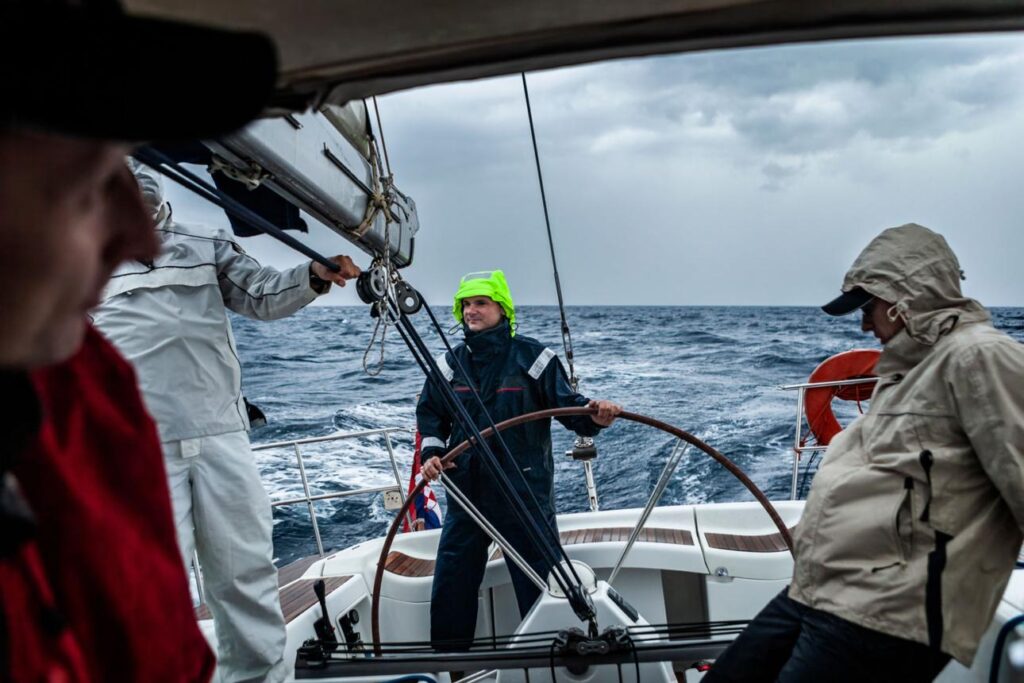
The Adriatic Sea is not the Mediterranean’s most forgiving charter destination. It is, for sailors who actually want to sail, its most rewarding one.
Croatia’s coastline stretches across 1,200 islands and roughly 6,000 kilometres of navigable shore — a geography that looks inviting on a chart and delivers on that promise, but not without demanding something in return. Wind systems that arrive fast, channels that require real navigation, and anchorages that separate the prepared from the unprepared. This is, for a specific kind of sailor, the entire appeal.
The Bora and the Jugo: Two Winds That Define the Adriatic
The Adriatic’s weather is shaped by two opposing systems. The Bora blows from the northeast, cold and gusty, dropping off the Dinaric Alps and accelerating across open water with little friction to slow it. According to the Croatian Meteorological and Hydrological Service, Bora gusts can exceed 100 km/h in exposed coastal areas during winter, and even summer Bora events arrive with speed that surprises unprepared crews.
The Jugo comes from the southeast — warmer, humid, building slowly and sustaining for days. It generates a long, rolling swell that is uncomfortable rather than dangerous, but it reliably disrupts itineraries by keeping boats in port for 48-hour windows while charterers rearrange plans.
Understanding both winds — their signs, their geography, their typical duration — is what separates a frustrating week in the Adriatic from a genuinely memorable one.
Why Difficulty Produces Better Sailors
There is a category of charterer who books the Adriatic specifically to improve. Not to be taken somewhere on a crewed boat, but to navigate, to work the sails, to make real decisions under real conditions. The island spacing in the Šibenik and Kornati archipelagos — documented in detail by Imray’s Adriatic Pilot — is optimised for actual passages, not short hops.
You can leave Split, sail to Hvar overnight, continue to Korčula, cross to the mainland for provisions, anchor in a bay you found on the chart, and return to Split — all in seven days, all with meaningful sailing in between. Northern European charterers — German, Dutch, Scandinavian — return to Croatia precisely because it gives them something to work with.
What the Charter Infrastructure Has Not Yet Caught Up With
The digital infrastructure serving Adriatic charter remains surprisingly primitive given the sophistication of its users. Experienced sailors researching routes, weather patterns, anchorage depths, and crew qualifications are largely doing so through PDFs, sailing forums, and phone calls to operators who may or may not speak fluent English.
Platforms beginning to address this — building verified skipper profiles, weather-linked availability, and route planning tools into a single booking layer — are still early. The gap between what this destination deserves digitally and what it currently offers remains significant.
The Right Approach
Allow more time than you think you need for wind windows. Build slack into your itinerary. Find a skipper who knows the local weather patterns from experience, not just a forecast app. The Adriatic rewards those who approach it on its own terms.
FAQ: Adriatic Charter
Is the Adriatic suitable for beginner sailors? The Adriatic can be sailed by beginners on crewed charters where a licensed captain manages navigation and weather decisions. Bareboat chartering requires demonstrated sailing competence and is not recommended for complete beginners, particularly in areas exposed to Bora conditions.
When is the best time to charter in Croatia? May, June, and September offer the best combination of favourable weather, available berths, and manageable crowds. July and August deliver reliable winds but significantly higher marina density and pricing.
What is the Bora wind and should I be concerned about it? The Bora is a cold, dry northeastern wind that can arrive quickly and reach significant speeds. In summer it is less frequent and shorter in duration than in winter but should be taken seriously. Any experienced skipper familiar with Adriatic conditions will monitor Bora forecasts as standard practice.
Do I need a sailing licence to charter in Croatia? Bareboat charters require a valid ICC (International Certificate of Competence) or equivalent national licence. The Croatian Ministry of Maritime Affairs recognises most European sailing licences. A separate VHF radio operator licence is also required.
How far in advance should I book a peak season charter? Quality bareboat and crewed charter availability in July and August in Croatia is typically exhausted by March or April. Booking 6-9 months in advance for peak season is standard practice among experienced charterers.
What is the difference between the Kornati and the Dalmatian islands for sailing? The Kornati archipelago (105 uninhabited islands) offers anchor-only sailing with dramatic limestone scenery and limited marina infrastructure. The Dalmatian islands (Hvar, Brač, Korčula, Vis) combine anchorages with established marina networks, restaurants, and provisioning. Most experienced charterers combine both in a week’s itinerary.
Are there charter platforms that offer verified skippers for Croatian waters? Verified skipper networks are beginning to emerge through integrated maritime platforms, though the market remains fragmented. The key is confirming that a skipper holds a valid Croatian skipperska dozvola and can demonstrate familiarity with your planned route.