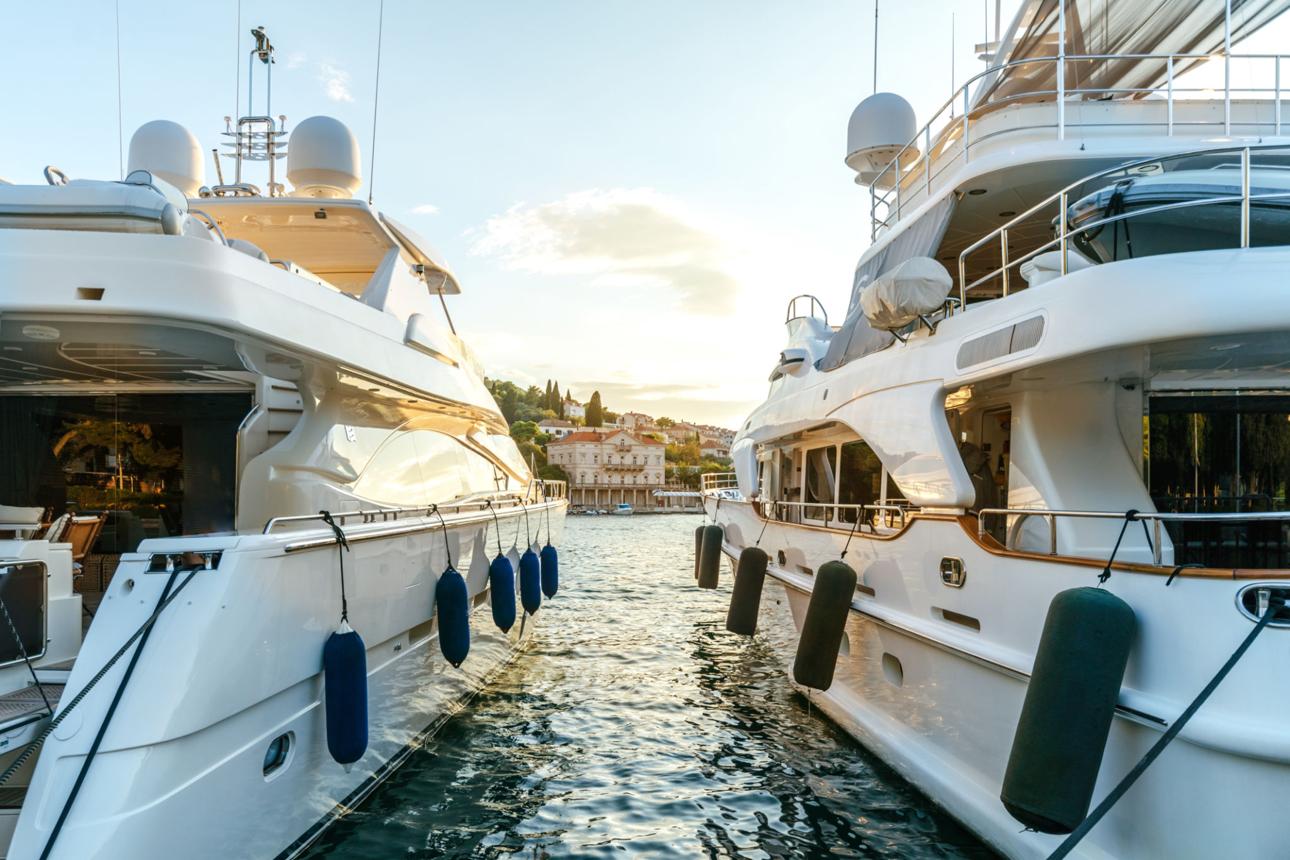
While the digital economy debates whether physical assets still matter, marinas sit at the intersection of geography, regulation, and demand — and quietly appreciate. Understanding why requires thinking about them not as amenities, but as infrastructure.
Desk: Maritime Business · Est. read: 10 min
Marinas are among the most misunderstood assets in coastal real estate and tourism economics. To the casual observer, they are harbours — pleasant backdrops for waterfront restaurants, necessary infrastructure for boats. To investors and urban planners who have studied them carefully, they are something considerably more interesting: fixed-supply assets in locations defined by permanent geographic constraints, serving a market with structural growth dynamics and almost no viable alternatives.
The economic logic is straightforward once you articulate it. You cannot build a new marina anywhere. You can only build one where the geography permits — where there is natural shelter, sufficient depth, appropriate tidal range, and proximity to demand centres. In the Mediterranean, those sites are finite and largely occupied. In many of the most desirable coastal locations, development moratoriums and environmental regulations mean that new large-scale marina capacity has effectively not been added to the supply in decades. Meanwhile, the number of registered vessels in European waters has grown steadily, and the demand for berths in premium locations consistently exceeds availability.
6,000+
Marinas in the Mediterranean basin
€183B+
EU Blue Economy coastal tourism annual value
30%+
Annual growth in boat charter & rental experiences
What makes a marina strategically valuable
The value proposition of waterfront infrastructure has several components that compound over time. The first is positional scarcity — the berth in Dubrovnik’s old harbour, the slip in Porto Cervo, the mooring in Portofino. These are not products that can be replicated. A new hotel can be built; a new marina berth in a protected bay on the Dalmatian coast cannot. This is the basic scarcity argument, and it is real.
The second component is regulatory moat. Marina operations in most Mediterranean jurisdictions require concessions granted by port or maritime authorities — licences that are difficult to obtain, expensive to maintain, and effectively impossible to replicate once a competing operator is established. The Croatian Adriatic, for instance, is served largely by the ACI (Adriatic Croatia International Club) marina network, a state-related entity with decades of concession history and 22 marinas across the coast. New private entrants seeking comparable scale face concession timelines measured in years rather than months.
The third component — and the one most underappreciated in traditional real estate analysis — is the ecosystem anchor effect. A marina is not simply a place to park boats. It is the gravitational centre of a local water economy: fuel and provisioning suppliers, maintenance and repair yards, equipment retailers, restaurants, charter operators, diving schools, water taxi services. All of these businesses depend on the marina’s existence and its volume of traffic. The marina that captures this ecosystem — rather than simply charging for berths — has a fundamentally different economic profile from one that operates as pure infrastructure.
A marina is not simply a place to park boats. It is the gravitational centre of a local water economy — and the operator that captures that ecosystem has a fundamentally different economic profile.
The revenue gap that most operators leave open
The gap between what Mediterranean marinas earn and what they could earn is one of the clearest inefficiencies in the regional tourism economy. The overwhelming majority of marina revenue in the Mediterranean comes from a single source: berth fees. Annual contracts, seasonal contracts, and transient nightly rates for visiting vessels. This is infrastructure revenue, and it has a ceiling — there are only so many berths, and competitive pricing constrains the upside.
What most marina operators have not built is the commercial layer on top. The fuel concession that generates margin every time a cruising boat refuels. The provisioning partnership that turns inbound charter traffic into grocery basket volume. The maintenance yard that captures the €2,000–8,000 average annual maintenance spend of every vessel in residence. The digital platform that gives every arriving charter guest access to local restaurants, experiences, and services — and earns a commission on each transaction.
An analysis of comparable marina models in the United States, where operators like Safe Harbor Marinas have built portfolios of hundreds of facilities, suggests that ancillary revenue can equal or exceed core berth revenue in well-managed facilities. European marina operators are, on the whole, significantly behind this benchmark — not because the demand doesn’t exist, but because the operational infrastructure to capture it has not been built.
Why digital infrastructure changes the calculus
The digitalisation of marina operations has been, by almost any measure, remarkably slow. As recently as 2023, the majority of Mediterranean marina berth bookings were made by phone or VHF radio, with payment settled in cash or by bank transfer. Availability information was typically not published online. Pricing was opaque. The experience of arriving at a new marina was largely identical to what it had been in the 1980s.
This is beginning to change, and the change will accelerate. The European Maritime Safety Agency and the European Boating Industry association have both identified digital transformation as a structural priority for the sector. The competitive dynamics are clear: marinas that develop digital booking, availability management, and guest experience infrastructure will be able to convert transient visiting traffic into yield far more effectively than those operating on analogue processes. The reservation that a sailor makes three weeks in advance — and the add-on services she books before arrival — are revenue that a phone-and-spreadsheet operation simply cannot capture.
The analogy to hotel distribution is instructive. Before channel management software and OTA integration, independent hotels captured a fraction of their potential occupancy because they were invisible to demand outside their immediate catchment. Marina operators today face a structurally identical problem. Their berths are invisible to most of the demand that could fill them, because there is no distribution layer connecting supply to demand at scale.
The Gulf investment signal
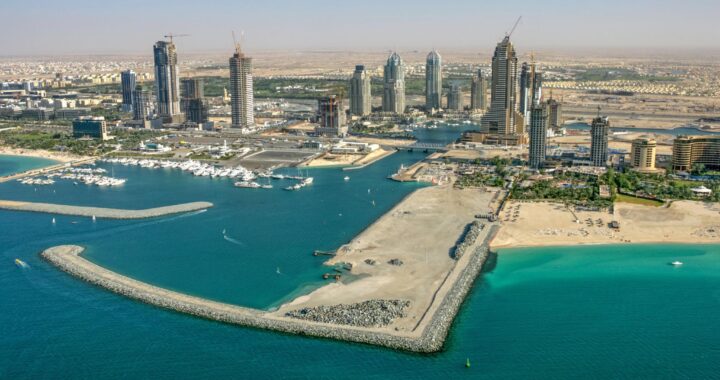
One of the clearest indicators of institutional confidence in waterfront infrastructure is the scale of marina investment currently underway in the Gulf region. Qatar, the UAE, and Saudi Arabia are collectively committing billions to marina and waterfront development as part of broader tourism and diversification strategies. Qatar’s Lusail Marina district, the Abu Dhabi marina expansion under the Tourism Development & Investment Company, and the Saudi Red Sea Project’s marina components all represent sovereign and institutional capital making very large bets on the sector’s long-term trajectory.
What makes this signal interesting is not simply the scale, but the sophistication of the strategic framing. These are not opportunistic developments. They are infrastructure-first investments, premised on the understanding that waterfront infrastructure creates durable economic ecosystems rather than single-use amenities. The Gulf investors are, in a sense, acting on the same logic that explains why the best Mediterranean marina berths have waiting lists of multiple years: the asset class has structural characteristics that most comparable tourism real estate does not.
The management gap as the real opportunity
For anyone operating in or around the marina sector, the interesting question is not whether waterfront infrastructure retains value — it clearly does, and will. The interesting question is where the value is being left uncaptured, and by whom it will eventually be extracted.
The operational sophistication gap between the best-run marina portfolios globally and the average Mediterranean marina operator is significant. Most Mediterranean marinas are single-site operations, family-owned or concessioned to local operators, running on legacy processes, with limited data, limited distribution, and limited ability to monetise anything beyond the berth itself. They are asset-rich and operationally constrained.
This creates a structural opportunity that has not yet been fully exploited at scale in the Mediterranean. The marina that adds management sophistication — yield management, digital distribution, ecosystem revenue capture, guest experience infrastructure — does not simply improve its own economics. It redefines what a marina can be within its local competitive context. In markets where most operators are still booking by phone, the operator with a working digital infrastructure has a disproportionate advantage in attracting the transient charter traffic that increasingly plans its routes around facility quality and booking convenience.
The marina that adds management sophistication does not simply improve its own economics. It redefines what a marina can be within its local competitive context.
What the asset class looks like from here
The structural case for waterfront infrastructure as a strategic asset has rarely been stronger. The supply is constrained by geography and regulation. The demand is growing, fuelled by the expansion of the yacht charter market, the growth of sailing as a leisure activity across European demographics, and the increasing appetite for experiential travel with genuine access to the sea. The digital infrastructure to extract value from this asset class is, in most of the Mediterranean, still early-stage.
The comparison with other tourism asset classes is illuminating. Hotels are relatively replicable — a new property can be built in most demand centres with sufficient capital. Restaurants come and go. But a berth at a well-positioned marina in a protected bay on the Adriatic, Aegean, or Ligurian coast is a genuinely scarce, geographically anchored asset with a defensible competitive position built into its physical location.
The operators and investors who understand this — who see marinas not as amenities to be operated at steady state but as infrastructure to be managed with the sophistication the asset class deserves — are positioned for a significant period of advantage as the Mediterranean nautical economy digitalises, consolidates, and grows. The window for that positioning is narrowing. The asset class is being noticed.
Frequently Asked Questions
Why are marinas considered strategic assets?
Marinas occupy geographically constrained positions — they can only exist where natural conditions permit — and are protected by regulatory concession systems that create high barriers to new competition. Combined with structural demand growth in nautical tourism, this makes them durable assets with compounding value in premium coastal locations.
How do marinas generate revenue beyond berth fees?
Well-managed marinas capture ancillary revenue from fuel and provisioning services, maintenance and repair operations, equipment retail, food and beverage concessions, and digital platform commissions on bookings and local services. In the most sophisticated operations globally, ancillary revenue can match or exceed core berth income.
What is the current state of digital transformation in Mediterranean marinas?
As of 2023–2024, the majority of Mediterranean marina berth bookings were still made by phone or VHF radio, with limited online availability and pricing transparency. The sector is significantly behind hospitality in digital capability, creating a clear opportunity for operators who invest in booking infrastructure, channel distribution, and guest-facing digital services.
Why is Gulf investment in marinas relevant to the Mediterranean market?
Large-scale marina investment by sovereign funds and institutional capital in Qatar, the UAE, and Saudi Arabia signals institutional confidence in waterfront infrastructure as a long-term asset class. It also creates a future competitive landscape where Mediterranean marinas may face better-capitalised operators in adjacent markets — raising the urgency of operational improvement.
What makes Mediterranean marina berths scarce compared to other tourism assets?
Geographic constraints (natural shelter, depth, tidal range) limit where marinas can be built. Environmental regulations and development moratoriums in most Mediterranean coastal zones have effectively frozen the addition of new large-scale capacity in premium locations for decades. This supply constraint, against growing demand, produces the structural scarcity that underpins asset value.
What is the ACI marina network?
The Adriatic Croatia International Club (ACI) is the largest marina network on the Croatian Adriatic, operating 22 marinas across the coast. It holds long-standing concessions granted by Croatian maritime authorities and represents the dominant organised infrastructure provider in one of the Mediterranean’s most active charter markets.
How does the marina sector compare to hotel investment as an asset class?
Hotels are relatively replicable — new supply can enter most demand centres with sufficient capital. Marina berths in premium locations cannot be replicated. The combination of geographic scarcity, regulatory moat, and ecosystem anchor effect gives marinas structural characteristics that most comparable tourism real estate lacks, though operational management quality varies significantly across the sector.