Corporate Retreats Are Quietly Moving From Conference Rooms to Charter Boats


Conference rooms are out. Charter boats are in. Here’s why corporate retreat planners are booking water activities instead.
Corporate retreat water activities is a search that’s grown quietly but consistently as retreat planners abandon the standard hotel conference room model for something water-based. The reasoning behind the shift is more practical than it might first appear.
Why the Traditional Corporate Retreat Model Is Breaking Down
The conference-room-plus-team-building-exercise format has a well-documented engagement problem. According to research referenced by the Harvard Business Review on offsite effectiveness, retreats that rely heavily on passive seated sessions show significantly lower retention and team cohesion impact than retreats built around shared physical activity and novel environments.
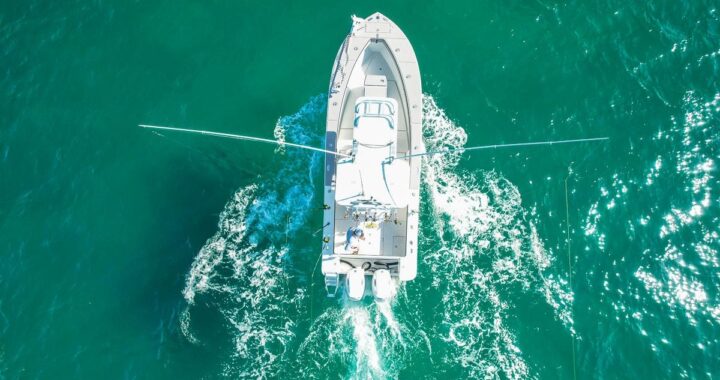
A day on the water solves both problems simultaneously: it’s a genuinely novel environment most colleagues haven’t shared before, and it requires enough light physical coordination — securing gear, balance, working together on a confined vessel — to create the kind of shared experience that team-building exercises try to manufacture artificially.
What a Corporate Charter Day Actually Looks Like
Large group beach vacation rental and water activities for large groups searches reveal the practical planning pattern: splitting a larger team into several mid-size boats rather than one oversized vessel consistently produces better outcomes, both logistically and for actual team interaction. A 40-person retreat split across five eight-person boats creates far more meaningful small-group interaction than one large vessel where most of the group never directly engages.
A typical corporate charter day includes a morning briefing, two to three boats departing with mixed-department groupings deliberately assigned, a shared lunch stop at a single location, and an afternoon return — structuring informal team interaction without it feeling like an imposed exercise.
Why This Is More Cost-Effective Than It Sounds
Comparing corporate retreat water activities pricing against a standard hotel conference package, the venue cost difference is frequently smaller than planners expect, while the engagement outcome — based on internal HR and retreat planning industry feedback — is consistently rated higher. A half-day or full-day charter often costs comparably to a single conference room day rate plus catering, once the team-building activity line item is factored out of the traditional model.
How to Actually Book This
The administrative bottleneck that has historically limited corporate water retreats isn’t cost — it’s coordination. Booking multiple boats, confirming capacity, verifying safety equipment for a large group, and managing logistics for dozens of people has traditionally required significant planner time spent calling individual operators.
This is precisely the coordination problem platforms like Marina Smart are positioned to solve for corporate planners — surfacing verified operators with confirmed capacity for large groups in one place, rather than requiring a retreat planner to call five different boat companies and manually track availability across all of them.
What to Confirm Before Booking a Corporate Water Retreat
Verify safety equipment and capacity certifications for every vessel involved, confirm a clear weather contingency plan, and build in a land-based backup activity for the small percentage of attendees who may prefer not to participate in water activities for any reason.
The Bigger Shift This Represents
Corporate retreat water activities reflect a broader move away from retreat formats built around passive content delivery and toward formats built around genuine shared experience. The conference room isn’t disappearing entirely — but for companies serious about retreat ROI, it’s increasingly the warm-up act rather than the main event.
FAQ: Corporate Retreats and Water Activities
Are corporate water retreats more expensive than traditional conference retreats?
Not necessarily. Once team-building activity costs are factored out of the traditional conference model, charter boat day pricing is frequently comparable, while reported engagement outcomes tend to be higher.
How should a large corporate group be split for a boat retreat?
Splitting larger groups across several mid-size boats with deliberately mixed departmental groupings generally produces better team interaction than one large vessel where most attendees don’t directly engage with each other.
What should be confirmed before booking a corporate charter retreat?
Safety equipment and capacity certifications for each vessel, a clear weather contingency plan, and an alternative land-based activity for attendees who prefer not to participate in water activities.
Why are companies choosing boat days over traditional team-building exercises?
Water-based activities create genuinely novel shared experiences with built-in light physical coordination, which research on offsite effectiveness associates with stronger team cohesion than passive, seated team-building formats.