The Country That Is Building 10 New Marinas From Scratch — And What It Tells Us About the Future of the Sea

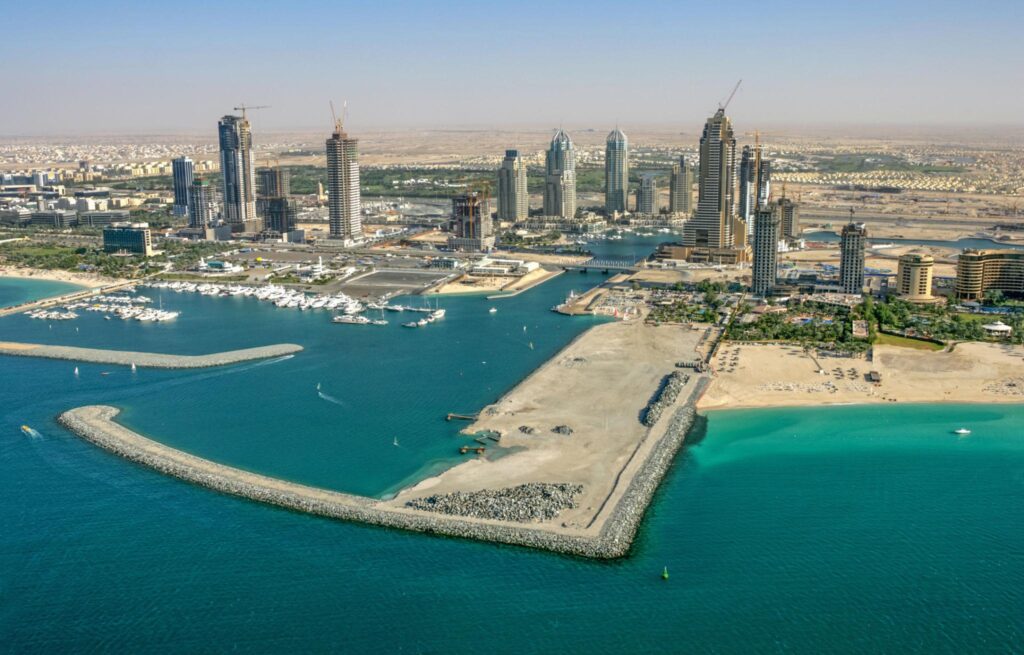
When a government commits to building ten new marinas simultaneously, it is not making a tourism decision. It is making an infrastructure bet — a statement about where economic value will concentrate in the coming decades and a deliberate move to be positioned there before the competition arrives.
Saudi Arabia is making that bet right now. And the scale of what is being built along the Red Sea coast is unlike anything happening elsewhere in the maritime world.
What Is Actually Being Built
The NEOM project alone — the Saudi mega-development on the Red Sea coast — includes multiple marina facilities as core infrastructure, not afterthoughts. The Red Sea Global development authority is overseeing marina construction at multiple sites along a coastline that, five years ago, had almost no recreational nautical infrastructure at all.
Qatar, where Marina Smart is registered and operating, has expanded its marina capacity significantly — Old Doha Port recorded over 7 million visitors in 2025, and the Pearl Island and Lusail marina developments represent billions in waterfront infrastructure investment. The UAE has been building premium marina facilities for two decades and continues to expand.
The combined marina development pipeline across the GCC represents the largest concentration of new nautical infrastructure investment anywhere in the world. Nothing comparable is happening in Europe, where coastal zoning makes new marina development extraordinarily difficult, or in North America, where existing infrastructure largely meets current demand.
Why This Is Happening Now
Three forces are converging in the Gulf region simultaneously.
The first is economic diversification. Saudi Vision 2030, Qatar National Vision 2030, and equivalent frameworks in the UAE and Bahrain all identify tourism — including nautical tourism — as a strategic alternative to hydrocarbon dependence. Marina infrastructure is both a tourism asset and a signal of economic sophistication.
The second is demographic demand. GCC countries have young, affluent populations with growing appetite for experiential leisure. The yacht charter market in the Gulf Cooperation Council was valued at approximately $579 million in 2025 according to industry estimates, with projected growth of 7.6% annually through 2035. That demand needs somewhere to go.
The third is competitive positioning. The Gulf states are watching each other build. First-mover advantage in premium nautical infrastructure is real and durable — marinas in established locations attract repeat visitors, create operational ecosystems, and generate network effects that late entrants cannot easily replicate.
What the Mediterranean Can Learn
Europe’s established charter destinations — Croatia, Greece, Italy, Spain — hold significant natural advantages that no amount of Gulf construction can replicate. The Adriatic’s island geography, the Aegean’s sailing conditions, the cultural depth of Italian coastal towns: these are not reproducible assets.
But the Mediterranean has structural weaknesses that the Gulf is not inheriting. As we explored in The Quiet Billionaires: Why Marina Owners Are Sitting on Assets They Don’t Know How to Monetize, Mediterranean marina economics remain dominated by berthing fees, with the ancillary economy largely uncaptured. And as we examined in The Berth Is the Cheapest Thing the Marina Sells, the digital infrastructure to change this is only now beginning to arrive.
The Gulf is building marinas with digital infrastructure from day one. Booking systems, service integration, data analytics — these are being designed into the facilities, not retrofitted into fifty-year-old harbour masters’ offices.
The Implication for the Global Maritime Economy
What Saudi Arabia, Qatar, and the UAE are building is not a regional amenity. It is a global nautical tourism alternative — one that will compete for the same high-value charterers who currently default to the Mediterranean because no serious alternative existed.
The maritime economy is global. The infrastructure being built on the Red Sea and the Arabian Gulf will attract the same European and American charterers who currently fill Croatian and Greek marinas in July. Not all of them. But enough to matter.
The response from Mediterranean operators is not to panic. It is to do what the Gulf is doing from scratch — build the digital layer on top of irreplaceable natural assets, capture the ancillary economy, and create the kind of integrated nautical experience that justifies the premium the Mediterranean commands.
The sea has always been the world’s most contested commercial corridor. That competition is intensifying. The operators who understand what is being built right now — on both shores — will be better positioned for what comes next.
FAQ: Gulf Marina Development and Blue Economy Investment
How many new marinas is Saudi Arabia building?
Saudi Arabia’s Red Sea development program includes multiple marina facilities across several major projects, including NEOM, Red Sea Global developments, and the Diriyah coastal initiative. The total number of new berths being created represents one of the largest single-country marina development programs in maritime history.
What is the size of the GCC yacht charter market?
The GCC yacht charter market was valued at approximately $579 million in 2025, with projected compound annual growth of 7.6% through 2035, driven by rising luxury tourism demand, infrastructure investment, and growing affluent local populations seeking premium maritime experiences.
How does Gulf marina infrastructure compare to Mediterranean marinas?
Gulf marinas being built now benefit from modern design, digital infrastructure integration, and purpose-built facilities. Mediterranean marinas have the advantage of established location, cultural context, and natural sailing geography that cannot be replicated. The competitive relationship is complementary rather than direct — different markets with overlapping high-end clientele.
What is Saudi Vision 2030’s approach to maritime tourism?
Saudi Vision 2030 identifies tourism as a core economic diversification pillar, with maritime tourism specifically targeted through Red Sea coastal development. The Red Sea Global authority is responsible for developing sustainable luxury tourism infrastructure along a previously undeveloped coastline, including marina facilities designed to international standards.
Why is the Mediterranean still dominant in global nautical tourism?
The Mediterranean’s combination of island geography, established sailing conditions, cultural depth, culinary heritage, and existing infrastructure represents an accumulated advantage built over centuries that cannot be rapidly replicated. New marina construction can match facilities but cannot replicate the Adriatic’s islands, the Aegean’s sailing winds, or the Mediterranean’s historical context.
What does Gulf marina development mean for charter prices in the Mediterranean?
Increased global supply of premium nautical infrastructure may exert some competitive pressure on Mediterranean charter pricing over the medium term, particularly for charterers primarily motivated by luxury amenities rather than sailing conditions or cultural experience. The Mediterranean’s natural and cultural assets provide structural pricing support that pure facility competition cannot undercut.