Sailing Bay of Kotor Montenegro — What Sailors Need to Know

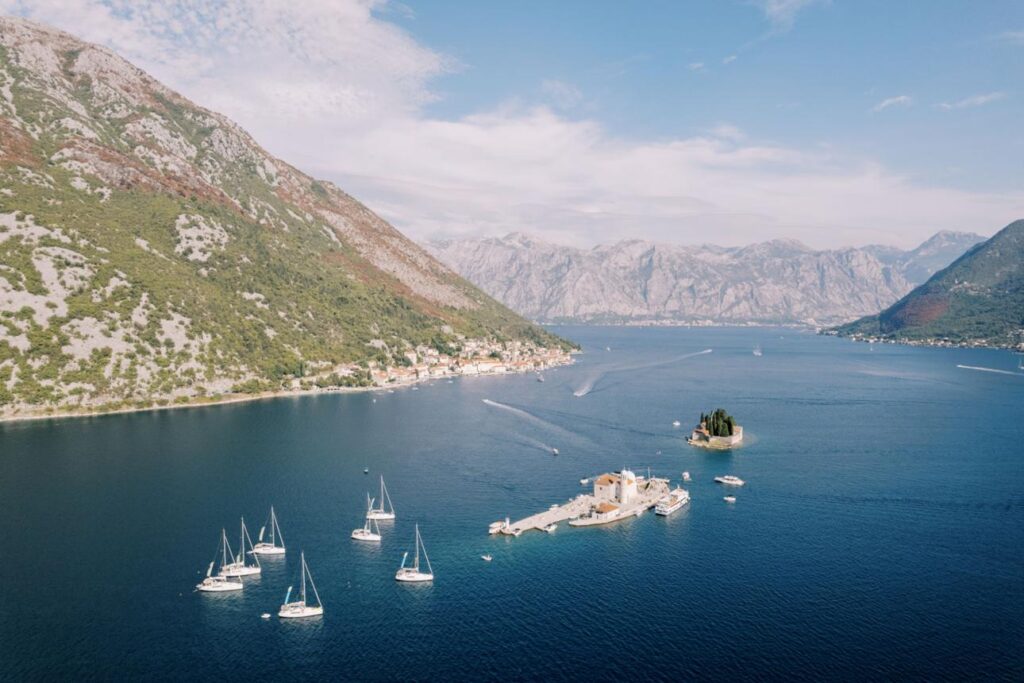
The Bay of Kotor is technically part of the Adriatic. Geographically, it behaves like nothing else in the region.
Four interconnected inlets carving 28 kilometres into the Montenegrin mountains create a body of water that is simultaneously sheltered from open-sea conditions and capable of producing its own localised weather systems that have surprised sailors who underestimated it. The result is a sailing destination that is neither beginner-simple nor expert-only — and one that rewards careful preparation in ways that few other Adriatic anchorages do.
What Makes the Bay of Kotor Different From Standard Adriatic Sailing
Most Adriatic sailing happens in relatively open water between islands, where wind direction and swell follow predictable seasonal patterns. The Bay of Kotor is enclosed. Wind funnels through mountain gaps rather than blowing consistently across open water, producing the Neverin — a sudden, localised squall that can arrive with minimal warning and reach significant speeds within the bay’s inner sections.
The Montenegrin Hydrometeorological Institute documents Neverin events specifically because they behave differently from the Bora or Jugo systems that define the wider Adriatic weather vocabulary. Sailors familiar with Croatian waters sometimes discover this the hard way.
This is not a reason to avoid the bay. It is a reason to sail it differently — checking local forecasts rather than regional ones, building more buffer time into anchorage plans, and seeking local knowledge from the skippers and boat operators who work these waters year-round. Platforms like Marina Smart are building exactly this kind of verified local expertise into the crew network — making it possible to connect with captains who know the bay’s specific microclimates before you arrive, not after.
The Anchorages That Define a Bay of Kotor Charter
Perast — A baroque village of eleven churches on a peninsula, with two islands visible from the anchorage. Our Lady of the Rocks, one of those islands, was built by sailors who placed a stone each time they passed safely. It is one of the more quietly extraordinary places accessible by boat in the entire Adriatic.
Lepetane — The narrowest point of the bay, where a car ferry crosses what feels like a river rather than a sea. Anchoring here and watching the ferry traffic while eating from a bag of local cheese bought at the village above is a particular pleasure that requires no planning beyond arriving.
Tivat — Porto Montenegro, the marina development that turned a former Yugoslav naval base into one of the most technically capable superyacht facilities in the Adriatic, according to Porto Montenegro’s official documentation. For charter boats, it’s a practical base. For anyone interested in watching how rapidly marina infrastructure transforms coastal economies, it’s also a case study worth observing firsthand.
What the Bay Teaches You About Enclosed Water Sailing
Sailing in enclosed water requires a specific recalibration of instincts developed in open sea. Distance from shore is shorter. Anchoring depths vary more dramatically than charts sometimes suggest. The visual scale is compressed in a way that makes seamanship feel more precise and less forgiving simultaneously.
Sailors who complete a full bay circuit — entering through the Verige straits, working north to Perast, continuing to Kotor itself, and returning — consistently describe it as one of the most concentrated sailing experiences in the Adriatic: four days that feel like ten, in the best possible sense.
A Note on the Town of Kotor Itself
Kotor’s medieval old town, surrounded by walls that climb 1,355 steps to a fortress above the city, is a UNESCO World Heritage Site. Arriving by boat and tying up in the town harbour means walking directly from the dock into those walls, which is a different experience from arriving by tourist bus and paying for parking. The boat earns its keep as infrastructure, not just as transport.
FAQ: Sailing and Boat Charter in Montenegro’s Bay of Kotor
Is the Bay of Kotor suitable for sailing?
Yes. The Bay of Kotor offers protected sailing conditions with dramatic mountain scenery, though sailors should be aware of localised wind systems including the Neverin squall, which differs from standard Adriatic weather patterns and requires local forecast monitoring.
What is the best time of year to sail the Bay of Kotor?
May, June, and September offer the best combination of favourable conditions and manageable tourist density. July and August are busiest, particularly in Kotor Town, though the bay’s anchorages remain more spacious than comparable Croatian destinations.
Can you rent a boat in Montenegro for a Bay of Kotor charter?
Yes. Boat rental and yacht charter options are available in Tivat and Kotor, ranging from small motorboat rentals to crewed sailing charters. The range of available vessels has grown significantly with the development of Porto Montenegro.
Do I need a sailing licence to charter a boat in Montenegro?
Yes, standard international sailing qualifications (ICC or equivalent) are required for bareboat charter in Montenegrin waters. Crewed charter options are available for those without a sailing licence.
What is Porto Montenegro?
Porto Montenegro is a superyacht marina and resort development in Tivat, built on the site of a former Yugoslav naval base. It is now one of the most modern marina facilities in the Adriatic and serves as the primary berthing hub for larger vessels visiting the Bay of Kotor.