The Mediterranean Charter Industry Is Still Selling Like It’s 2005. That’s About to Change.

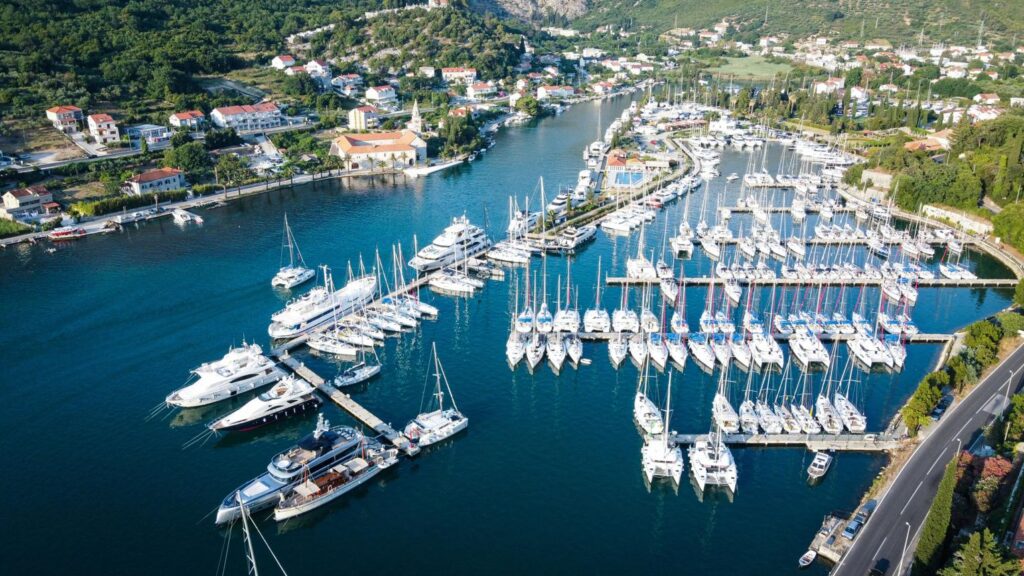
The Mediterranean charter market generates billions of euros in annual economic activity across Croatia, Greece, Italy, Spain, France, Turkey, and Montenegro. It has been doing so for decades — a mature, established industry with recognized trade associations, published safety standards, and a well-documented seasonal rhythm.
It also, in significant parts, still runs on phone calls, personal relationships, and the assumption that the traveler will either already know an operator or be willing to stand on a dock and negotiate.
This is not a criticism of the people in the industry. It is an observation about the infrastructure — or the lack of it — and about why that infrastructure is finally, visibly changing.
What the Mediterranean Charter Market Still Gets Wrong
The charter industry has a discoverability problem that it has largely chosen not to acknowledge. A traveler arriving in Split, Dubrovnik, Athens, or Nice who wants to rent a boat, hire a skipper, or book a day charter faces a surprisingly fragmented landscape: a handful of aggregator platforms that cover the larger, more established operators, and a long tail of smaller, often excellent operators who have no meaningful online presence.
This is the same structural problem we identified in the US market in Why Americans Are the World’s Most Reluctant Boat Renters — the demand exists, the supply exists, and the infrastructure to connect them efficiently doesn’t. In the Mediterranean, the problem is compounded by a market that has run on relationship-based sales for long enough that many operators have never needed to think about digital discovery.
According to the European Boating Industry Association, digital booking adoption in the Mediterranean charter sector lags significantly behind comparable accommodation and transportation categories — a gap that represents both a frustration for travelers and a revenue ceiling for operators who rely on their existing network to stay booked.

Why the 2025-2026 Period Is Different
Two things are converging that make this moment different from previous years.
The first is generational. The travelers booking Mediterranean charters now are increasingly the same demographic that normalized Airbnb, Uber, and digital-first accommodation booking — people who find the phone-call-and-negotiate model not just inconvenient but actively suspicious. Opacity in pricing is no longer a neutral fact of the market. It’s a competitive disadvantage for operators who rely on it.
The second is infrastructure. Platform-quality booking tools for the charter market — with verified operators, transparent pricing, review systems, and direct communication — are arriving now in a form that is actually usable for small and medium operators, not just for the large established charter companies that could afford custom technology.
As we covered in The Berth Is the Cheapest Thing the Marina Sells, the marina and charter sector has been generating enormous economic activity while capturing a fraction of its potential revenue — because the digital layer that would allow operators to reach new customers, offer ancillary services, and build review-based trust has simply not been available at accessible cost.
What This Means for Mediterranean Charter Operators
For operators in Croatia, Greece, the south of France, and the Adriatic more broadly, the window for first-mover advantage in digital booking is open right now — and it won’t be open indefinitely.
The operators who establish digital presence first — verified profiles, accumulated reviews, direct booking capability — will be better positioned when the mainstream traveler fully normalizes advance online booking for charter experiences the way they’ve already normalized it for accommodation.
This is the same dynamic that created Airbnb’s most successful early hosts: people who listed in 2011 when the platform was small, built review histories while other property owners waited to see how it played out, and found themselves at the top of search results when mainstream adoption arrived.
Where Marina Boat App Fits — Honestly
Marina Boat App is a young platform. We’re not going to pretend we have the traffic numbers of established players. We launched weeks ago. We’re building.
What we are doing is onboarding Mediterranean charter operators — in Croatia, Montenegro, Greece, Italy, France, Spain — for free during our founding partner phase. No listing fee. No commission. The goal is straightforward: build a supply inventory of verified operators with real pricing and real reviews before we activate the marketing that brings the traveler demand.
For a Mediterranean charter operator who has spent years building a reputation in their local market but has limited digital presence outside it, a free listing on a platform explicitly targeting both European and Gulf region travelers — we’re registered at the Qatar Financial Centre, and the Gulf travel market is a primary focus — represents a straightforward opportunity with zero downside.
The charter industry runs on trust. We’re starting by earning it.
FAQ: Mediterranean Charter Industry in 2026
Why is the Mediterranean charter market still hard to navigate for travelers?
The Mediterranean charter market has historically relied on relationship-based sales and established operators, leaving a long tail of smaller, high-quality operators without meaningful digital presence. This fragmentation makes discovery difficult for travelers without existing connections in the industry.
Is digital booking becoming more common for Mediterranean yacht charters?
Yes, and the shift is accelerating. Travelers in the 25-45 demographic — the core charter market — have fully normalized digital booking for accommodation and transport and increasingly expect the same for charter experiences.
What is changing in the Mediterranean charter market in 2026?
Digital booking platforms designed specifically for the charter industry are reaching the quality and usability level needed for broad operator adoption. Combined with generational shifts in traveler expectations, this is driving faster digital adoption than the market has seen in previous years.
How can small Mediterranean charter operators increase their bookings?
Establishing a verified digital presence on a platform that aggregates charter options — with transparent pricing, real reviews, and direct booking capability — provides discoverability to travelers who would otherwise never find small operators, regardless of those operators’ reputation within their local market.
Why is the Gulf region important for Mediterranean charter operators?
Gulf region travelers — particularly from Qatar, UAE, and Saudi Arabia — represent one of the highest-spending demographics in Mediterranean tourism. As marina infrastructure in the Gulf develops, the cross-market travel flow between Gulf residents visiting the Mediterranean and Mediterranean operators reaching Gulf travelers is increasing.