MARINA NO. 14 · MARITIME JOURNALISM · THE BLUE ECONOMY
Italian yards account for 52 percent of global superyachts. Italy is also the world’s third-largest charter destination, and its charter companies are growing. The industry’s own asks are not about demand. They are about tax treatment and berths.
In short: Italian yards build 52 percent of the world’s superyachts, and Italy is the third-largest charter destination. Its charter industry is growing, and its stated asks are practical: more yacht-ready berths and a VAT rate aligned with tourism.
The Italian nautical industry presented its figures in Milan in March, and the headline numbers are the kind a finance minister likes to repeat. The sector generates more than €13 billion in added value and employs almost 168,000 people, according to Confindustria Nautica and its partner foundations, and Italian yards account for 52 percent of global superyachts.
The less quoted numbers sit lower in the same report, and they are about the part of the industry that rents boats rather than builds them.
How is Italian yacht charter doing?
Well, with an asterisk. Of the charter and rental companies surveyed, 57 percent reported turnover growth in 2025, while 29 percent reported a contraction, limited to 10 percent. Looking ahead, 64 percent expect further growth in the current nautical year. Among companies in nautical tourism, ports and services, 75 percent expect turnover to grow.
MYBA figures reported by Superyacht24 put Italy up 4 percent in 2025 and make it the third-largest charter destination in the world, with 39 percent of bookings in the Western Mediterranean. Spain’s Balearics, which we cover in the next story in this issue, are the obvious rival for those bookings.
Who actually charters in Italy?
Not necessarily who you would guess. Data from Spartivento Group, a large Italian charter company, reported by Quality Travel, showed foreign tourists making up 67 percent of its clients, led by Germans at 18 percent and Poles at 13 percent. That is one operator’s customer base, not a national census. Americans do not appear among the leading nationalities it names, which is itself an opening for anyone selling to them.
What is holding Italian charter back?
Two things come up repeatedly, and both are structural. The first is infrastructure. A Deloitte study published with Altagamma, summarized by Marine Industry News, found that just 30 percent of berths in Italy are in marinas equipped to receive yachts and superyachts with appropriate technical and tourism facilities. The second is tax. Among its recommendations is to bring the VAT rate on yacht charter into line with the rate for the tourism and hotel sector, which implies it is not aligned today.
Italy has spent decades persuading the world to buy its boats. It is now asking its own tax code to accept that renting one is a holiday.
Italian trade press has also reported that a law approved this spring, known as the Sea Enhancement Law, introduces simplifications for yacht owners and yards and aligns Italy more closely with European competitors. Confindustria Nautica’s own reading is that regulatory simplification strengthens the effect that charter and rental have on tourism, “even beyond coastal areas”.
What does this mean?
It is rare for an industry to be this strong and this specific about what it wants. Italy does not need more demand, more shipyards or better weather. It needs yacht-ready berths, a tax treatment that treats a charter week as tourism, and paperwork that matches its neighbors’. Those are policy questions with answers, which is why charter operators in Italy are cautiously optimistic.
For travelers, the practical consequence is that Italian charter is a market to book carefully: confirm the departure marina, ask what is included, and talk to the captain before you pay. Full disclosure: this magazine is published by Marina Boat App, a booking app for boats, crew and berths that is new and still in its founding-partner phase.
Every country on the Mediterranean makes boats look desirable. Only a few have worked out how to make renting one look ordinary.
Frequently asked questions
How big is the Italian boating industry?
Confindustria Nautica reports that the sector generates more than €13 billion in added value and employs almost 168,000 people, based on 2024 data in the Geographies of the Italian Boating Supply Chain 2026 report. Italian yards account for 52 percent of global superyachts, and the industry reported €4 billion in exports.
Is Italy a major yacht charter destination?
Yes. MYBA figures reported by Superyacht24 put Italy as the third-largest charter destination in the world, with bookings up 4 percent in 2025 and 39 percent of bookings in the Western Mediterranean. Confindustria Nautica says 57 percent of surveyed charter and rental companies reported turnover growth in 2025.
What is limiting yacht charter growth in Italy?
A Deloitte study with Altagamma found only 30 percent of Italian berths are in marinas equipped for yachts and superyachts. It also recommended bringing the VAT rate on charter into line with tourism and hotels, and updating Italian flag registration procedures to compete with other flags.
Who charters boats in Italy?
Foreign tourists dominate at one large operator. Spartivento Group reports that foreign guests make up 67 percent of its clients, led by Germans at 18 percent and Poles at 13 percent. This reflects one company’s clientele rather than the whole market.
Can I message a captain before booking an Italian charter?
Yes, on Marina Boat App, where you can ask the host about the departure marina, route and what is included before you commit.
How we reported this
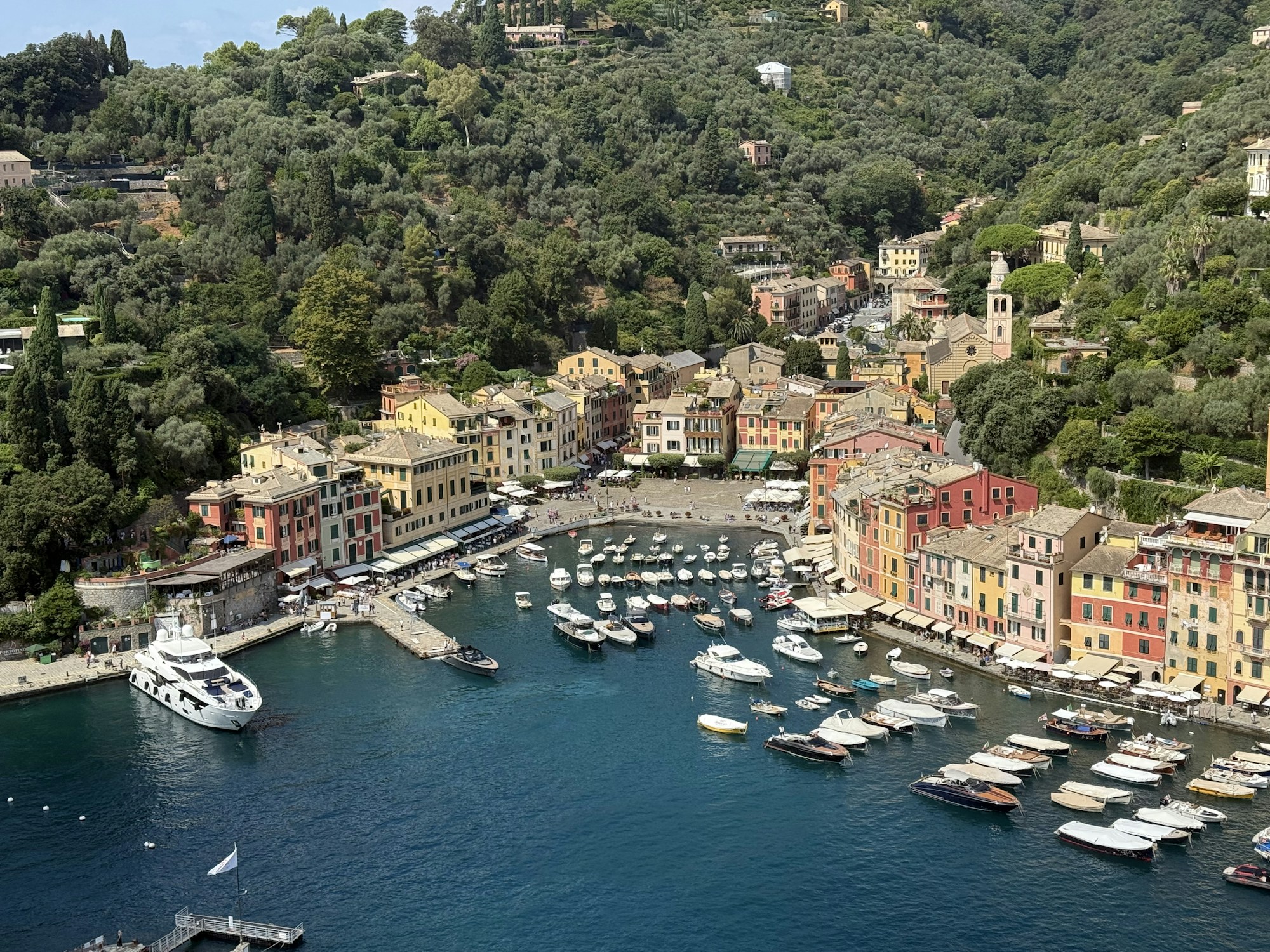
Figures are from Confindustria Nautica (via Pressmare and Salone Nautico Venezia reports), Superyacht24, Marine Industry News and Quality Travel, linked above. The Deloitte/Altagamma study is cited as summarized by Marine Industry News; its publication date is not given in the summary we read. Corrections: support@marinasmart.app. Cover photo: Portofino, Liguria, Italy. Photo: Nella N / Unsplash.