MARINA NO. 14 · MARITIME JOURNALISM · THE BLUE ECONOMY
New powerboat sales fell in 2025. Four of every five boats that changed hands were already used. The data says Americans have not stopped going out on the water. They have stopped wanting to carry the whole cost of getting there.
In short: New US powerboat sales fell an estimated 8 to 10 percent in 2025, yet 79.7 percent of the boats sold were pre-owned and recreational marine spending still reached $54 billion. Americans have not stopped going out on the water. They have stopped wanting to carry the whole cost of getting there.
Picture the guy who bought a 22-foot center console in the spring of 2021, when dealers were selling anything that floated and the deposit felt like a formality. He still has it. He still likes it. And every October, when the cover goes on, he sets slip, insurance, fuel and storage against the number of times the engine actually turned over, and he does not love the result.
He is not an outlier. He is the median customer of an industry that has quietly changed what it sells.
The headline was a decline. The National Marine Manufacturers Association (NMMA) estimated that new powerboat retail unit sales, personal watercraft included, fell 8 to 10 percent in 2025, to between 215,000 and 225,000 boats. Its sales-trends report put the count at 220,397 new powerboats, led by fishing boats at 77,434 units and watersports boats, including PWC, at 71,461. Total recreational marine retail spending still reached $54 billion.
The number that reorders the story sits one line lower. New boats were 20.3 percent of all boats sold in 2025. Pre-owned boats were 79.7 percent.
The part of the market that gets the headlines, the dealer lot and the January boat show, is one boat in five.
NMMA estimates that boat shows alone, concentrated between January and March, account for 30 to 60 percent of annual retail sales. The industry's shop window is narrow, seasonal and brightly lit. The Fort Lauderdale show we covered in No. 13 is the extreme version of it. Most of the market happens in driveways, classified listings and brokers' back offices.
The installed base is enormous. NMMA's registration report counts 11.8 million registered and documented boats in 2024, plus an estimated 3.6 million that are neither registered nor documented. That is roughly 15.4 million vessels.
What nobody publishes is how often those boats leave the dock. I looked for a clean national figure and did not find one I would stand behind. The numbers that circulate come from surveys of different years and different definitions, so I am not repeating them. The gap is itself a finding: an industry that tracks every unit sold has no routine measure of how much of its capital sits idle.
Sales in 2025 concentrated in entry-level categories: personal watercraft, aluminium fishing boats and smaller boats that can be trailered to a local ramp, according to NMMA's market outlook. Chief executive Frank Hugelmeyer described a "wait-and-see mindset" among some consumers after an uncertain economic year. The same outlook called the market stable, supported by steady boating activity and by the increased use of shared-access models: boat clubs, peer-to-peer rentals and charter.
Put those facts side by side and something unexpected comes into view. The slump in new boats is not a slump in the desire to be on the water. NMMA itself describes activity as steady. It is a slump in the willingness to carry the full fixed cost of a boat in order to get there. That is our reading of the data, not NMMA's. But the association's own list of what is holding the market up points the same way.
For the owner of that 22-footer, the useful number is not the purchase price. It is the number of hours the boat earns or enjoys per year. Shared access is the first serious answer the market has produced to that arithmetic. We looked at the fee side of it in The Middleman Tax.
For the guest, the implication is simpler. The supply is already out there: a fleet in the millions, most of it second-hand, most of it unused on most days. The missing piece has been a way to find it and talk to the person who owns it.
Full disclosure: this magazine is published by Marina Boat App, a booking app for boats, water taxis, fishing and diving trips, crew and berths. It is built on exactly that premise. Operators pay zero commission and guests message the captain directly. The platform is new and in its founding-partner phase, and we would rather say so than imply otherwise.
The boating industry has always counted the boats it sells. The more interesting number is the one it has never counted: the days a boat stays tied up.
MARINA NO. 14 · MARITIME JOURNALISM · PERSPECTIVES
Nobody agrees on how many yachts China has. Published counts for 2020 run from 38,100 to 100,000, depending on who is counting and what counts as a yacht. The larger puzzle is why a country with that much new wealth still has so few people on the water.
In short: Nobody agrees how many yachts China has: published counts for 2020 run from 38,100 to 100,000. Industry commentators point to regulation and liability, not wealth, as the brake on boating, and that makes crewed charter the structure most likely to scale.
Ask three sources how many yachts China had in 2020 and you will collect at least two answers. The US International Trade Administration's market intelligence page says the number reached 100,000, with a market value of $8.6 billion. A forecast attributed by China Briefing to the China Transport Association's Cruise Yacht Branch starts from 38,100 yachts in 2020 and projects 163,510 by 2025. A decade earlier, wire reports were still quoting state media for roughly 1,300 private yachts.
That spread is not a rounding error. Our reading is that it reflects a definitions problem: what one counter calls a yacht, another calls a boat. The honest conclusion is that the denominator of the Chinese yacht market is unknown, and that anyone quoting a precise figure is quoting a choice.
In a handful of coastal hubs. A column in Yacht Style lists them from north to south: Tianjin, Dalian, Qingdao, Shanghai, Ningbo, Xiamen, Shenzhen, Guangzhou, Zhuhai and Hainan. Recreational boating is young. The same column dates its real start to the first China Cup in Shenzhen in 2007 and the Olympic sailing at Qingdao in 2008.
Hainan is the outlier. The South China Morning Post reported 1,600 registered yachts there at the end of 2021, up 29 percent on 2020, and described the province as having the most yacht wharves in the country. Mordor Intelligence attributes part of that to the Hainan free trade port, and notes that the tax gap between Hainan and the mainland concentrates ownership and charter activity inside the port rather than spreading it nationwide.
The usual explanation is that Chinese demand has not yet caught up with Chinese wealth. A sharper one comes from a SuperyachtNews opinion column, which argues that the "fundamental problem has been the regulatory and operating environment surrounding recreational boating". Its logic is administrative rather than economic: where officials can be held accountable for serious accidents, more pleasure boats means more perceived risk for the people who regulate them.
Money was never the scarce thing. A signature was.
If every additional boat is an additional liability for someone in an office, the rational response of the office is to make owning one harder.
This is the connection that is easy to miss. Charter moves liability. In a crewed charter the licensed operator carries the vessel, the crew and the paperwork, and the guest carries none of it. For a market with a thin base of experienced boaters, that is not a compromise. It may be the only structure that scales.
The data points the same way. Mordor Intelligence's analysis says private ownership held 82.04 percent of the Chinese yacht market in 2024, while commercial charter use is forecast to grow at a 15.21 percent compound annual rate over 2025 to 2030. That is a forecast from a market-research firm, not an outcome, and we treat it as direction rather than fact. Brokers quoted by Jing Daily were already saying that most of their guests are newcomers to boating.
For operators outside China, the implication is practical. Travelers from mainland China, Hong Kong and Singapore are likely to arrive with little boating experience and every reason to prefer a crewed trip with a licensed captain. The product they need is clarity: who is the captain, what is included, who answers if something changes. Full disclosure: this magazine is published by Marina Boat App, which is built around that last question, with direct messaging to the captain and no commission taken from operators.
The Chinese yacht market has been described for fifteen years as a sleeping giant. The detail worth keeping is that the giant may not be asleep. It may be waiting for a form that someone is willing to sign.
MARINA NO. 14 · MARITIME JOURNALISM · NAUTICS
Singapore's yacht charters leave from two marinas that sit close together on a map and are not interchangeable. One is on an island with controlled access. The other is a city drop-off. Guests regularly choose wrongly, and the boat cannot wait.
In short: Most Singapore yacht charters leave from ONE°15 Marina Sentosa Cove or Marina at Keppel Bay. They are not interchangeable, and guests regularly go to the wrong one, so confirm the departure marina before you book.
The instruction appears on a local charter marketplace's marina guide, in the flat tone of someone who has seen it too many times: check your booking confirmation for the departure marina before you plan transport. Guests regularly turn up at the wrong one, it says, "and a yacht cannot wait indefinitely."
For a place that built its yachting infrastructure with such deliberation, it is a curiously human failure.
Three, according to CharterWorld: Raffles Marina, ONE°15 Marina Club and Marina at Keppel Bay. Raffles Marina opened in 1994, and before that Singapore had only small yacht clubs, sailing clubs and boatels. ONE°15 and Keppel Bay both started in 1997. Almost thirty years on, those three harbors still define where a yacht in Singapore can realistically begin a trip.
A charter guide on BoatCrowd describes ONE°15 at Sentosa Cove as the only private marina in Singapore with its own customs facility, and says Marina at Keppel Bay has 168 berths with capacity for superyachts up to 280 feet, the largest in the country. Those are the guide's figures, not an official count, but they fit the picture the trade press gives.
Because they are different journeys. According to the same marketplace guide, ONE°15 at 11 Cove Drive suits guests already on Sentosa and routes toward the Southern Islands. Marina at Keppel Bay is on the mainland side near HarbourFront and the central business district: a normal city drop-off, with no island access to negotiate. Both have parking on site. The guide suggests arriving fifteen minutes early, and thirty if you are bringing decorations.
The decorations matter. A Klook listing for one charter warns that breaking the marina's rules on balloons and confetti can bring a fine of $500 and confiscation of the materials, and tells guests who want them to choose a yacht departing from Keppel Bay or the Raffles-based RSYC instead. Marina rules, in other words, are part of the product. You do not learn them from a boat's photographs.
In Singapore the scarce thing is not water, boats or berths. It is the small facts about where you stand when the charter begins.
Our reading is that it is information, not infrastructure. The harbors are built, the crews are licensed, the islands are close: we described the thirty-five-minute run to the Southern Islands in No. 13. What a first-time guest lacks is a single place where the boat, the departure marina, the arrival time, the shoe rule and the monsoon calendar sit together. We covered the weather side in Monsoon Economics.
The BoatCrowd guide puts peak season at March to May, the inter-monsoon months. A local operator's guide notes that weekday charters are usually cheaper and marinas quieter, while weekends and public holidays bring surcharges and busier anchorages at Lazarus Island or Eagle Bay.
For operators, the departure marina belongs in the first line of the listing, not the confirmation email. For guests, the lesson is cheap: before you book, ask where you will board, how early to arrive, and what the marina allows. Full disclosure: this magazine is published by Marina Boat App, which lets guests message the captain directly before booking, so those questions can be settled in writing. The platform is new and in its founding-partner phase.
Singapore proved in the 1990s that it could build a harbor. The remaining work is smaller and harder: making sure the person who booked the boat is standing at the right gate.
MARINA NO. 14 · MARITIME JOURNALISM · THE BLUE ECONOMY
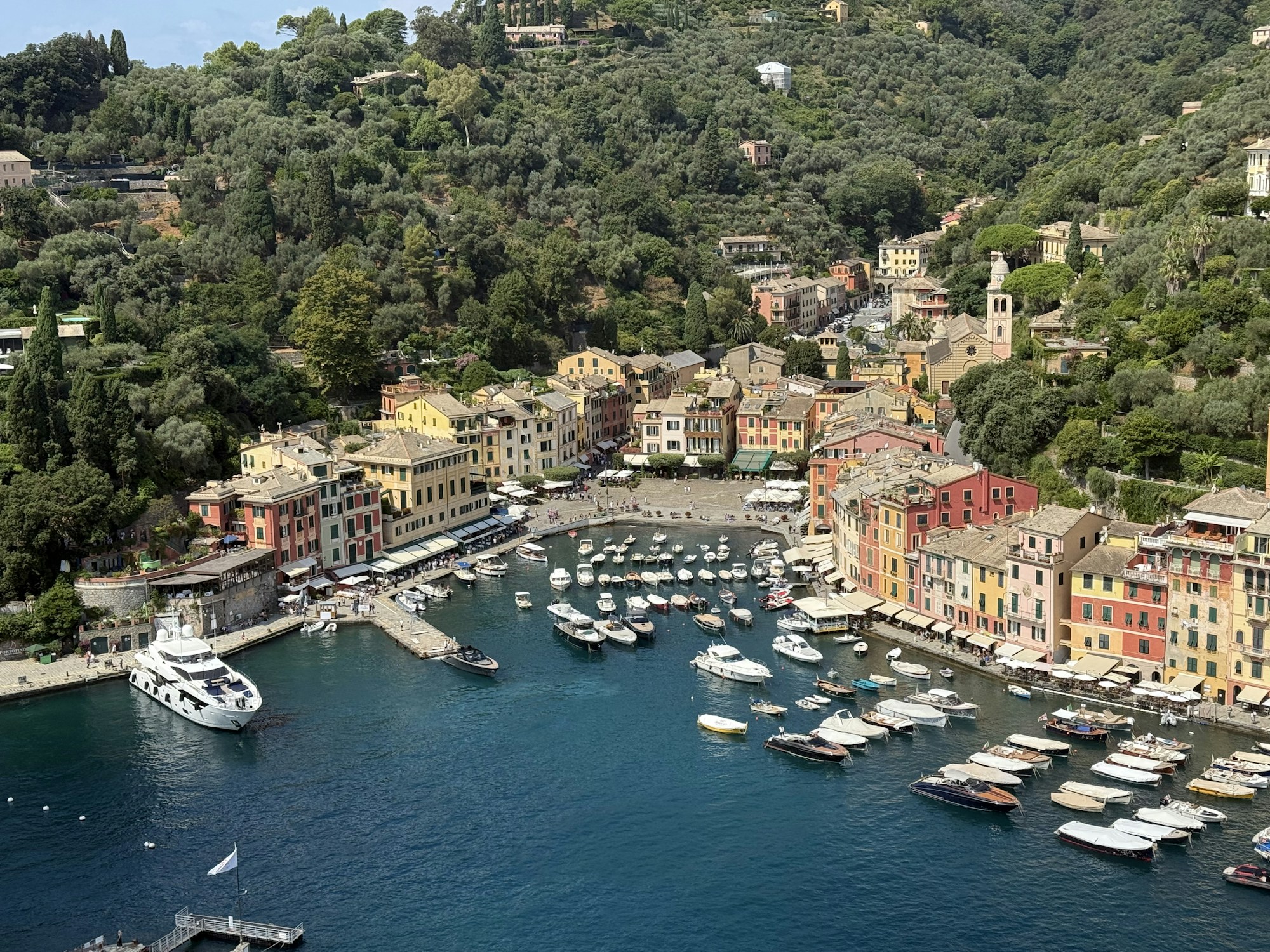
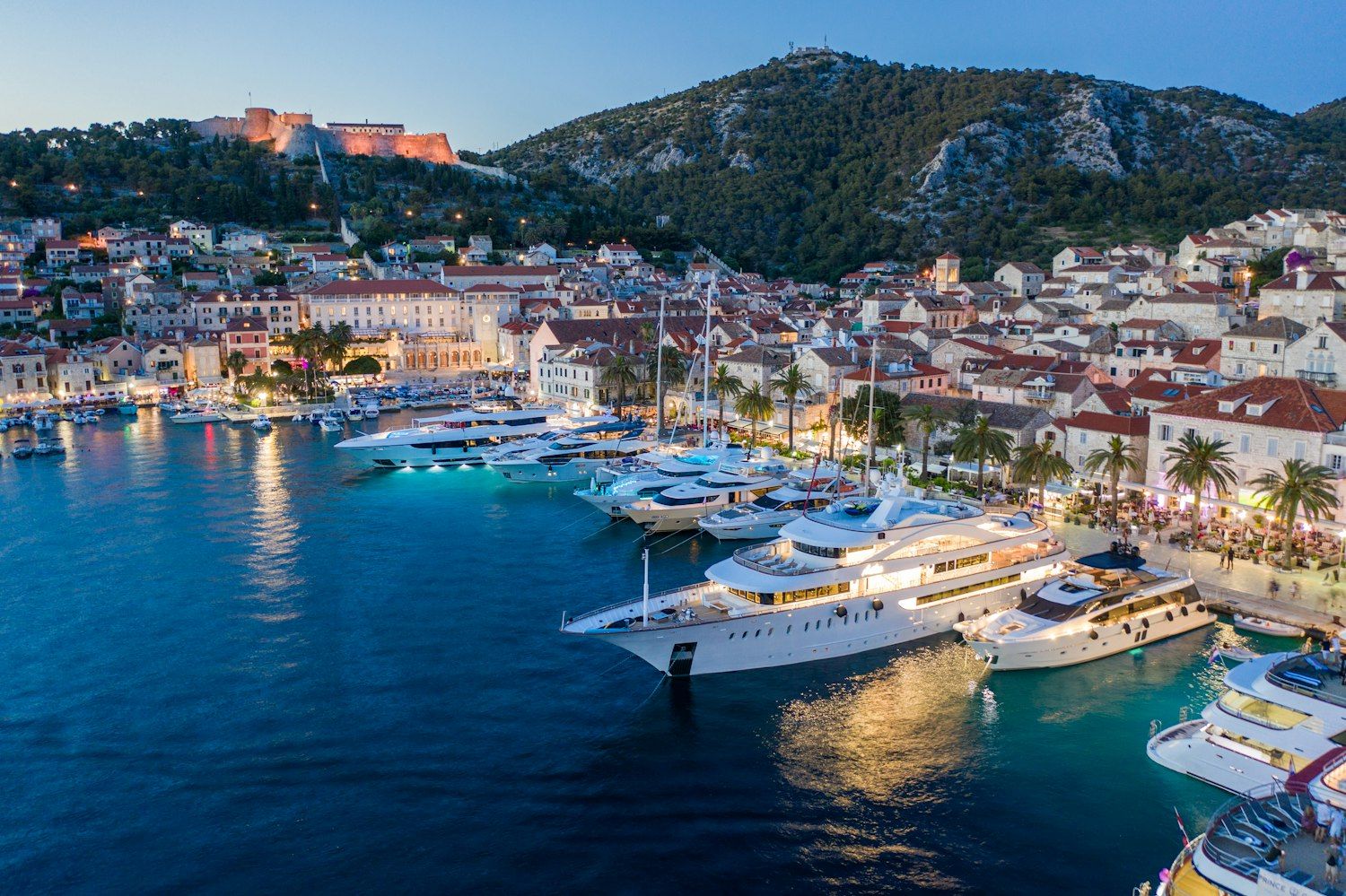
Italian yards account for 52 percent of global superyachts. Italy is also the world's third-largest charter destination, and its charter companies are growing. The industry's own asks are not about demand. They are about tax treatment and berths.
In short: Italian yards build 52 percent of the world's superyachts, and Italy is the third-largest charter destination. Its charter industry is growing, and its stated asks are practical: more yacht-ready berths and a VAT rate aligned with tourism.
The Italian nautical industry presented its figures in Milan in March, and the headline numbers are the kind a finance minister likes to repeat. The sector generates more than €13 billion in added value and employs almost 168,000 people, according to Confindustria Nautica and its partner foundations, and Italian yards account for 52 percent of global superyachts.
The less quoted numbers sit lower in the same report, and they are about the part of the industry that rents boats rather than builds them.
Well, with an asterisk. Of the charter and rental companies surveyed, 57 percent reported turnover growth in 2025, while 29 percent reported a contraction, limited to 10 percent. Looking ahead, 64 percent expect further growth in the current nautical year. Among companies in nautical tourism, ports and services, 75 percent expect turnover to grow.
MYBA figures reported by Superyacht24 put Italy up 4 percent in 2025 and make it the third-largest charter destination in the world, with 39 percent of bookings in the Western Mediterranean. Spain's Balearics, which we cover in the next story in this issue, are the obvious rival for those bookings.
Not necessarily who you would guess. Data from Spartivento Group, a large Italian charter company, reported by Quality Travel, showed foreign tourists making up 67 percent of its clients, led by Germans at 18 percent and Poles at 13 percent. That is one operator's customer base, not a national census. Americans do not appear among the leading nationalities it names, which is itself an opening for anyone selling to them.
Two things come up repeatedly, and both are structural. The first is infrastructure. A Deloitte study published with Altagamma, summarized by Marine Industry News, found that just 30 percent of berths in Italy are in marinas equipped to receive yachts and superyachts with appropriate technical and tourism facilities. The second is tax. Among its recommendations is to bring the VAT rate on yacht charter into line with the rate for the tourism and hotel sector, which implies it is not aligned today.
Italy has spent decades persuading the world to buy its boats. It is now asking its own tax code to accept that renting one is a holiday.
Italian trade press has also reported that a law approved this spring, known as the Sea Enhancement Law, introduces simplifications for yacht owners and yards and aligns Italy more closely with European competitors. Confindustria Nautica's own reading is that regulatory simplification strengthens the effect that charter and rental have on tourism, "even beyond coastal areas".
It is rare for an industry to be this strong and this specific about what it wants. Italy does not need more demand, more shipyards or better weather. It needs yacht-ready berths, a tax treatment that treats a charter week as tourism, and paperwork that matches its neighbors'. Those are policy questions with answers, which is why charter operators in Italy are cautiously optimistic.
For travelers, the practical consequence is that Italian charter is a market to book carefully: confirm the departure marina, ask what is included, and talk to the captain before you pay. Full disclosure: this magazine is published by Marina Boat App, a booking app for boats, crew and berths that is new and still in its founding-partner phase.
Every country on the Mediterranean makes boats look desirable. Only a few have worked out how to make renting one look ordinary.