WINTER ISSUE · THE AMERICAS · CHARTER
America now charters boats the way it orders dinner: late, on a phone, and for less time than it used to. The people who notice first are the ones with an empty boat at 9 p.m. on a Thursday.
In short: Charter clients are confirming bookings closer to departure and choosing shorter, more local trips, according to IYC's 2026 mid-year market review. For travelers, that means last-minute boat charters are easier to find than ever. For operators, it means a boat that cannot be booked instantly from a phone is effectively invisible.
Picture the guy who used to plan a Bahamas week in February for the following Christmas. He had a broker, a spreadsheet and a deposit due in March. He still exists. He is just no longer the market.
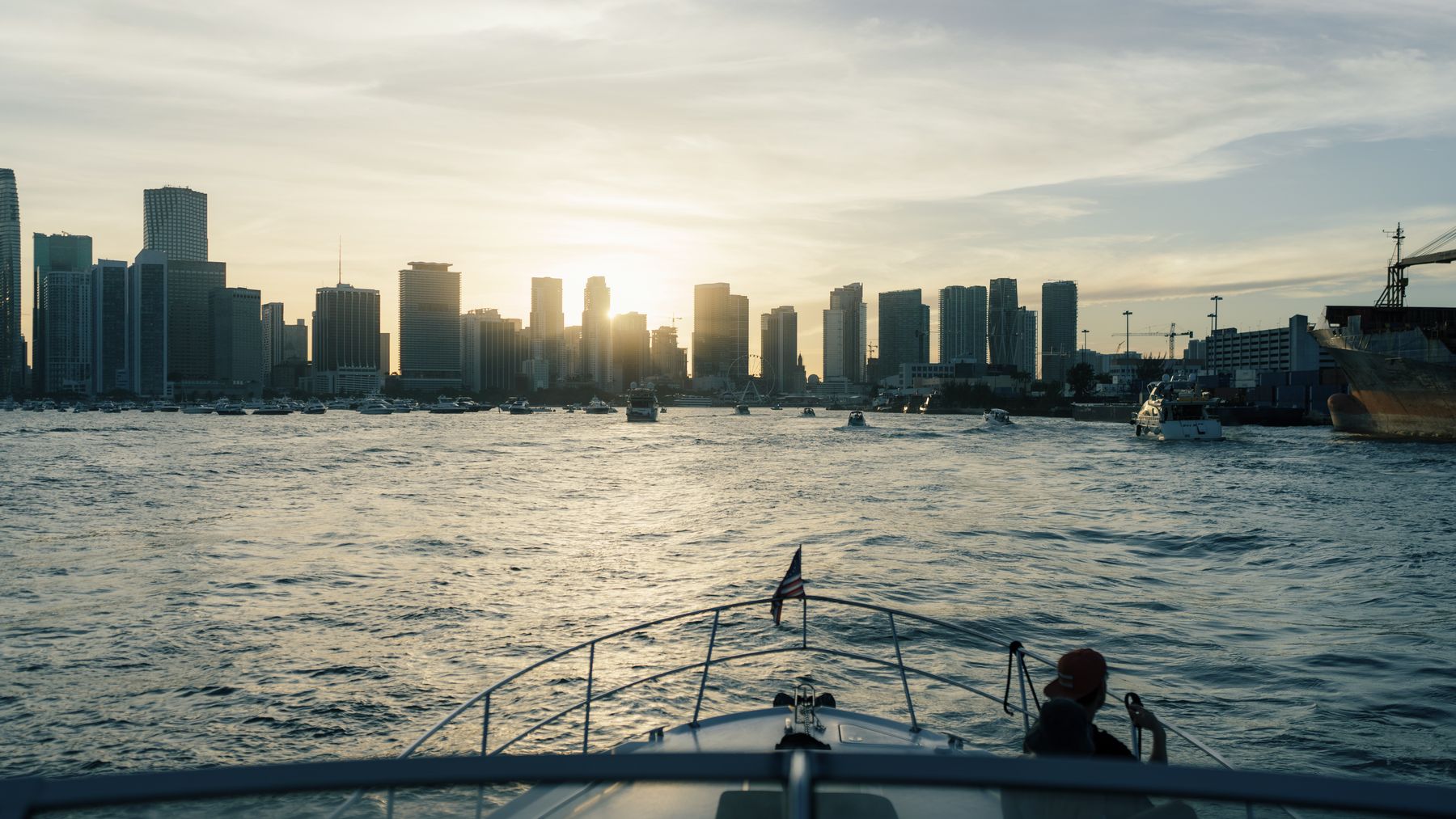
The market now is the couple in Fort Lauderdale who decide on Wednesday night that Saturday should happen on the water. It is the family in Boston who wanted the 250th-anniversary fireworks from a boat and booked the week of. It is the group chat that agrees, at 11:40 p.m., that a sandbar is a better birthday venue than a restaurant.
The data has started to say the same thing. In its mid-year review of the 2026 charter market, IYC, which describes itself as the world's largest charter fleet manager, reported that booking windows are compressing, with clients confirming closer to departure because they want a clearer view of their budgets first. By the halfway point of the year, summer bookings stood at roughly 70% of the previous summer's full volume, with the rest arriving late.
The old charter calendar was written by brokers. The new one is written by group chats.
The second shift is about length. The same IYC review points to higher fuel prices, provisioning costs and advance provisioning allowances, plus geopolitical uncertainty, nudging clients toward shorter, more localized itineraries and yachts with lower weekly rates. People are not giving up the water. They are buying it in smaller, more spontaneous portions.
This is where Charles Duhigg would look for the hidden habit. Spontaneity is not a mood; it is a system. It only works when three things are true at once: the inventory is visible, the price is clear, and the confirmation is instant. Remove any one of them and the late booker goes back to the restaurant.
Winter sharpens all of this. IYC reports that the Caribbean remained the dominant winter region in the 2025/26 season, at around 45% of activity and 12% growth, with total winter bookings up roughly 10% year on year. Large-yacht brokers are already signaling a busy 2026/27: DMA Yachting's British Virgin Islands desk, for one, has described rising superyacht demand for the coming winter.
But the headline numbers are about big boats and booked weeks. Underneath them is a quieter economy that the reports barely measure: the half-day captain in Key West, the water taxi running between Miami waterfront restaurants, the fishing guide in the Outer Banks who fills his calendar three days at a time. That is where late booking is not a trend. It is the entire business model.
Early planner vs. late booker: how the decision differs
FactorEarly plannerLate booker
Booking windowMonths aheadDays or hours ahead
Trip lengthA week or moreHalf day to a weekend
Decision channelBroker, email, callsPhone search, app, DMs
What wins the bookingThe specific yachtAvailability and a clear price
Michael Lewis likes stories where the people on the ground understand a market before the market understands itself. Charter has one. Ask an independent captain what his worst-performing asset is and the honest ones will tell you: the boat on a sunny Tuesday with nobody on it.
Late booking turns that empty Tuesday into an opportunity, but only for operators who are findable at the moment of decision. A captain whose calendar lives in a notebook and whose booking process is "call me" is not losing to a competitor. He is losing to a dinner reservation.
For independent operators the practical playbook is short:
That last point is why we built Marina Boat App around zero commission for operators. It is new, and we say so plainly, but the logic is old: if the trips get shorter, the middleman's cut should not stay the same.
For the traveler, the rule is simple: be flexible on the boat, firm on the experience. Decide what the afternoon is for, whether that is a sandbar, a fishing run, a waterfront lunch or a sunset, and let the boat follow. Check whether a licensed captain is included, what fuel policy applies, and what happens if the weather turns. Then book the shorter trip you can actually take this week, not the perfect week you will plan forever.
For a century, the romance of chartering was the planning: the brochure, the itinerary, the countdown. The new romance is the opposite. It is the decision made at a kitchen counter on Wednesday and the cold drink on a sandbar on Saturday. The industry built itself around the first kind of client. The next decade belongs to whoever builds for the second.
COMING IN DECEMBER
The waters that stay warm while Europe closes its harbours: the Caribbean, Singapore and Southeast Asia, the Gulf and the Canaries. Follow @marinabooking on Instagram and TikTok for the countdown.
WINTER ISSUE · THE AMERICAS · PERSPECTIVES
This week, more than 100,000 people are walking past 209 superyachts in Fort Lauderdale. Almost none of them will leave the show on a boat. That gap is the most interesting thing at the biggest boat show in America.
In short: The 67th Fort Lauderdale International Boat Show (FLIBS) runs from October 28 to November 1, 2026, across six venues, with around 1,000 brands, 209 superyachts and organizers expecting more than 100,000 visitors. It sells the dream of ownership. But the boat most visitors can actually step onto this weekend is a water taxi, a sandbar charter or a sunset cruise, booked on a phone. That is where the real boating economy of Fort Lauderdale lives.
The numbers are built to impress. According to YachtCharterFleet's opening report, this year's show brings 209 superyachts to Fort Lauderdale, up from 170 last year, including 59 charter yachts, spread across six venues after the 17th Street basin was dropped. There is a helicopter shuttle from the city's two airports to a landing platform at Pier Sixty-Six, celebrity chefs in the VIP lounges and, for the first time, a floating pickleball court at Las Olas Marina for yacht crews. Boat International reported before the opening that the brokerage fleet alone carried a combined asking price of more than €1.4 billion, with the bulk of yachts between 24 and 40 metres.
It is, by any measure, the Super Bowl of American boating. And like the Super Bowl, most of the people in the building are spectators.
A boat show sells the yacht you will never buy. The boat you will actually take is waiting outside, at the water taxi stop.
Picture the couple from Ohio who flew in for the weekend. They will spend four hours in the sun at Bahia Mar, take photos in front of a 60-metre Feadship, and pay too much for a lobster roll. They will touch more boats in one afternoon than most people touch in a lifetime. And on Sunday night, they will fly home without having been on the water once.
This is the quiet contradiction at the heart of the boat show business. It is designed for the few hundred buyers who can sign for a superyacht, and it is attended by the tens of thousands who cannot. The show converts the first group into sales. It mostly converts the second group into Instagram posts.
Charles Duhigg would call it a habit loop with a missing reward. The cue is powerful: the water, the boats, the light on the Intracoastal. The craving is real. But the reward, actually being out there, rarely arrives, because nobody on the docks is selling it.
Here is where the story shrinks to the right size. Fort Lauderdale is a city of canals, sometimes called the Venice of America, and its everyday boating economy has very little to do with superyachts. It is the water taxi running along the New River. It is the half-day captain who takes six people to a sandbar. It is the fishing guide booked three days ahead, the sunset cruise booked three hours ahead, and the South Florida charter operators whose best weeks of the year are the ones when the city is full of people who love boats and cannot buy one.
That last point is the opportunity nobody at the show is pricing. As we reported in The Late Bookers, IYC's 2026 market review found clients booking closer to departure and preferring shorter trips. A boat show week is the purest version of that market: a hundred thousand inspired people, a free afternoon, and a phone in every hand.
Two boat economies, one week in Fort Lauderdale
FactorOn the show docksJust outside the show
Typical boatSuperyacht, 24 to 90 metresDay boat, water taxi, fishing charter
Who it servesA few hundred buyersTens of thousands of visitors
Decision timeMonthsMinutes
What changes handsContractsA two-hour booking
Michael Lewis's favourite stories are about people who saw what the market was really doing while everyone else watched the headline. At FLIBS, the headline is the 91-metre support yacht. The real market is the visitor walking back to the parking garage, still wanting to be on the water.
For a local captain, the lesson is simple and slightly brutal: the busiest week of the boating year is useless if you cannot be found that week. That means real availability, short formats priced for an impulse decision, and a booking that confirms in minutes. It also means keeping the margin, because a two-hour trip cannot carry a platform commission of up to 35%.
We think the boat show of the future will look less like a car dealership and more like a festival. The yachts will still be there, because dreams need a shop window. But the best show would also put every visitor on a boat before they leave: a ten-minute water taxi hop, a sunset run, a first fishing trip. Not because it sells superyachts, but because it makes boaters. Every great owner, captain and charter client started the same way, as a passenger. The industry spends billions on the dream and almost nothing on the first ride.
COMING IN DECEMBER
Florida, the Bahamas, the Caribbean and Singapore: the waters that stay warm while Europe closes its harbours. Follow @marinabooking on Instagram and TikTok for the countdown.
WINTER ISSUE · EUROPE · THE BLUE ECONOMY
The oldest trophy in international sport is coming to Naples, and with it a forecast of nearly a billion euros. The most interesting question is not who lifts the Cup. It is who, on the water, gets paid.
In short: Naples will host the 38th America's Cup in 2027, the first time the event has been held in Italy. The Louis Vuitton Cup challenger series starts on 22 May 2027, with the match expected to finish in July. Italy's Ministry of Tourism and Luiss Business School estimate an economic impact of more than €690 million by July 2027. For travellers, the best seat is on the water; for local boat operators, the event is a once-in-a-generation opportunity that will reward those who prepare now.
For 175 years the America's Cup has moved between a small number of rich harbours: Newport, Fremantle, San Diego, Auckland, Valencia, Barcelona. In May 2025 the Italian government announced that Naples would host the 2027 edition, the first time the Cup comes to Italy. Italy has lost three finals and won none; the country's relationship with the event is part obsession, part heartbreak.
The rehearsal has already happened. In late September 2026, the preliminary regattas were sailed in the gulf between Castel dell'Ovo and Posillipo, and Luna Rossa beat Emirates Team New Zealand, the defender, in the final race. For one week, Naples saw what it would feel like to have the fastest boats in the world racing in front of its seafront.
The Cup will be won by a team of engineers. Naples will be won, or lost, by a few hundred people with small boats.
The official forecasts are large. According to Il Sole 24 Ore, estimates by the Ministry of Tourism and Luiss Business School put the impact at more than €690 million by July 2027, and €1.2 billion in the medium to long term. The wider regeneration of Bagnoli, where the team bases are being built, involves around €1.7 billion of resources. A smaller warm-up event in Cagliari, the paper notes, turned roughly €7 million of public money into an estimated €50 million of impact.
Those numbers will be argued over, as they always are. What is certain is where most of the money flows first: hotels, sponsors, broadcast, construction and the large yacht charter fleets that follow the Cup from venue to venue. The question that interests us is smaller and, for the city, more important.
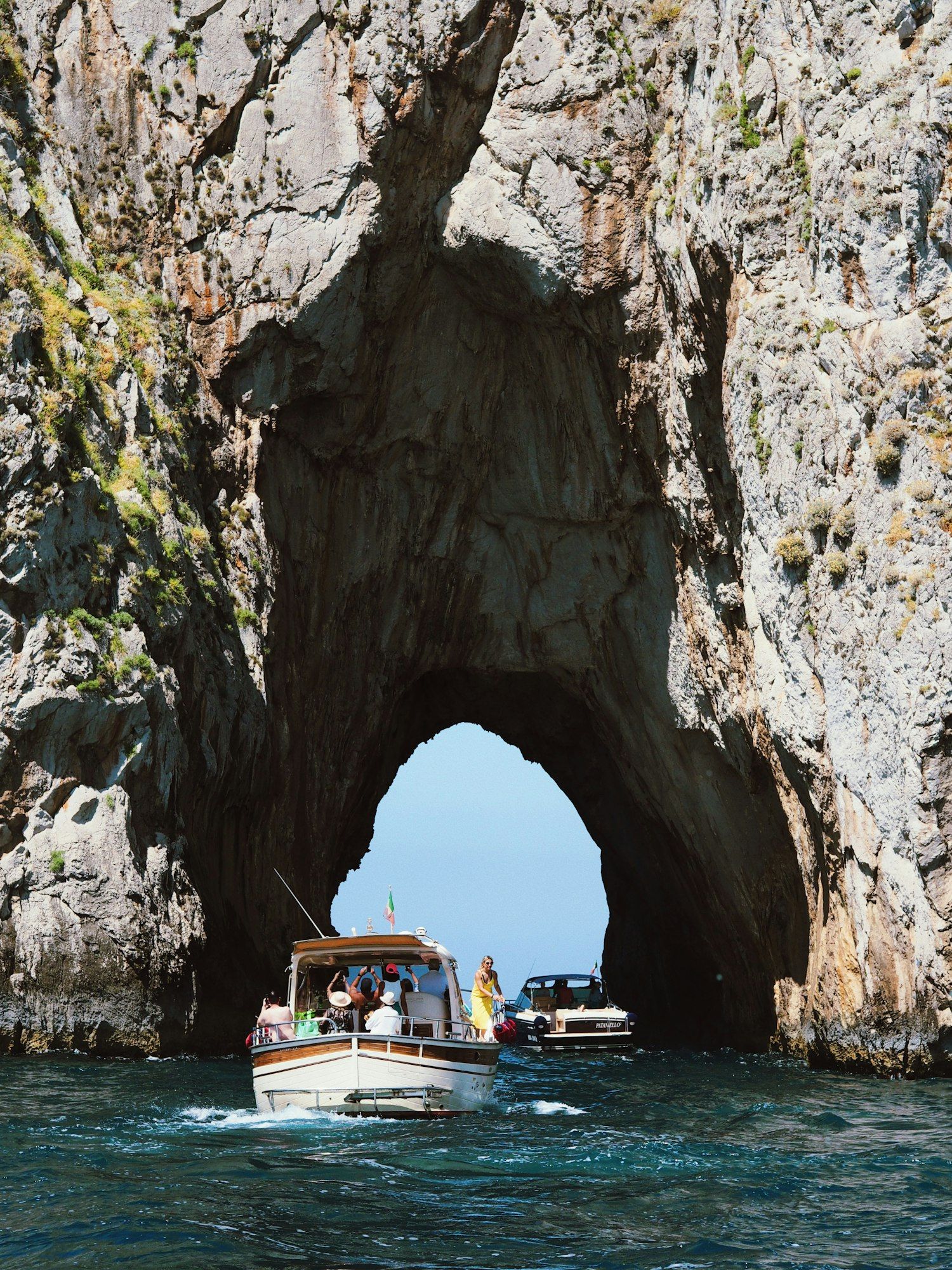
Naples has one of the richest small-boat cultures in the Mediterranean. The wooden gozzo, the fishing families of Mergellina and Marechiaro, the boatmen who take visitors to swim beneath the villas of Posillipo, the water taxis to Capri, Ischia and Procida. This is the economy that will meet hundreds of thousands of visitors at the water's edge, and it is the one least equipped for the moment.
Mega-events have a pattern. Exclusion zones close parts of the water during racing. Prices rise, sometimes fairly and sometimes not. Visiting fleets arrive with crews, booking systems and brokers, and capture the clients who plan ahead. Local operators who rely on a phone number painted on a sign capture whoever is left. Unless something changes, the Cup will pass in front of the gozzi rather than through them.
Who wins on the water during a mega-event
PlayerTypical advantageTypical risk
Visiting charter fleetsBrokers, booking systems, early clientsHigh costs, short stay
Hotels and venuesPricing power on race daysEmpty weeks between events
Local boat operatorsKnowledge of the gulf, authenticityInvisible online, squeezed by exclusion zones
SpectatorsThe best view is from the waterLate booking, inflated prices
For travellers, the best view of a foiling AC75 is not from a grandstand but from the sea, outside the official course boundaries and within the rules set by the organisers and the port authority. Expect spectator areas to be defined and enforced. The practical advice is old-fashioned: book a licensed local skipper early, ask exactly where the boat is allowed to go on race days, and be flexible about racing schedules, which depend on wind.
We think the measure of success in 2027 is not only the result, but how much of the event's value stays in the gulf. If the local skipper with a gozzo can be found, booked and paid properly by a visitor from Auckland or New York, the Cup will have done something more lasting than any trophy. That requires visibility now, not in May. The small operators of Naples have about seven months of runway before the first races. The ones who use it will meet the world at the dock.
Spectators, families and teams will be looking for boats long before the racing starts. Be visible before the crowds arrive.
COMING IN DECEMBER
While the Mediterranean prepares for the Cup, the warm seas open: the Caribbean, Singapore, the Gulf and the Canaries. Follow @marinabooking for the countdown.
WINTER ISSUE · THE AMERICAS · MARITIME BUSINESS
Every American boat owner who rents online pays a toll to be found. Most never add it up. When you do, the most expensive thing on the boat is not the engine.
In short: The large US boat rental platforms keep a meaningful share of every booking. Getmyboat lists a standard owner fee of 11.5% on domestic US bookings, and Boatsetter says owners earn between 65% and 88.5% of the list price depending on the boat and insurance plan. On a busy season, that difference can equal a new outboard. Zero-commission listing platforms change the math for independent captains.
Picture the guy in Tampa with a 26-foot center console, a captain's licence and forty good Saturdays a year. He did everything right: insured the boat, took good photos, answered messages at midnight. Then he looked at his annual payouts next to his gross bookings and found a number he had never budgeted for.
The fees are not hidden; they are simply never added up. Getmyboat's owner page lists a standard fee of 11.5% for domestic US transactions and 14.5% for international ones, with an extra 3% for currency conversion. Boatsetter's fee page says owners earn between 65% and 88.5% of their list price, depending on the boat and the insurance plan, which means the platform side of the booking can run from about 11.5% to 35%.
Commission is the only cost on a boat that grows every time you do your job well.
This is where Charles Duhigg would look for the habit hiding inside the numbers. Owners compare platforms by bookings, not by what each booking leaves behind. The table below uses an illustrative season, not real accounts, to show why that habit is expensive.
Illustrative season: 40 half-day trips at $600 each ($24,000 gross)
Platform shareKept by platformKept by owner
0% (direct or zero-commission listing)$0$24,000
11.5%$2,760$21,240
20%$4,800$19,200
35%$8,400$15,600
Insurance, payment processing and marketing all have real costs, and a platform that supplies them is selling something genuine. The question is not whether those services are worth paying for. It is whether a captain who already has insurance, a licence and repeat clients should be paying for them on every single trip.
Michael Lewis would find his story in the dock-level economics. A superyacht charter carries a broker's commission, but the margin is wide enough to absorb it. A day boat does not have that cushion. Fuel, ice, cleaning and the captain's own time are fixed per trip; commission is taken from what is left.
And the market is moving toward exactly those small bookings. As we reported in The Late Bookers, clients are booking later and choosing shorter trips. More bookings of smaller value means the percentage bites more often. For a fishing charter or dive operator running two trips a day, the fee is not a line item. It is a business model decision.
Zero commission is not charity; it is a different business model, where the platform earns elsewhere and the operator keeps the booking. That is the bet behind Marina Boat App, which we publish this magazine alongside. It is new, it is in its founding-partner phase, and we say that plainly. But the logic for operators is simple: if the trips get smaller and more frequent, the cut should not stay the same.
Boat owners know the price of everything on board: the bottom paint, the impeller, the slip. The one cost most never calculate is the one that scales with success. In a market that is turning toward short, spontaneous trips, the captains who do that arithmetic first will be the ones still smiling in October.
COMING IN DECEMBER
Where the winter money is on the water: Florida, the Caribbean, Singapore and the Gulf. Follow @marinabooking on Instagram and TikTok for the countdown.