MARINA N.º 12 — El mar que trabaja Volver a la revista
MARINA
La revista del agua
N.º 12 · Septiembre 2026
El mar que trabaja
Historia de portada · Perspectivas
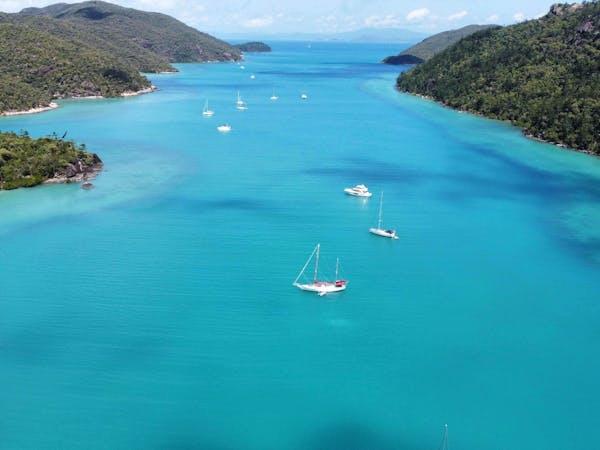
Croatia Yacht Charter Business — How Operators Built Profitable Fleets
Croatia's charter market generates over €200 million annually. The operators who positioned early built defensible businesses. Here's what the successful model actually looks like.
La economía azul
The Greek Island Skipper Who Works Six Months and…
La economía azul
The Dive Instructor in Singapore Who Taught 300 People Last Year and Still…
Náutica
Whitsundays Boat Charter — What Experienced Sailors Actually Find
Los editores, Marina Boat App
Las personas que viven del mar, y la distancia entre lo buenos que son y lo fácil que es encontrarlos.
MARINAN.º 12 · Septiembre 2026
Índice
El mar que trabaja
I
Perspectivas
Croatia Yacht Charter Business — How Operators Built Profitable Fleets
II
La economía azul
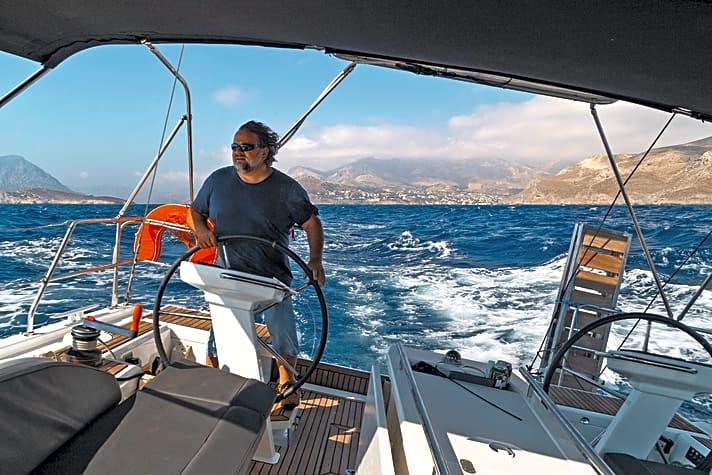
The Greek Island Skipper Who Works Six Months and Earns More Than Most Athenians Do in a Year
III
La economía azul
The Dive Instructor in Singapore Who Taught 300 People Last Year and Still Can’t Be Found on Google
IV
Náutica
Whitsundays Boat Charter — What Experienced Sailors Actually Find
En este número · blog.marinasmart.app
Estilo de vida
Australian Maritime Culture — Sailing Boating and Coastal Life Down Under
Perspectivas
Singapore Maritime Culture — Sailing and Recreational Boating in Southeast Asia
La economía azul
Fishing Charter Diving Tours Boat Rental Income USA — Triple Revenue GuideFishing Charter Diving Tours Boat Rental Income USA — Triple Revenue Guide
Náutica
Great Barrier Reef Dive Charter — Fishing and Snorkeling Operator Guide
La revista
List Your Boat Australia Free — Marina Boat App for Aussie Operators
Náutica
Watersport Instructor Jobs Europe — Surf Kite Foil Income Guide
Edición especial
Una edición hecha para ti. — blog.marinasmart.app/special-edition/
Feature I · PerspectivasMARINA N.º 12
Croatia Yacht Charter Business — How Operators Built Profitable Fleets
Croatia's charter market generates over €200 million annually. The operators who positioned early built defensible businesses. Here's what the successful model actually looks like.
Por la redacción · blog.marinasmart.app/croatia-yacht-charter-business-operator-guide/

In the summer of 1991, Croatia's sailing coastline — the Dalmatian islands, the Kornati archipelago, the Kvarner Gulf — was largely inaccessible to international tourists. A war was beginning. The marinas were closing. The charter boats that had operated under Yugoslav registry were being repositioned or idled.

By 2000, the same coastline was becoming one of the fastest-growing charter markets in the Mediterranean. By 2010, it was one of the most established. By 2026, it generates an estimated €200-250 million in charter revenue annually, supporting over 20,000 registered charter vessels and a professional services ecosystem — skippers, boat maintenance, provisioning, marina management — built from essentially nothing in under three decades.

The operators who entered the Croatian charter market in the early 2000s, when the infrastructure was basic and the international awareness was low, built businesses that are now genuinely difficult to replicate from scratch. Not because the market is closed, but because the review histories, the fleet positioning, and the client relationships accumulated over twenty-plus seasons represent a compounding asset that a new entrant in 2026 cannot buy.

The parallel with what is happening right now in the digital booking layer of the European charter market is not incidental.

What the Croatian Charter Business Model Actually Looks Like

The majority of successful Croatian charter operators run what the industry calls a mixed fleet model: privately owned vessels that the operator uses personally for part of the season and places into the charter fleet for the remainder. The economics require some explanation because they are less obvious than they appear.

A 45-foot sailing yacht purchased new costs approximately €180,000-250,000. The same yacht in Croatia's charter market generates €25,000-45,000 in gross annual charter revenue, depending on the vessel's age, specification, and season length. After marina fees, maintenance, insurance, management fees to the charter company (typically 25-35% of revenue), and depreciation, net annual income to the owner runs €8,000-18,000. This is not a high-yield investment in isolation. It becomes more interesting when understood as partial offset of ownership costs on a vessel the owner also uses personally — combined with the appreciation of a quality sailing yacht over a 10-15 year ownership period in a rising market.

The operators who have built genuinely significant businesses have done so through fleet expansion — adding vessels through retained earnings and leveraging established charter revenue history to access marine financing for additional yachts. A fleet of six to ten vessels, managed efficiently, generates the kind of revenue that makes the business self-sustaining and scalable.

The Digital Distribution Gap That Still Exists

Here is the part of the Croatian charter story that hasn't been resolved in the way the physical infrastructure has. The dominant booking channels for Croatian charter — international charter brokers, the major online charter platforms — take 20-35% of charter revenue for providing distribution. An operator generating €40,000 gross annual charter revenue from a single yacht retains €26,000-32,000 after platform and broker fees.

This fee structure is rationalized by the fact that the platforms provide international reach — German, British, Scandinavian, and American sailors who would not otherwise find the specific yacht or the specific operator. The argument is real. The cost is real. And the alternative — building independent distribution to these same international audiences — has historically been beyond the reach of individual operators or small fleets.

The emerging alternative is platforms built specifically for the maritime market that charge operators zero commission. Marina Boat App, free on the Apple App Store, lists Croatian charter operators — sailing yachts, motor yachts, catamaran charters, skippered day charters — with direct booking capability and no commission deducted from charter revenue. An operator who generates €40,000 in bookings through Marina Boat App retains €40,000.

The platform is newer than the established brokers. The audience is smaller. The trajectory follows the same pattern as every marketplace platform in its early adoption phase — and the operators who establish review histories now are positioned before the traffic scales.

What the Next Generation of Croatian Charter Operators Is Doing

The most interesting new entrants into the Croatian charter market are not buying fleets. They are building what the established operators built physically — client relationships, local knowledge, reputation — but digitally, through platforms that surface their specific expertise to the international audiences willing to pay for it.

The sailing skipper who knows every anchorage in the Kornati, lists skippered day charters on Marina Boat App, and accumulates 50 genuine reviews over two seasons has built something that the large charter company cannot replicate from its generic inventory listing. The personal expertise, the specific local knowledge, the review history attributable to a specific human being rather than a generic vessel — these are genuinely scarce in a market that has commoditized the bareboat product.

Marina Boat App
¿Quieres ganar dinero? Publica tu barco gratis — 0%.
App Store · apps.apple.com/app/id6780864722
Feature II · La economía azulMARINA N.º 12
The Greek Island Skipper Who Works Six Months and Earns More Than Most Athenians Do in a Year
Licensed skippers in Greece earn €30,000-60,000 in a six-month season. Here's exactly how the Mediterranean charter skipper market works — and how to find paid work on it.
Por la redacción · blog.marinasmart.app/skipper-jobs-greece-mediterranean-charter-work/

The mathematics of the Greek charter season are unusual enough to be worth stating plainly. A licensed skipper working the Cyclades or Ionian Islands from May through October commands €250-400 per day on a crewed sailing yacht, plus tips that in a strong season add 15-25% to the base figure. Six months of consistent work — not guaranteed, but achievable for experienced skippers with verifiable references — produces €40,000-65,000 gross before tax.

The Athenian average annual salary, for comparison, is approximately €18,000-22,000.

This gap exists because the Greek charter market is structurally unable to meet its own demand for qualified skippers during the sailing season. There are more licensed charter yachts in the Greek registry than there are experienced, English-speaking skippers available to operate them competently. This is not a recent development. It is a persistent structural feature of a market that grew faster than its professional workforce.

How the Greek Charter Skipper Market Actually Works

Greek charter operations divide into two distinct employment models.

The first is the bareboat charter company that occasionally needs a skipper provided — either because a client requested a skipper, or because the vessel cannot be released bareboat to a particular client's demonstrated competence level. Companies like Kiriacoulis, Dream Yacht Charter, and Sailing Greece maintain rosters of approved independent skippers they contact when a skipper-assisted charter is confirmed. Getting onto these rosters requires demonstrable competence, references from previous charter seasons, and the appropriate Greek or internationally recognized qualification.

The second is the direct client arrangement — the couple or group that has chartered a bareboat but wants an experienced skipper to handle navigation while they enjoy the experience as guests. These clients increasingly book their skipper separately, through platforms that list maritime professionals alongside vessels.

The ICC (International Certificate of Competence) is the minimum recognized qualification for operating in Greek waters. The Greek national Skipper's Licence (Πτυχίο Κυβερνήτη Σκάφους Αναψυχής) provides broader commercial options for those planning to make the Greek market a long-term career.

The Qualification Path for Non-Greek Skippers

The majority of skippers working the Greek charter circuit in any given season are not Greek nationals. They are British, German, Dutch, French, and Scandinavian sailors who hold RYA Yachtmaster or equivalent qualifications, have accumulated offshore passages, and have positioned themselves as available, references-equipped, and English-proficient in the months before the season opens.

The Royal Yachting Association's Yachtmaster Offshore certificate is the most recognized qualification in the Greek charter market for non-EU skippers. EU nationals operating commercially require additional maritime authority recognition depending on vessel flag state.

The practical entry path: build offshore passage miles, obtain Yachtmaster or equivalent, accumulate one or two seasons as unpaid or low-paid crew on charter yachts to build references, then approach charter companies and direct clients with a documented portfolio of passages and a reference from a previous charter captain.

Finding Skipper Work Before the Season Starts

The skippers who find consistent work are positioned before April. The Greek charter season runs May through October. Charter companies confirm their skipper arrangements in February and March. Operators who wait until May to start looking consistently find that the best-paying arrangements are already filled.

The emerging approach: list a skipper for hire profile on Marina Boat App — free on the Apple App Store — so that charter clients searching for a skipper to accompany their bareboat charter can find qualified professionals directly. Create a host profile, select crew or skipper listing, add your qualifications, passage history, languages spoken, and available season dates, and publish. Charter clients booking through the platform find your profile alongside available vessels.

Zero cost to list. No placement fee. The arrangement is between you and the client directly.

Marina Boat App
¿Quieres ganar dinero? Publica tu barco gratis — 0%.
App Store · apps.apple.com/app/id6780864722
Marina Boat App
Todo sobre el agua, en un solo lugar
Barcos y chárteres con tripulación, taxis acuáticos, pesca y buceo, tripulación y amarres: en un mapa, acordado directamente con el anfitrión.
Descarga en App Store0% · Comisión, para siempre
Feature III · La economía azulMARINA N.º 12
The Dive Instructor in Singapore Who Taught 300 People Last Year and Still Can’t Be Found on Google
Singapore's dive and boat charter market is growing fast. Here's why the best instructors and operators are invisible online — and how a new free platform is changing that.
Por la redacción · blog.marinasmart.app/diving-tours-singapore-earn-money-instructor-boat-operator/

There is a dive instructor working out of a shop near Sentosa who has been teaching scuba in Singapore for eleven years. PADI certified, Advanced Open Water instructor, comfortable in the waters from the Southern Islands to the outer reefs of Bintan. Last year she taught 300 students. Her review average across Google and Facebook is 4.9 from people who describe her as the best instructor they've ever had.

Type "scuba diving lessons Singapore" into Google on a Tuesday afternoon. She does not appear on the first page. She barely appears on the second.

The operator who appears first spent money on SEO. The instructor with eleven years of expertise spent it on her students.

This is the central dysfunction of Singapore's water activity market — and it is not unique to diving. It describes fishing charter captains working the Johor Strait, boat operators running day trips to the Southern Islands, kayak guides taking groups through the mangroves of Ubin. The best operators are structurally invisible to the tourists and expats who would pay well for access to them.

What Singapore's Water Activity Market Actually Is

Singapore's reputation as a water destination is complicated by its urban density and its proximity to more dramatic regional alternatives. The reef diving of the Maldives is four hours away. The Whitsundays are seven. The assumption of many visitors — and many Singaporeans — is that Singapore's water is merely transitional, something to look at from the Marina Bay waterfront rather than enter.

This assumption is wrong, and the operators who know it are the ones earning serious money from those who discover the truth.

The Southern Islands — Lazarus Island, St John's, Sisters' Islands — sit 30 minutes from Marina South Pier by boat and contain fringing reef that the National Parks Board of Singapore actively manages as marine conservation zones. The water clarity at Lazarus Island on a calm morning is genuinely good by Southeast Asian standards. The marine life — nudibranchs, cuttlefish, reef fish, occasional seahorses in the seagrass — rewards the diver who knows where to look.

The fishing grounds in the Johor Strait and the outer Singapore waters hold queenfish, grouper, barramundi, and snapper year-round. The guides who know the specific spots — the submerged structures, the tide-dependent holding areas — produce catch results that no amount of GPS or sonar technology can replicate without local knowledge.

The Riau Islands, accessible from Singapore's ferry terminals in 45-60 minutes, extend this further into genuinely excellent diving and fishing territory. As we covered in The Straits of Malacca Carry 40% of World Trade, the waters around Batam and Bintan hold dive sites and fishing grounds that attract serious regional anglers and divers precisely because they remain below the radar of the mainstream tourism infrastructure.

The Platform Problem and What's Replacing It

GetMyBoat operates in Singapore. It charges operators 8-12% commission on every booking. Airbnb Experiences, which expanded into water activities, takes 20%. The established regional dive booking platforms take 15-25% and prioritize the operators who pay for premium listing placement.

The result: prices that guests pay are padded to cover platform fees, operators earn less than market rate, and the independent instructor or small charter captain who doesn't have the margin to absorb 25% commission simply doesn't appear in search results at all.

Marina Boat App launched on the Apple App Store earlier this year. It is free. No commission, no listing fee, no subscription.

We will be direct about what this means in Singapore right now: the platform is new. It does not have the booking volume of GetMyBoat. What it has is a zero-commission model we intend to keep, editorial content driving traffic from the US, UK, Australia, and Europe — markets that send visitors to Singapore every week — and a genuine belief that the dive instructor with eleven years of expertise deserves to be as findable as the operator with the best advertising budget.

For Singapore operators: register as a host, list your dive tour, fishing charter, Southern Islands day trip, or water taxi service. Set your price in SGD. Publish. Your listing is immediately visible to travelers from every English-speaking market who are planning Singapore trips in advance. Five minutes to set up. Zero cost. Everything you charge stays with you.

What the Income Numbers Look Like

A PADI dive instructor running four guided dives per week for independent certified divers at SGD 80-120 per diver, with groups of four, generates SGD 1,280-1,920 weekly from guided diving alone. Add open water certification courses at SGD 400-600 per student, two students per week, and the annual income from independent operation significantly exceeds what most dive shop employment positions pay.

A fishing charter captain running two private charters per week to the Johor Strait at SGD 300-500 per group generates SGD 2,400-4,000 monthly — on top of whatever their primary occupation produces.

A Southern Islands boat day trip operator running three trips per week at SGD 80-120 per person, groups of six, generates SGD 1,440-2,160 weekly.

The income is there. The booking infrastructure that connects these operators to the guests who would hire them has been the missing piece. In Singapore, where the cost of living means that supplementary income from a water skill or vessel matters more than in lower-cost markets, that missing piece has a specific financial consequence.

Marina Boat App
¿Quieres ganar dinero? Publica tu barco gratis — 0%.
App Store · apps.apple.com/app/id6780864722
Feature IV · NáuticaMARINA N.º 12
Whitsundays Boat Charter — What Experienced Sailors Actually Find
The Whitsundays are one of the world's great sailing grounds. Here's what's beyond the Airlie Beach charter circuit — and how to access it properly, as an operator or a guest.
Por la redacción · blog.marinasmart.app/whitsundays-boat-charter-sailing-guide/

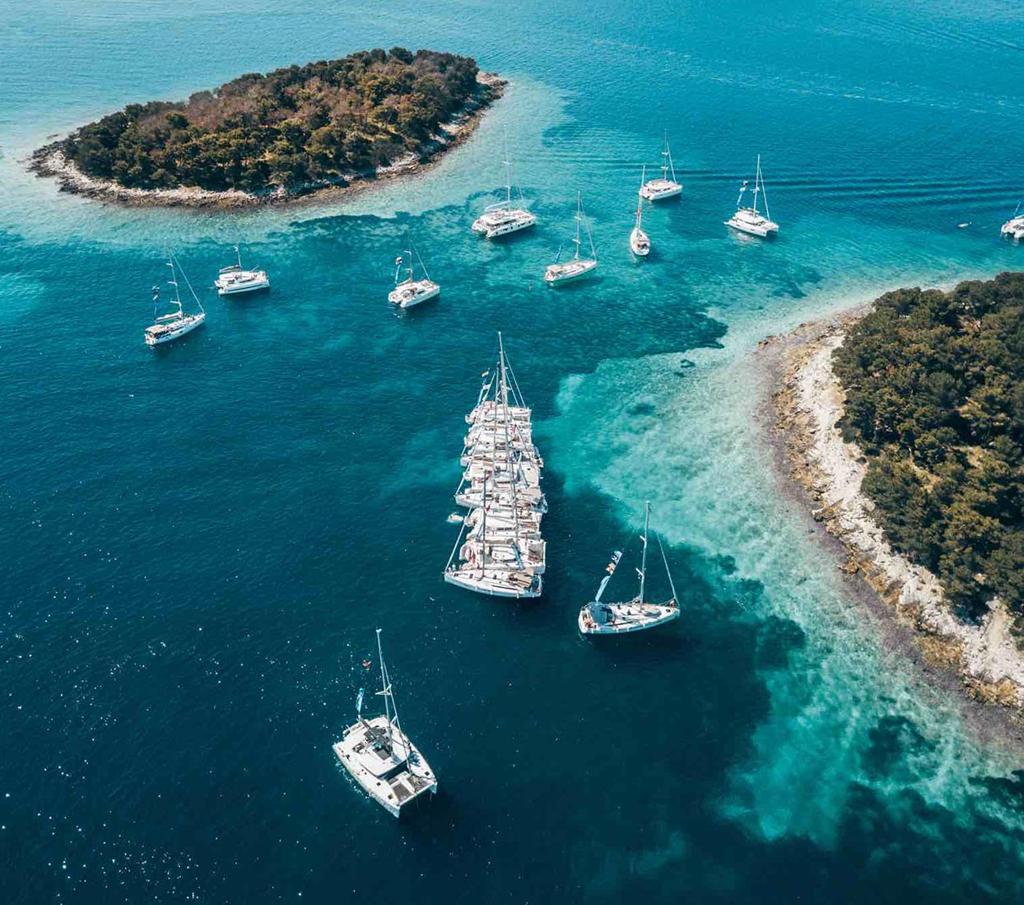
The Whitsundays are 74 islands scattered across the Coral Sea between the Queensland coast and the outer Great Barrier Reef. They are, by most accounts of people who have sailed extensively across the Pacific and Indian Oceans, one of the great sailing grounds on earth — warm water, reliable trade winds from the southeast, protected passages between islands, and the specific quality of light on tropical water that defies photography without quite defying experience.

The charter circuit that operates out of Airlie Beach visits, with some regularity, approximately seven of them.

Hayman. Hamilton. Whitehaven Beach on Whitsunday Island. Hook Island's Nara Inlet. Daydream. The Passage. South Molle. These are the destinations that appear in every charter brochure and most Instagram posts generated from the region, and they are genuinely extraordinary. Whitehaven Beach is one of the most photographed stretches of sand in the southern hemisphere for reasons that are entirely justified.

What's less photographed, and significantly less crowded, begins immediately beyond the circuit.

What the Outer Islands Actually Are

The northern Whitsundays — Gloucester, Saddleback, Olden, and the smaller, largely unnamed islands near the northern passage — receive a fraction of the charter traffic of the southern circuit. The reason is practical: they require a longer passage from Airlie Beach, which places them outside the comfortable range of a three-day bareboat charter operated by guests who are new to the area.

The experienced skipper or the charterer willing to spend a week rather than three days finds something different. Anchorages with one or two other vessels in peak season rather than fifteen. Coral that receives significantly less diver traffic than Hook Island's Blue Pearl Bay. Fringing reef accessible by snorkeling from an anchored boat in conditions that produce the water clarity the Whitsundays are known for without the boat density that the more-visited anchorages generate.

Thomas Island, Repair Island, the passage between Border Island and the outer reef edge — these are places that appear in the cruising notes of sailors who have done the full Whitsundays circuit multiple times and stopped mentioning them publicly for reasons that require no explanation.

The Sailing Conditions — What You Actually Need to Know

The Whitsundays operate under consistent southeast trade winds from April through October — the primary sailing season — with wind strengths typically between 15 and 25 knots. The passage between islands is generally well-charted and manageable for competent sailors, with the exception of the Whitsunday Passage itself in strong wind conditions, where the funnelling effect between the islands and the mainland can produce short, steep chop that surprises visitors expecting tropical sailing to mean flat water.

The cyclone season runs November through April. The shoulder months — October and November before cyclone season, March and April at the end of it — offer lighter trade winds and lower charter pricing with acceptable risk. The peak season (July and August) delivers the best wind consistency and the highest charter rates. Bureau of Meteorology's Queensland marine forecasts are the authoritative reference for any Whitsundays passage planning.

For Operators: What the Whitsundays Charter Market Looks Like in 2026

The Whitsundays charter market is one of the most established in the southern hemisphere — Airlie Beach supports a fleet of several hundred charter vessels ranging from small day-charter catamarans to fully crewed luxury sailing yachts. The market is well-developed, professionally served, and consolidated around a relatively small number of established booking channels.

Independent operators — the experienced skipper who knows the outer islands, the dive guide who runs excursions to the less-visited reef sections, the local captain offering customised itineraries beyond the standard circuit — exist in this market and consistently deliver better experiences than the commodity charter fleet. They are also, reliably, harder to find online.

The international traveler who arrives in Airlie Beach having planned their Whitsundays trip from London, Los Angeles, or Tokyo finds the established charter operators because those operators have the marketing infrastructure. The independent guide who knows Repair Island's underwater topography in detail doesn't appear in the same search results.

Marina Boat App — free on the Apple App Store — lists Whitsundays charter operators and guides with direct booking and transparent pricing. For independent operators working the Queensland coast: list your charter service, your dive guide operation, your outer island itinerary. Zero commission on every booking. The international guests who are planning their Queensland trip months in advance can find you before they arrive at the Airlie Beach marina office.

For Guests: What to Book and What to Ask

The single most useful question before booking any Whitsundays charter: where specifically will this itinerary take me? Not "the Whitsundays" — which island anchorages, on which nights, with how many other boats in the anchorage?

The charter that answers this question specifically, names the anchorages, and adjusts based on conditions is being operated by someone who knows the archipelago. The one that answers with "we'll see what the weather is doing" and "the usual spots" is probably operating the standard circuit.

The Whitsundays are worth doing properly. Seventy-four islands, warm water, consistent trade winds, and the specific experience of anchoring in a bay with nobody else in it — that experience is available. It just requires booking the operator who knows where to find it.

Marina Boat App
¿Quieres ganar dinero? Publica tu barco gratis — 0%.
App Store · apps.apple.com/app/id6780864722
La guía del anfitrión · Para armadores, capitanes e instructores
Tu barco ya es un negocio.
La mayoría de los mejores capitanes no aparecen en internet. Marina Boat App los pone frente a viajeros de todo el mundo, sin cobrar nada.
0%
Comisión, para siempre
5 min
Para tu primer anuncio
1
Descarga la app
Gratis en iPhone. Una sola cuenta para reservar y para ofrecer.
2
Crea tu cuenta y regístrate como anfitrión
Armador, operador chárter, guía de pesca, instructor, patrón o puerto deportivo.
3
Publica tu servicio
Fotos con luz de mañana, la ruta, para quién es. El anuncio es tu escaparate.
4
Fija precio y disponibilidad
Tu tarifa, tu calendario. Lo que paga el huésped es lo que te quedas.
5
Publica y responde en la app
Los viajeros te escriben directamente. Gestiona las solicitudes desde el panel de anfitrión.
Descarga y crea tu cuenta
apps.apple.com/app/id6780864722
MARINA
La revista del agua
Viajes lentos, dinero honesto y la costa entre ambos.
Marina Boat App · App Store · blog.marinasmart.app?lang=es