MARINA N.º 11 — El manual del operador Volver a la revista
MARINA
La revista del agua
N.º 11 · Julio 2026
El manual del operador
Historia de portada · La economía azul
How to Make Money With Your Boat in 2026: The Complete Guide for First-Time Operators
Your boat sits idle 300+ days a year. Here's exactly how first-time operators turn that into $20,000-60,000 annually — fishing charters, water taxis, boat tours. Free to start.
La economía azul
Start a Water Taxi Business With Your Boat —…
La economía azul
Miami Boat Rental Income — How South Florida Boat…
Náutica
How to List Your Boat Online and Start Taking…
Los editores, Marina Boat App
Cómo convertir un barco, una licencia o una habilidad en reservas, paso a paso y sin comisión.
MARINAN.º 11 · Julio 2026
Índice
El manual del operador
I
La economía azul
How to Make Money With Your Boat in 2026: The Complete Guide for First-Time Operators
II
La economía azul
Start a Water Taxi Business With Your Boat — Free Registration 2026
III
La economía azul
Miami Boat Rental Income — How South Florida Boat Owners Are Making Money
IV
Náutica
How to List Your Boat Online and Start Taking Bookings This Weekend
En este número · blog.marinasmart.app
Perspectivas
How to Become a Water Taxi Operator: Licence, Setup, and Your First Booking
Cómo alquilar
How to Rent Out Your Boat to Tourists in Europe: What You Need, What You Earn, How to Start
La economía azul
 Start a Boat Tour Business Europe Free — Zero Upfront Cost Guide
La economía azul
How to Find Boat Crew Jobs USA — Skipper and Water Sports Work 2026
Perspectivas
How to Get More Dive Students — Dive Instructor Marketing 2026
Edición especial
Una edición hecha para ti. — blog.marinasmart.app/special-edition/
Feature I · La economía azulMARINA N.º 11
How to Make Money With Your Boat in 2026: The Complete Guide for First-Time Operators
Your boat sits idle 300+ days a year. Here's exactly how first-time operators turn that into $20,000-60,000 annually — fishing charters, water taxis, boat tours. Free to start.
Por la redacción · blog.marinasmart.app/how-to-make-money-with-your-boat-2026-complete-guide/

There's a version of boat ownership that most people don't talk about at the marina. Not the Saturday morning version — the coffee, the fuel dock, the good morning to the neighbor three slips down. The Monday morning version, when the boat is sitting in its slip generating nothing, and the slip fee hit your account at midnight.

The average American recreational boat is used 15-30 days per year. The math on the other 335 days is a choice — and in 2026, for the first time, it's a genuinely simple one to make differently.

What the Money Actually Looks Like

The range is wide enough that it's worth being specific about what each model produces, because "make money with your boat" means something different at $8,000 per season versus $60,000.

Fishing charters — the highest-demand single category in US coastal boating. A private half-day fishing charter for up to six people runs $450-900 in most US coastal markets. Full day runs $700-1,500. A center console running two charters per week through a 20-week season — conservative, part-time numbers — generates $18,000-36,000 gross. After fuel, insurance adjustment, and maintenance reserve, net returns run 55-70% of gross for a well-run operation.

Water taxi and boat transfers — point-to-point passenger transfers between coastal destinations, marinas, waterfront restaurants, or island access points. Pricing runs $15-60 per person on shared routes, $80-300 for private group transfers. The operator who establishes two or three regular routes in a coastal market — hotel to island, marina to marina, beach access run — builds a predictable daily revenue schedule that fishing charters don't offer.

Day charters and sunset cruises — the boat as experience rather than transport or fishing platform. A private four-hour sunset cruise for a group of eight runs $400-800. Corporate group charters, bachelorette parties, anniversary trips — these book at $600-1,200 for a half day in most markets. The margin is high because the service is atmosphere rather than skill or local knowledge.

Boat rental — self-drive rental to qualified operators. The simplest model, the lowest revenue per booking ($200-500 per day for a typical recreational vessel), but the most passive: you list the boat, someone books it, they bring it back. Appropriate for boats in good condition in protected water environments.

Kayak and water sports tours from your vessel — using your boat as a base for guided kayak, paddleboard, or snorkel excursions. Increasingly popular, particularly in markets with marine wildlife or coastal access that small boats provide.

The Licensing Reality — Before You Book Anything

One number matters before anything else: six. In US waters, carrying more than six paying passengers for hire on a vessel under 100 gross tons requires a USCG Master's licence. Carrying six or fewer requires the OUPV — the Six-Pack licence, formally the Operator of Uninspected Passenger Vessels certificate.

The OUPV requires 360 days of sea service, a physical, a drug test, and a written examination administered through the US Coast Guard National Maritime Center. The process takes 3-6 months and costs approximately $500-1,500 in fees and course expenses. It is not optional for carrying paying passengers, and operating without it is a federal violation.

For boat rental where the renter operates the vessel themselves, OUPV requirements may not apply — but commercial insurance for peer-to-peer rental use is still required, and standard recreational policies typically exclude it.

How Marina Boat App Fits Into This

The operational setup of a charter business — licensing, insurance, maintenance — takes months. The booking infrastructure used to take months too: building a website, setting up payment processing, figuring out an availability calendar, getting listed somewhere travelers actually search.

It no longer works that way.

Marina Boat App is free on the Apple App Store. Register as a host, create your listing — fishing charter, water taxi route, day charter, boat rental — set your pricing and availability, and publish. Your listing is immediately visible to travelers from the US, UK, Germany, Australia, and the Gulf region who are actively searching for water experiences in your destination.

Zero commission on every booking. Zero listing fee. Not a trial period — the platform is building its supply base before scaling marketing, which means the operators who list now are positioned before the traffic arrives. Every dollar your guests pay goes directly to you.

The slip fee doesn't change. The insurance doesn't change. The boat is already there. The question is whether it works for you on the 335 days you're not using it.

Marina Boat App
¿Quieres ganar dinero? Publica tu barco gratis — 0%.
App Store · apps.apple.com/app/id6780864722

Feature II · La economía azulMARINA N.º 11
Start a Water Taxi Business With Your Boat — Free Registration 2026
Got a boat? Water taxi and boat transfer services are the fastest-growing segment in coastal tourism. Here's how to start — free, no commission, five minutes to set up.
Por la redacción · blog.marinasmart.app/start-water-taxi-business-boat-transfer-register-free/

There is a gap in coastal tourism that is hiding in plain sight. Every marina has boats. Every coastal town has tourists trying to get from Point A to Point B on the water. The route between those two facts — the boat, the tourist, and the transfer — has historically been handled by whoever happened to be at the dock when someone needed a ride, at whatever price was negotiated on the spot, with no record of the transaction and no way for the next tourist to find the same service tomorrow.

This is the water taxi business. And in 2026, it is being rebuilt from scratch.

What a Water Taxi Business Actually Is

Strip away the branding and a water taxi operation is simple: you have a boat, someone needs to go somewhere by water, you take them there for a fee. The destinations vary. The vessel varies. The price varies. But the core transaction is the same whether you're running a tourist across the Bay of Kotor in Montenegro, shuttling beachgoers from Saranda to the Blue Lagoon in Albania, ferrying guests between islands in Croatia, transferring hotel clients from a marina to a waterfront restaurant in Miami, or moving families from a Cornwall harbor to a beach with no road access.

What all of these have in common: the demand exists, the boats exist, and the infrastructure to connect them has been almost entirely absent.

Why Now

Three things are converging that make 2026 specifically the right moment to register a boat transfer service and start taking bookings.

The first is demand. According to UNWTO's tourism recovery data, coastal tourism is back to and exceeding pre-pandemic levels across Europe and North America, with travelers specifically seeking water-based experiences and transfers that land transport doesn't provide. The search volume for terms like "water taxi near me," "boat transfer," "sea taxi," and "taxi boat" has grown consistently — our own Search Console data shows water taxi terms generating the highest impression volumes of any category on this publication.

The second is expectation. The traveler who arrives in Split or Saranda or Miami today expects to book a water taxi the same way they book a restaurant — from their phone, in advance, with a price shown upfront and a review system to evaluate the operator. The walk-up, negotiate-at-the-dock model still exists, but it's losing ground to travelers who arrive with plans already made.

The third is infrastructure. Platforms built specifically for water activity booking — not hotel software adapted for boats, not general marketplace tools — are now available at zero cost to operators. The technical barrier to having a professional, bookable water taxi listing visible to international travelers is gone.

The Specific Business Models That Work

Point-to-point tourist transfers — the most straightforward model. Saranda to Ksamil. Dubrovnik to a nearby island. Falmouth to St. Mawes. Fixed route, fixed price, bookable in advance. A boat that runs four tourist transfers per day at €30-60 per person generates €120-240 daily from a single popular route. Two routes, six months of season: the math is significant.

Hotel and restaurant transfers — waterfront properties increasingly want to offer guests water transfers as part of their service. The hotel that can say "we'll arrange a boat taxi from the marina" is differentiated from the one that can't. Operators who approach local hotels, waterfront restaurants, and resort properties with a transfer service and a booking mechanism generate a B2B revenue stream on top of direct tourist bookings.

Island and beach access transfers — wherever a beach, island, or coastal attraction has no road access, a boat is the only way there. These routes command premium pricing because there's no alternative. The operator who holds the relationship with a no-road-access beach effectively controls access to it.

Marina-to-marina transfers — in coastal destinations with multiple marinas, a water taxi service connecting them serves both tourists and boat owners who need transport between facilities without moving their vessel.

Airport and port transfers by water — in cities where airports or cruise ports are accessible by water, a boat transfer service competes on time rather than price. The water transfer from Dubrovnik's Gruž port to the old town waterfront is faster than the road. Where the geography supports it, this category commands the highest per-seat pricing of any water taxi model.

How to Register and Start Taking Bookings

This is where the friction has historically lived. Starting a water taxi business used to require: building or paying for a website, setting up payment processing, figuring out an availability calendar, managing booking requests through WhatsApp or email, and doing all of this without any guarantee that anyone would find you.

It no longer works this way.

Marina Boat App is free on the Apple App Store and includes water taxi and boat transfer as a primary listing category — not an afterthought, but a first-class service type alongside boat charters, fishing trips, and diving excursions.

Here is exactly how to register and start:

Step 1: Download Marina Boat App from the Apple App Store. It's free.

Step 2: Create a host profile. Your name, your location, a description of your boat and your transfer service. This takes two minutes.

Step 3: Create a listing. Select "Water Taxi / Boat Transfer" as your service type. Add your route or routes — where you depart from, where you go. Set your pricing (per person, per trip, or per hour — you choose the model). Set your available days and hours.

Step 4: Add photos of your boat. Listings with photos receive significantly more booking requests than those without.

Step 5: Publish. Your listing is immediately searchable by travelers worldwide — from the US, UK, Germany, the Netherlands, Australia, the Gulf countries — who are actively searching for water taxis and boat transfers in your destination.

Zero commission on every booking. Zero listing fee. You keep every euro, pound, or dollar your passengers pay. The platform earns its keep by building the traveler side of the market — through content, through marketing, through international partnerships — while you focus on running the trips.

Why This Is the Future of Coastal Transport

The broader shift happening in coastal tourism is not subtle. Travelers are moving toward experiences that use the water rather than looking at it. The charter boat for a day, the fishing trip, the sunset cruise — but also the simpler, more functional experience of getting from one place to another by boat rather than by road.

Water taxis are the category that sits at the intersection of utility and experience. The tourist going from Saranda to the Blue Lagoon is not primarily looking for an experience — they're looking for transport. But the transport is a boat on turquoise Ionian water with Albania's mountains visible behind them. The utility and the experience are the same thing.

The infrastructure to monetize this has arrived. The operators who register now build the review histories and platform positioning that compound as the market grows. The water taxi business that starts in 2026, on a platform that charges nothing, in a market that is actively growing, is the same structural opportunity that existed for Airbnb hosts in 2010.

The boat is already there. The tourists are already searching. The gap between them is five minutes and a free registration.

FAQ: Starting a Water Taxi Business

What licence do I need to run a water taxi service?

Licensing requirements vary by country and by the number of passengers carried. In most European countries, carrying paying passengers commercially requires either a commercial vessel licence or a passenger transport authorisation. In the US, a USCG OUPV licence (Six-Pack) is required for up to six paying passengers. Check with your local maritime authority for specific requirements.

How much can I earn running a water taxi service?

A water taxi operator running four transfers per day at €30-60 per person through a six-month season generates substantial revenue from a single route. Multiple routes, group bookings, and hotel transfer contracts multiply this significantly. The income potential depends almost entirely on utilization — how many days the boat is actually working versus sitting idle.

Do I need a dedicated water taxi boat or can I use my existing vessel?

Most recreational and charter boats are suitable for water taxi operations with appropriate licensing. The key requirements are seaworthiness, sufficient passenger capacity for your typical group size, and appropriate commercial insurance coverage for carrying paying passengers.

How is Marina Boat App's water taxi listing different from just advertising on social media?

Social media requires building an audience before anyone sees your posts. A Marina Boat App listing is findable by people who are actively searching for water taxis in your specific location right now — purchase-intent traffic rather than passive audience building. The difference is the moment of discovery: at the point of need rather than during general browsing.

Can I list multiple water taxi routes on Marina Boat App?

Yes. You can create multiple listings under one host profile — one for each route, or different listings for different service types (tourist transfers, hotel contracts, private group charters). Each listing has its own pricing, availability, and description.

Is Marina Boat App really free for water taxi operators?

Yes. Marina Boat App charges zero listing fee and zero commission on bookings during the founding partner phase. You set your pricing, receive bookings, and keep everything your passengers pay.

Marina Boat App
¿Quieres ganar dinero? Publica tu barco gratis — 0%.
App Store · apps.apple.com/app/id6780864722
Marina Boat App
Todo sobre el agua, en un solo lugar
Barcos y chárteres con tripulación, taxis acuáticos, pesca y buceo, tripulación y amarres: en un mapa, acordado directamente con el anfitrión.
Descarga en App Store0% · Comisión, para siempre
Feature III · La economía azulMARINA N.º 11
Miami Boat Rental Income — How South Florida Boat Owners Are Making Money
Miami has more registered boats per capita than almost any US city. Most of them sit in slips generating costs. Here's how South Florida boat owners are turning that around — and what it takes.
Por la redacción · blog.marinasmart.app/miami-boat-rental-income-south-florida-charter-business/

Miami-Dade County has one of the highest concentrations of registered recreational vessels in the United States. The marinas at Coconut Grove, Dinner Key, Crandon Park, and along the Intracoastal Waterway hold boats in numbers that reflect a city where boat ownership is part of the self-image in a way that is different from most American metros — not just a weekend hobby but an identity statement, a status object, and in many cases a significant financial commitment.

Most of these boats are losing money.

This is not a Miami problem specifically. It is the arithmetic of recreational boat ownership in any high-cost coastal market: purchase price, marina slip fees averaging $800-1,500 per month in South Florida according to industry data, insurance, maintenance, fuel, and registration fees add up to $15,000-40,000 per year in carrying costs for a mid-size recreational vessel, against zero revenue for the owner who uses the boat twenty weekends a year and leaves it in its slip the other forty-four.

The math changed the moment the boat became a charter business. It changes further when the boat becomes visible to the right customers.

What South Florida Actually Offers Charter Operators

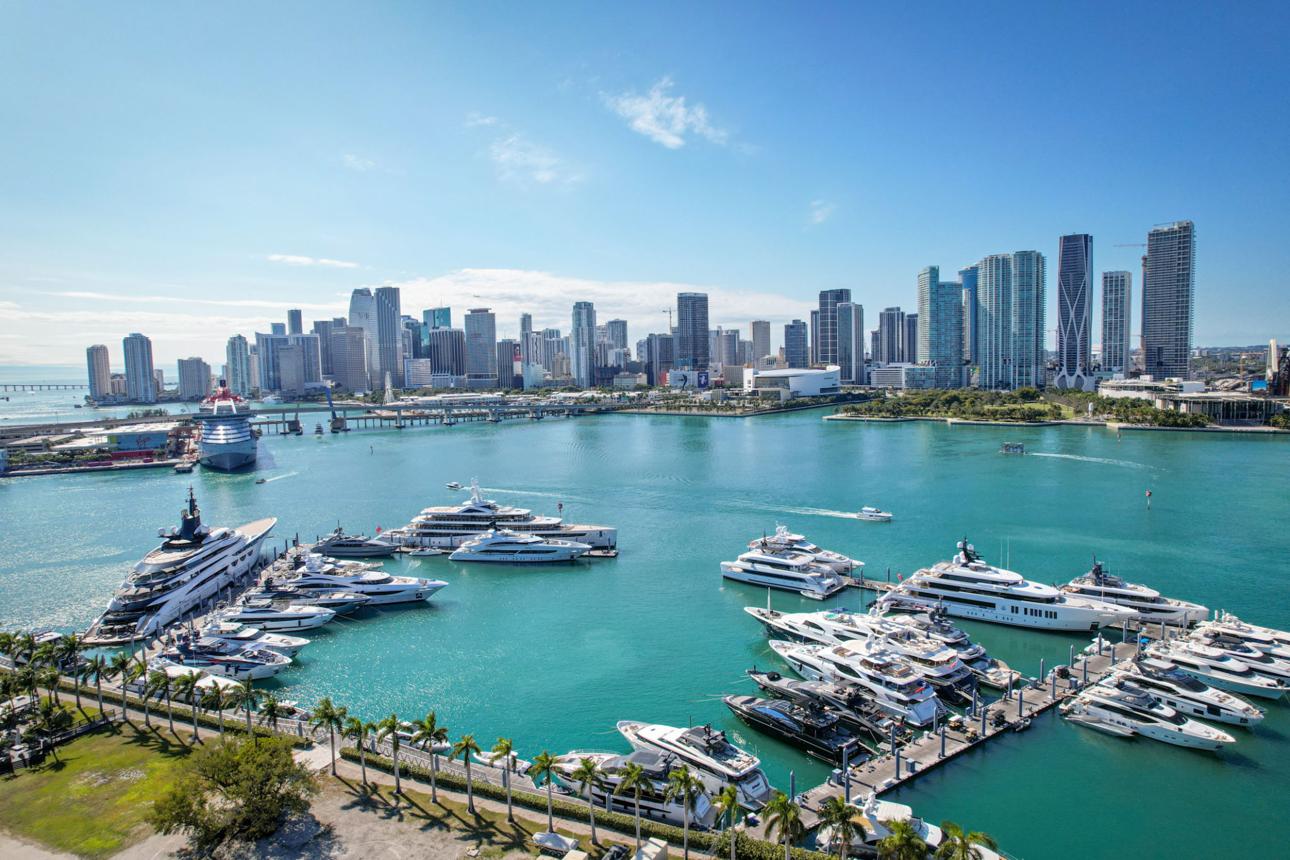
Miami's geography creates a charter market with unusual variety for a single metro area. Biscayne Bay — the shallow, protected estuary between Miami Beach and the mainland — offers flat-water conditions suitable for water taxis, sunset cruises, and beginner boat charters with visibility to a skyline that photographs better from the water than from any land position. The Biscayne National Park reef system, accessible by charter from Miami's south shore, contains snorkeling and diving conditions that most visitors don't know exist within an hour of South Beach. The Florida Keys, beginning at Key Largo 45 minutes south, represent some of the most productive fishing grounds in North America — mahi-mahi in the Gulf Stream, bonefish on the flats, tarpon at the bridges.

The water taxi category specifically is underdeveloped relative to Miami's geography. The city's waterfront restaurant scene — from the Design District to Wynwood to Coconut Grove — is fragmented across shorelines that a water taxi network could connect more efficiently than land transport during peak hours. The technology exists. The boats exist. The infrastructure connecting available operators to potential passengers has been the missing piece.

The Five-Minute Registration That Changes the Math

Consider the boat owner in Coconut Grove with a 32-foot center console paying $1,100 per month in slip fees, $4,000 per year in insurance, and using the boat eighteen weekends a year. The annual carrying cost approaches $25,000. The annual revenue from those eighteen weekends: zero, unless you count the enjoyment, which is real but doesn't pay the slip fee.

Now the same boat, listed as a fishing charter and water taxi service on Marina Boat App, running four booked charters per week through an eight-month Miami season. At $450 per half-day charter — below market rate for a private Biscayne Bay or Keys fishing trip — that's $57,600 in gross revenue against the same $25,000 in annual costs.

Registering as a host on Marina Boat App takes five minutes. Create a profile, list your boat or service — fishing charter, water taxi, Biscayne Bay sunset cruise, Keys day charter — set your pricing, publish. Your listing immediately reaches international tourists searching for boat rentals and charters in Miami, domestic travelers from the US interior planning South Florida trips, and Gulf region visitors who come to Miami specifically for water experiences. Zero commission charged to you. Every dollar your guest pays goes directly to you.

The boat that was losing money becomes the boat that pays for itself. The arithmetic is not complicated. The infrastructure to make it happen is now free.

Why Miami Specifically Is the Right Place for This Shift

Every major coastal city has a version of this opportunity. Miami has it more acutely than most because the combination of factors — high boat density, high marina costs, high tourist volume, year-round season, and a water geography that supports multiple charter categories simultaneously — creates pressure on boat owners that is unusually visible. The Coconut Grove captain who is quietly doing the math on his slip fees every month is a specific Miami type in a way that the Chesapeake Bay sailor, with lower costs and less tourist pressure, is not.

The shift in South Florida's recreational boating economy — from pure cost center to potential revenue source — is happening faster than in most comparable markets because the pressure to make it happen is greater. The boats are there. The tourists are there. The infrastructure connecting them is arriving now.

FAQ: Making Money With a Boat in Miami and South Florida

How much can a boat owner earn from charters in Miami?

A well-positioned Miami boat running fishing charters and water taxi trips four days per week through an eight-month season can generate $40,000-80,000 in gross annual revenue depending on pricing and boat type. Net returns after slip fees, insurance, fuel, and maintenance vary but can convert a significant cost center into a breakeven or profitable operation.

What licences do I need to run a charter fishing boat in Miami?

A USCG OUPV licence (Six-Pack) is required to carry up to six paying passengers for hire. Florida also requires a state charter boat licence from the Florida Fish and Wildlife Conservation Commission. Details at myfwc.com.

What types of charter services work best in Biscayne Bay?

Sunset cruises, private group day charters to Biscayne National Park, water taxi transfers between waterfront restaurants and hotels, snorkeling excursions to the offshore reef, and fishing trips targeting bonefish, permit, and tarpon on the flats all have established demand in the Miami metro market.

How do I list my Miami boat as a water taxi or charter service?

Download Marina Boat App free from the Apple App Store. Register as a host, create your listing — describe your boat, your charter or water taxi service, set your pricing and available dates — and publish. Your listing is immediately searchable by travelers worldwide at zero commission to you.

Is the Florida Keys fishing charter market accessible from Miami for day trips?

Yes. Key Largo is approximately 45-50 minutes from Miami and serves as the gateway to the Upper Keys fishing grounds. Many Miami-based charter operators run half-day and full-day trips to Key Largo and beyond for tarpon, bonefish, permit, and offshore species.

Marina Boat App
¿Quieres ganar dinero? Publica tu barco gratis — 0%.
App Store · apps.apple.com/app/id6780864722

Feature IV · NáuticaMARINA N.º 11
How to List Your Boat Online and Start Taking Bookings This Weekend
Listing your boat online used to take weeks. In 2026 it takes 5 minutes and costs nothing. Here's exactly how — and which platform actually brings you paying guests.
Por la redacción · blog.marinasmart.app/how-to-list-your-boat-online-free-bookings-2026/

The fishing guide in Pensacola with seventeen years on the Gulf doesn't have a website. He has a phone number that his regulars have memorized and a reputation that fills his calendar from March through October without a single Google search.

In January, his calendar has gaps. In February, it has more. The tourists who would pay him well to take them fishing in winter — the ones from Chicago and Cincinnati who fly to the Panhandle specifically for the offshore fishing and have no idea who to call — find the charter company with the professional website and the Google Ads budget. They pay more. They get less. He never knew they were looking.

The problem is not the fishing. The problem is the listing.

What "Listing Your Boat Online" Actually Means in 2026

Three years ago, listing your boat for charter meant either paying a broker (who took 20-30% of every booking), building a website (which cost $2,000-5,000 and required ongoing maintenance), or hoping that word of mouth eventually found the right people.

Today it means downloading an app, creating a profile, and publishing a listing that is immediately searchable by travelers worldwide. The infrastructure that used to require months and thousands of dollars now takes, accurately, about five minutes.

The critical distinction: not all boat listing platforms are equal, and the difference between them is not aesthetic. Platforms that charge operators 8-35% commission on every booking force you to either raise your prices to cover the cut — making you less competitive — or absorb it and make less money. The commission is invisible to the guest in the listing price but visible to you in every payout.

The Step-by-Step Process

Step 1: Download Marina Boat App
Free on the Apple App Store. Create a host account — your name, location, contact information.

Step 2: Choose your service category
Marina Boat App lists: fishing charters, day charters and sunset cruises, water taxi and boat transfers, boat rentals (self-drive), diving and snorkeling tours, kayak and water sports tours, sailing charters, crew for hire. Select the categories that match what you actually offer.

Step 3: Write your listing
Be specific. "Private fishing charter, Gulf of Mexico, half day" is better than "fishing trips." Name the target species. Name the departure marina. Name what's included — tackle, bait, ice, cleaning. Guests who read specific listings book. Guests who read vague listings keep searching.

Step 4: Set your pricing
Look at what comparable operators in your market charge. Price at or slightly below market for your first few bookings — the goal is accumulating reviews, which is what builds long-term booking volume. Reviews compound. An operator with 20 verified reviews gets booked over an operator with zero regardless of price.

Step 5: Upload photos
Listings with photos receive dramatically more booking requests than those without. Photos of the boat, photos of fish caught, photos of the view from the water on a good morning. Your phone camera is sufficient.

Step 6: Set your availability
Block the dates you want to keep for personal use. Open the rest. Guests see real-time availability and book without calling.

Step 7: Publish
Your listing is live. Zero commission on every booking that comes through. Every dollar your guest pays goes to you.

What Happens After You List

The Pensacola fishing guide who lists this weekend won't fill his January calendar by Monday. SEO and platform discovery take time to build — realistically 4-8 weeks before a new listing starts generating consistent inbound booking requests.

What happens faster is the review base. The first three to five guests who book through the platform and leave genuine reviews establish the listing's credibility. Those reviews are what the next guest reads before deciding between you and the operator with the paid website.

The operator who lists in July, runs five trips through August, accumulates five reviews, and enters the fall with an established platform presence is in a fundamentally better position than the one who waits until October.

Marina Boat App
¿Quieres ganar dinero? Publica tu barco gratis — 0%.
App Store · apps.apple.com/app/id6780864722
La guía del anfitrión · Para armadores, capitanes e instructores
Tu barco ya es un negocio.
La mayoría de los mejores capitanes no aparecen en internet. Marina Boat App los pone frente a viajeros de todo el mundo, sin cobrar nada.
0%
Comisión, para siempre
5 min
Para tu primer anuncio
1
Descarga la app
Gratis en iPhone. Una sola cuenta para reservar y para ofrecer.
2
Crea tu cuenta y regístrate como anfitrión
Armador, operador chárter, guía de pesca, instructor, patrón o puerto deportivo.
3
Publica tu servicio
Fotos con luz de mañana, la ruta, para quién es. El anuncio es tu escaparate.
4
Fija precio y disponibilidad
Tu tarifa, tu calendario. Lo que paga el huésped es lo que te quedas.
5
Publica y responde en la app
Los viajeros te escriben directamente. Gestiona las solicitudes desde el panel de anfitrión.
Descarga y crea tu cuenta
apps.apple.com/app/id6780864722

MARINA
La revista del agua
Viajes lentos, dinero honesto y la costa entre ambos.
Marina Boat App · App Store · blog.marinasmart.app?lang=es