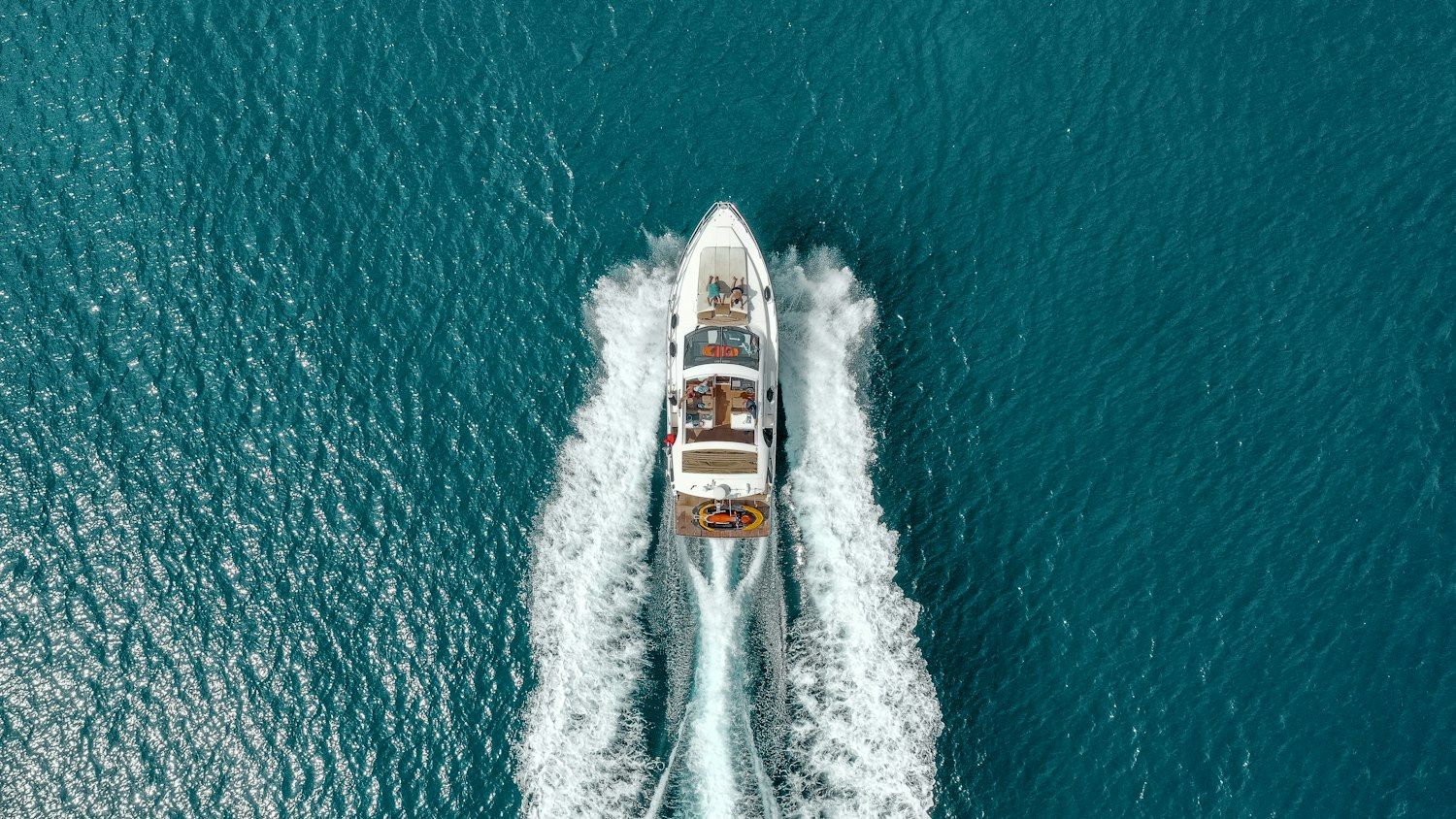
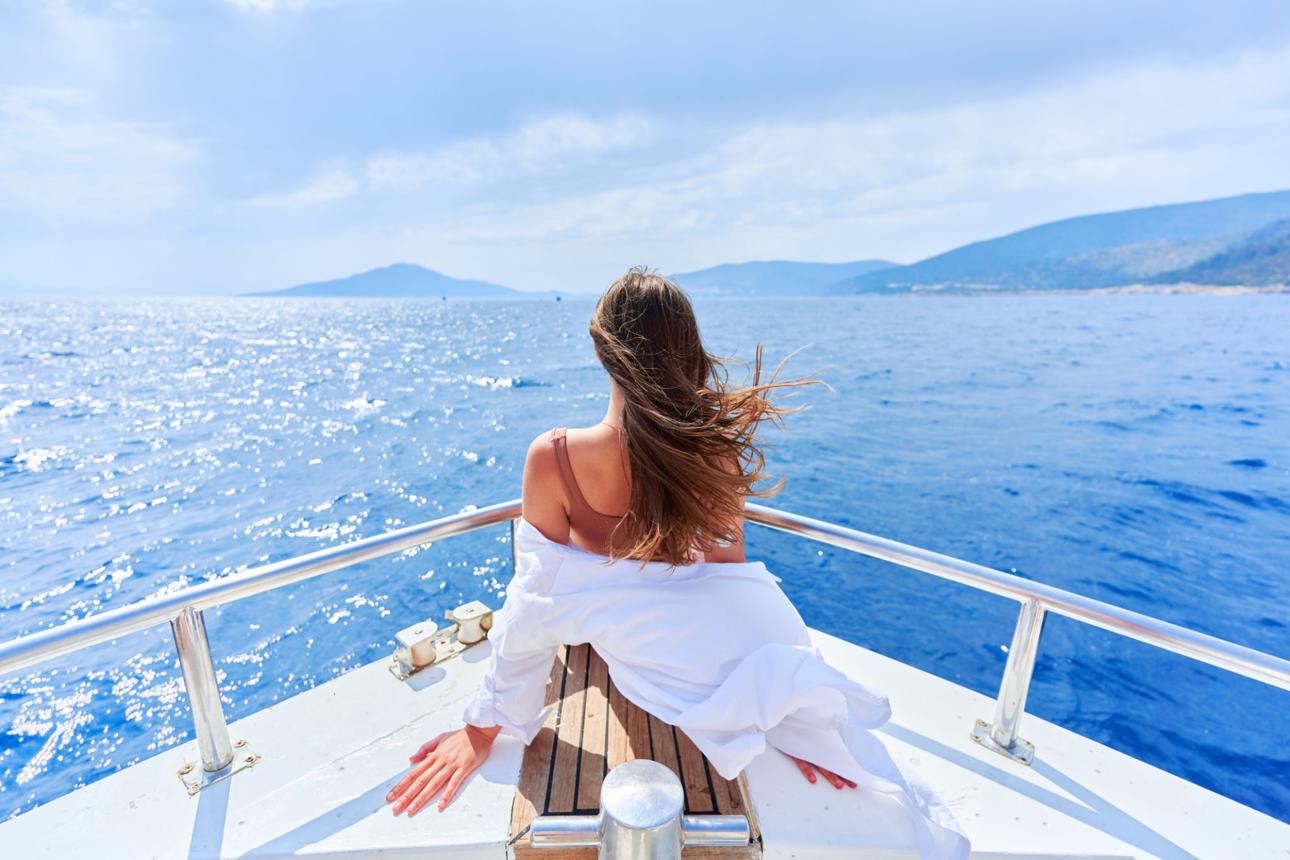
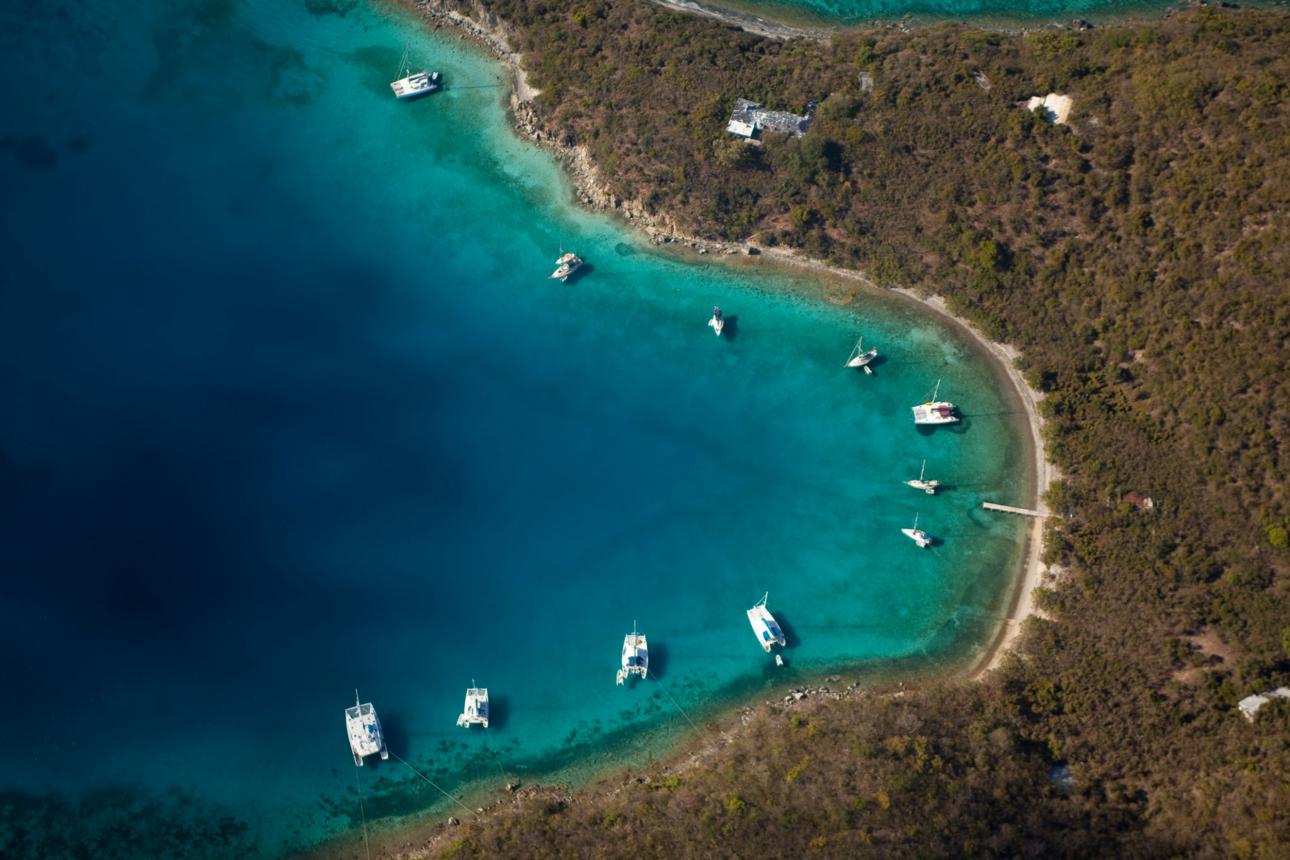
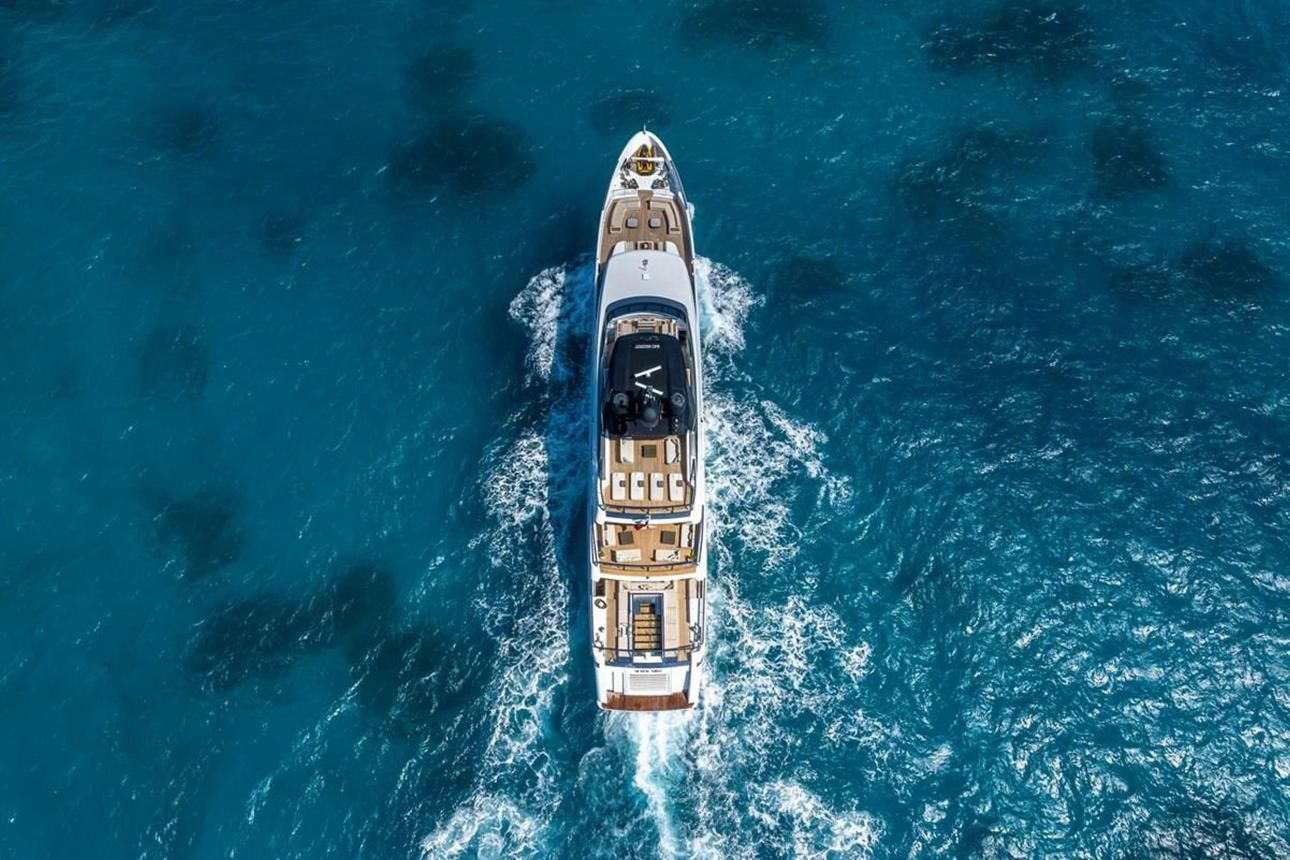
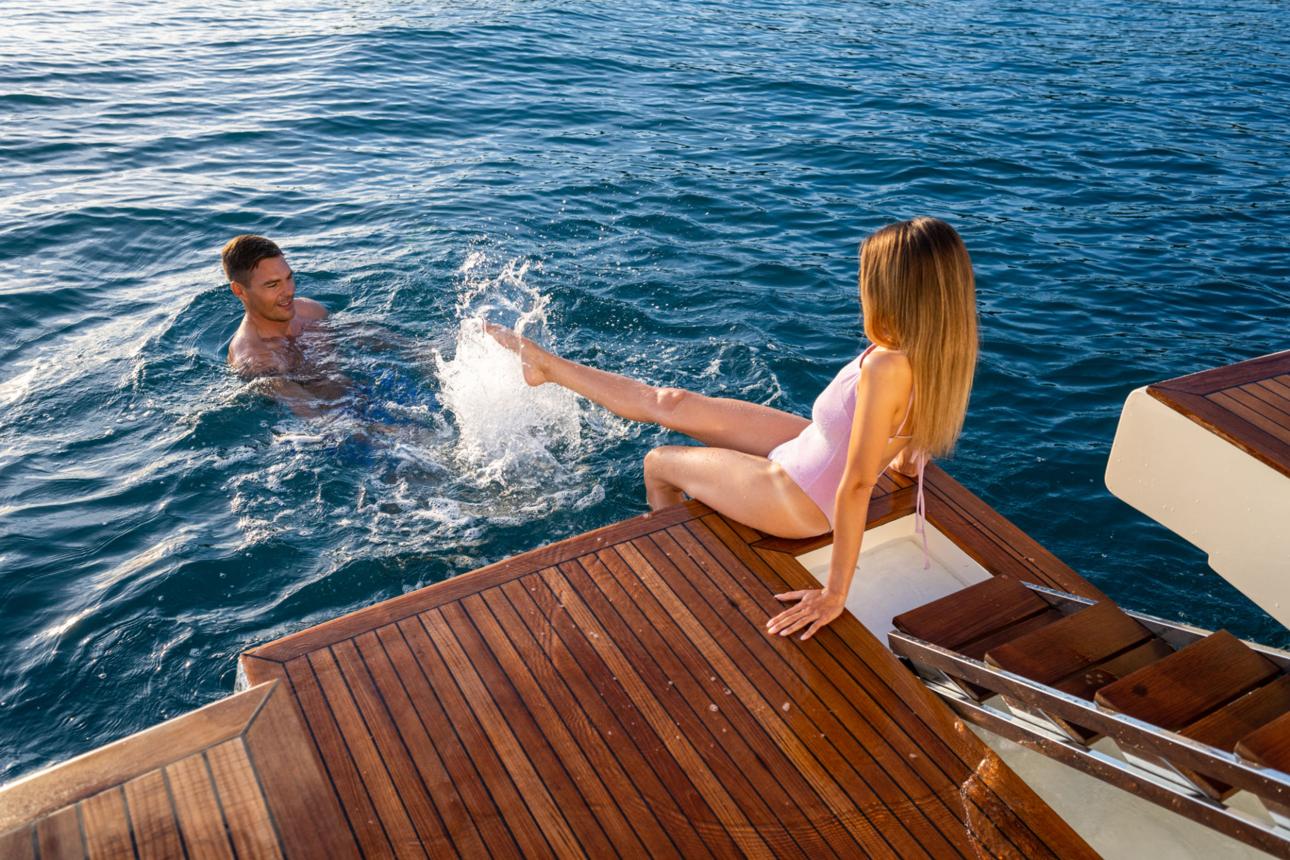
"Revenge travel" gave way to something more specific: a deliberate move away from packed, photo-driven itineraries toward slower, more private, sensory experiences. Water-based travel turns out to be exactly what that shift was looking for.
Desk: Perspectives · Est. read: 5 minThe travel industry spent 2022 and 2023 talking about "revenge travel" — the post-pandemic surge in bookings as people made up for years of canceled plans. What's emerged since is more interesting and more durable: a genuine shift in what American travelers actually want from a trip, away from the maximalist, see-everything itinerary and toward something quieter, more private, and more sensory.
Travel + Leisure has tracked this explicitly in its annual travel trend reporting, identifying "quiet travel" and a preference for fewer, deeper experiences over crowded landmark-checking as one of the defining shifts among American leisure travelers over the past two years.
A day on a chartered boat is, almost by structural necessity, the opposite of a crowded landmark experience. There's no line. There's no crowd of other tourists in your photos. The itinerary bends to your actual interests rather than a bus schedule. Condé Nast Traveler has specifically named small-group and private water experiences among the categories benefiting most from this broader travel mood shift, citing built-in privacy and sensory engagement — wind, water, open horizon — as qualities increasingly scarce in mainstream tourism.
This isn't really about boats specifically. It's about what boats happen to offer structurally: a private, slower, less photographed, more genuinely experienced version of travel that the broader market has been moving toward since the pandemic recalibrated what people actually wanted from a vacation.
Nobody plans a vacation around a crowded landmark anymore if they can help it. A chartered boat is one of the few travel experiences that is private by default, not as an expensive upgrade.
Survey data referenced by Travel + Leisure has consistently shown rising American traveler interest in "experiential" categories — cooking classes, private guided experiences, small-boat excursions — outpacing growth in traditional sightseeing tour bookings. The pattern holds across age groups, though it skews particularly strong among travelers in their 30s and 40s who have explicitly cited "crowds" as a primary detractor from recent trips in post-vacation surveys.
This demand shift has happened faster than the supply side has adapted. Most American coastal destinations still market boat tourism through the same large commercial operators that have always dominated visibility — not because they're better, but because they've always had the marketing budget to dominate search results and local advertising.
The mismatch between traveler demand for private, small-scale water experiences and the visibility of operators who actually provide them is closing, primarily through direct booking platforms that don't require a marketing budget to be discoverable. Marina Smart exists specifically to solve this discovery gap — connecting the travelers who want exactly the kind of quiet, private, water-based experience the broader travel industry has identified as the future of leisure travel, directly with the individual captains and boat owners who have always been able to provide it, but never had an efficient way to be found.
The shift in what American travelers want has already happened. The infrastructure to actually find it is what's catching up.
Category: Nautics Target audience: B2C — American sailors, charter guests, experience travelers planning a sailing tripPrimary keyword: best sailing destinations USA Secondary keywords: best places to sail in America, US sailing spots, yacht charter destinations United States, where to sail in America Meta description: Not the tourist list. These are the US sailing destinations that experienced captains and repeat charterers keep coming back to — and why each one is different.
Every travel website has a "best sailing destinations" list.
Most of them repeat the same five places. None of them explain what makes each destination worth choosing — or who it is actually right for.
This is a different kind of list.
These are the US sailing destinations that experienced sailors and repeat charterers consistently recommend — based on what makes them genuinely distinctive on the water.
The Florida Keys are the most accessible charter market in the United States, and that accessibility is their biggest advantage.
The water is calm by open-ocean standards. The weather window is long — the Keys operate year-round, with peak season running November through April. The marine infrastructure is dense: marinas, anchorages, fuel docks, and provisioning options are never far. NOAA's Florida Keys National Marine Sanctuary covers roughly 2,900 square nautical miles of protected waters — making the snorkeling and diving among the most biodiverse in North America.
For someone doing their first skippered charter, the Keys remove uncertainty without removing the experience. If you are still deciding between charter types, our How to Charter guide explains the difference between bareboat, skippered, and crewed options clearly.
The stretch between Key Largo and Key West offers a range of anchorages, from busy (Key West harbor) to genuinely isolated (the backcountry between the islands).
Best for: First-time charterers. Groups who want warm, calm water. Anyone who values infrastructure and accessibility.
Season: Year-round. Avoid hurricane season (June–November) if you prefer predictable weather.
The USVI — particularly the waters between St. Thomas, St. John, and the British Virgin Islands — is considered by many experienced sailors to be the finest bareboat charter destination in the Western Hemisphere.
The reason is technical: consistent trade winds from the east-northeast, relatively flat seas in the Sir Francis Drake Channel, and a concentration of anchorages so close together that you can cover significant ground without long offshore passages. The Virgin Islands Charterers League maintains a directory of licensed operators in the territory — a useful starting point for vetting operators before you book.
For sailors with their own certifications, the USVI offers a level of independent sailing that almost nowhere else in the US market can match. You hop between islands on day sails. You anchor in bays that are either completely empty or just populated enough to feel social. You clear customs into the BVI if you want to extend your range.
Best for: Experienced sailors doing bareboat. Groups with sailing backgrounds. Anyone wanting to combine US territory with easy access to the BVI.
Season: December through April. Avoid September and October.
The Chesapeake is the largest estuary in the United States, and it is unlike any other major US sailing destination.
The Bay is shallow, which keeps the waves relatively manageable even in strong winds — making it excellent for learning and for inland sailors who want a forgiving environment. The cruising ground is enormous: over 11,000 miles of shoreline, dozens of navigable rivers, and a network of small towns and working waterfronts that have defined American maritime culture for centuries. The Chesapeake Bay Maritime Museum in St. Michaels is worth a half-day if you stop in the Miles River — it puts the sailing culture of the region in sharp context.
What distinguishes the Chesapeake from the Keys or the USVI is its character. This is not a tropical sailing destination. It is a distinctly American one — working crab boats, colonial-era harbors, ospreys on channel markers.
Best for: Sailors who want a real cruising ground, not just a sailing backdrop. Families. East Coast sailors who want somewhere accessible from major population centers.
Season: May through October. Peak season is summer.
San Juan Islands, Washington — the waters between the mainland and Vancouver Island — represent the Pacific counterpart to the Chesapeake, but with wilder scenery and more demanding conditions.
The Pacific Northwest sailing is not forgiving. Tidal currents through the passes require planning and timing. NOAA's tidal current predictions for Deception Pass and Rosario Strait are essential reading before you go. Fog is a regular presence. The weather changes faster than on the East Coast.
But for sailors who want somewhere that feels genuinely remote — where you anchor in a bay with eagles overhead and no other boats in sight — the Pacific Northwest delivers an experience that no other US sailing destination replicates.
The San Juan Islands themselves are extraordinary: 172 named islands and reefs, orca populations that make regular appearances through the summer months, and a maritime culture that takes its sailing seriously. The San Juan Islands Visitors Bureau maintains updated seasonal guidance on wildlife viewing and anchorage conditions.
Best for: Experienced sailors. Anyone who finds the Caribbean too crowded. Sailors coming from the Pacific who want domestic waters.
Season: June through September.
The honest answer depends on two things: your experience level and what you want to feel.
If you want warmth, accessibility, and a first charter that goes smoothly — Florida Keys.
If you want the most technically satisfying bareboat sailing in American waters — USVI.
If you want history, culture, and a massive cruising ground to explore at your own pace — Chesapeake.
If you want somewhere that still feels genuinely wild — Pacific Northwest.
None of them are wrong. They are just different. And once you have done one, you will already be planning the next. Here is why that repeat pattern happens — and what the second trip usually looks like.
Find your charter across all four.
Marina App connects travelers with verified operators across US sailing destinations. Real availability. Clear pricing. Book the way you would expect a modern platform to work.
Explore available charters →
Published by Marina Smart Journal — charter insights for people who take the water seriously.
Most American travelers picture exactly one version of "boat day" — a crowded party boat with a cash bar. There is an entirely different category of on-water experience that almost nobody markets correctly, and it's the one experienced travelers are quietly switching to.
Desk: Nautics · Est. read: 5 min
Type "boat day near me" into Google in any major US coastal city and the results skew heavily toward one format: large-capacity party boats, loud, crowded, alcohol-centric, designed for a bachelorette party rather than a genuine day on the water. That format has its place. It is also not the only thing available, and a growing number of American travelers — particularly the demographic Travel + Leisure has identified as seeking "quiet luxury" experiences over Instagram-driven group activities — are discovering that the alternative is both more enjoyable and, in many cases, no more expensive.
The alternative is the small-group or private charter: a properly captained boat, four to eight guests, an itinerary built around actual coastline rather than a fixed party-boat loop, and a level of attentiveness that scales inversely with the number of people aboard.
A large party boat operates on volume economics — fill the boat, run the same loop multiple times a day, keep the bar moving. A private or small-group charter operates on experience economics — the captain adjusts the route based on weather, current interests, and what's actually worth seeing that day. Condé Nast Traveler has covered this shift extensively in its yacht and sailing coverage, noting that smaller, more personal charter experiences increasingly outperform larger commercial operations in guest satisfaction surveys, even at comparable per-person price points.
The price difference is smaller than most first-time charter guests expect. A four-hour private charter for a small group, split among four to six people, frequently lands in a similar per-person range to a premium ticket on a large commercial boat — without the crowd, the fixed schedule, or the forced itinerary.
The party boat sells you a seat. The private charter sells you the actual water — where you go, how long you stay, and whether today is a swimming day or a sightseeing day.
Coastal cities with strong charter markets — Miami, San Diego, Charleston, the San Juan Islands — increasingly offer both formats side by side, and the price-comparable nature of small private charters has become more visible as direct booking platforms make it easier for individual captains and small operators to list without the marketing budget that large commercial fleets have always had. Yachting Magazine has tracked this democratization specifically, noting that boats and captains previously accessible only through high-end brokers or word-of-mouth are increasingly bookable directly online.
The challenge has historically been discovery — small operators and individual captains rarely had marketing budgets to compete with large commercial boat tour companies in search results or local advertising, even when their actual product was superior. This is exactly the gap that platforms like Marina Smart are built to close: a place where travelers can search verified, reviewed private charter options directly, compare real boats and real captains rather than scrolling past the same handful of heavily-advertised commercial operators, and book a genuinely personalized day on the water with the same ease as booking a restaurant table.
For a first-time charter guest deciding between formats, the honest answer is: if you want photos for the group chat and don't care where you go, the party boat works fine. If you actually want a good day on the water — somewhere quiet, somewhere with good light, somewhere worth remembering — the small private charter is very likely worth the search.
Every year, thousands of boats are damaged or destroyed not by the storm itself, but by decisions made weeks before it ever formed. Here's what the data actually says about haul-out timing, storage, and risk.
Desk: Nautics · Est. read: 5 min
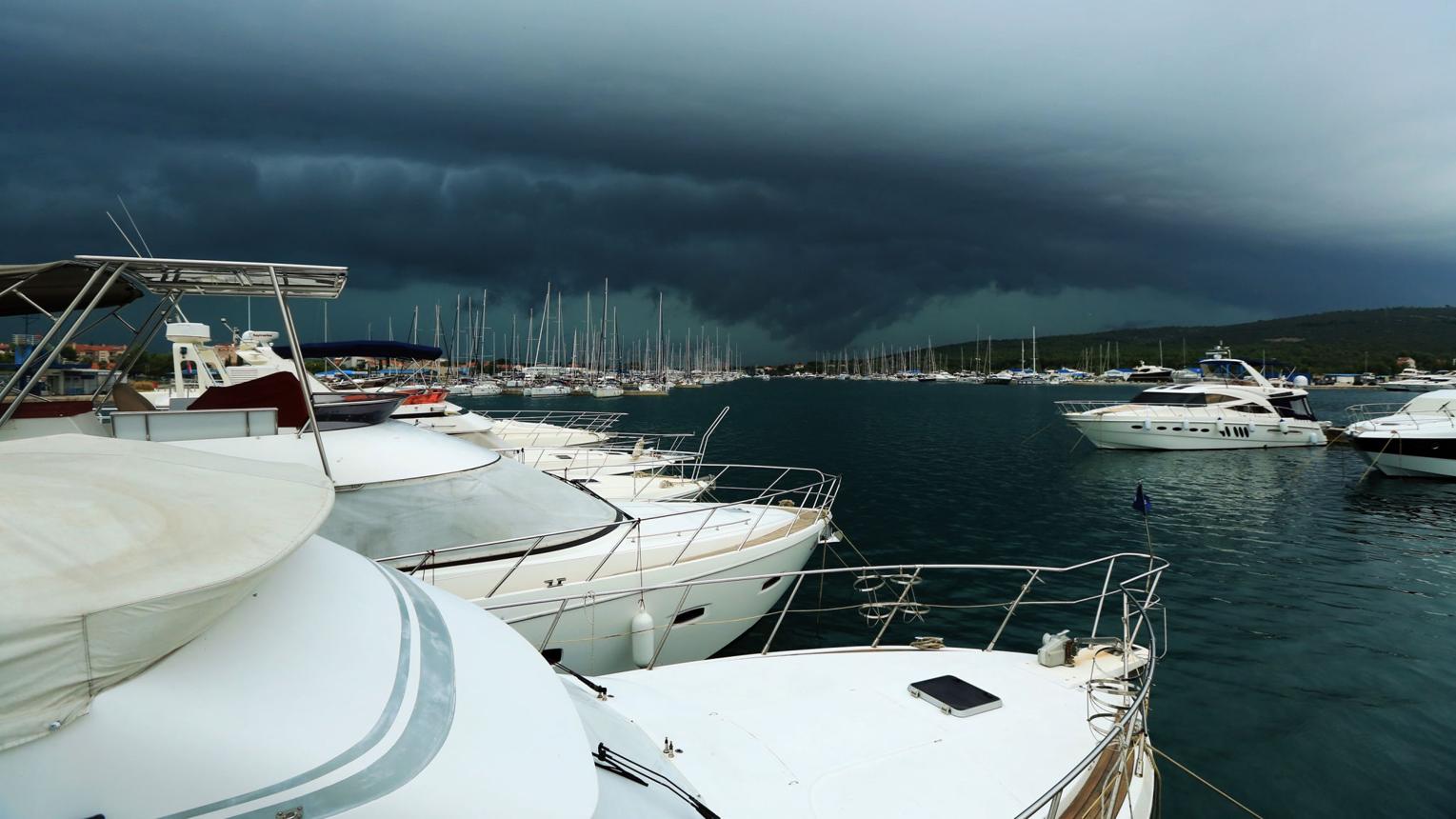
Atlantic hurricane season runs June through November, and according to NOAA's National Hurricane Center, the peak threat window for the Gulf Coast, Florida, and the Eastern Seaboard concentrates heavily between August and October. Most boat owners know this. What fewer of them know is how badly the standard advice — "haul out before the season" — fails to match what insurers and marine surveyors actually see after a storm.
The data from major claims, compiled annually by BoatUS through its catastrophe response teams, tells a consistent story: boats lost to hurricanes are disproportionately boats that were left in the water on standard mooring setups, in marinas without storm-rated infrastructure, with owners who had a plan that assumed more lead time than the storm actually gave them.
The math is unforgiving. A Category 3 storm can form and make landfall within 72 hours. Boatyards across an entire region book out completely within 24–48 hours of a watch being issued — every available lift, every available trailer slot, every available hand on deck. Owners who wait for a forecast before calling their marina are, in practice, competing with every other owner in the region for the same finite haul-out capacity.
This is why the National Marine Manufacturers Association consistently recommends a pre-season plan rather than a storm-triggered one: identify your haul-out yard, confirm your slot, and understand your insurer's specific named-storm deductible before June 1st, not after a watch is issued.
The boats that survive hurricane season aren't the ones with the best owners during the storm. They're the ones with a plan made in April.
Marine surveyors who inspect post-storm damage consistently point to the same factors. Boats stored on land, properly strapped and blocked, survive at dramatically higher rates than boats left on moorings or even in well-protected marina slips. Storm surge, not wind, causes the majority of total losses — which means location matters more than most owners assume. A marina rated for 100-knot winds can still flood if it sits in a surge zone.
Dock lines matter more than owners think. The standard recommendation from BoatUS calls for doubled lines with chafe protection at every contact point, and significant slack to accommodate storm surge — a boat tied tightly for calm water will tear its cleats out when the water rises six feet.
Standard recreational boat insurance policies often include a separate, higher deductible specifically for named storms — sometimes 1-2% of the insured value, which on a $200,000 vessel means a $2,000–4,000 deductible that owners frequently don't discover until they're filing a claim. Reading this clause before the season, not during it, is the single highest-leverage five minutes a boat owner can spend in May.
For owners who charter their vessel commercially — an increasingly common model as platforms like Marina Smart make direct booking accessible to individual operators — commercial marine insurance typically requires separate storm preparedness documentation, and insurers increasingly ask for proof of a written hurricane plan as a condition of coverage. This is a genuinely useful forcing function: owners who charter are required to think about this earlier than owners who don't.