MARINA No. 03 — The Boat Economy Back to the magazine
MARINA
The Magazine of the Water
No. 03 · Juin 2026
The Boat Economy
Cover Story · The Journal
The $36 Billion Industry Still Running on Spreadsheets
The global yacht charter market is projected to reach $36 billion by 2030. Most of it is still managed with spreadsheets. That is not an exaggeration.…
The Journal
The Berth Is the Cheapest Thing the Marina Sells
The Journal
The Quiet Billionaires: Why Marina Owners Are Sitting on…
The Journal
The Country That Is Building 10 New Marinas From…
The Editors, Marina Boat App
Marinas, berths, gig captains and the platforms taking a cut: the money moving across the water.
MARINANo. 03 · Juin 2026
Contents
The Boat Economy
I
The Journal
The $36 Billion Industry Still Running on Spreadsheets
II
The Journal
The Berth Is the Cheapest Thing the Marina Sells
III
The Journal
The Quiet Billionaires: Why Marina Owners Are Sitting on Assets They Don’t Know How to Monetize
IV
The Journal
The Country That Is Building 10 New Marinas From Scratch — And What It Tells Us About the Future of the Sea
In This Issue · blog.marinasmart.app
The Journal
Airbnb Was Built on Air Mattresses. The Boat Version of That Story Is Being Written Right Now.
The Journal
The Airbnb Moment for Boats Is Happening Right Now — And Most Operators Are Missing It
The Journal
Uber Created the Gig Driver. The Next Decade Creates the Gig Captain.
The Journal
Waterfront Slips Are Outperforming the Stock Market in Some US Markets. Almost Nobody Is Talking About It.
The Journal
The American Boat Owners Making Six Figures With One Vessel — And the Three Things They Do Differently
The Blue Economy
The Enduring Value of Waterfront Infrastructure
Perspectives
If Your Marina Still Runs on a Spreadsheet, You’re Losing Bookings Every Single Week
Special Edition
An Edition Made for You. — blog.marinasmart.app/special-edition/
Feature I · The JournalMARINA No. 03
The $36 Billion Industry Still Running on Spreadsheets
The global yacht charter market is projected to reach $36 billion by 2030. Most of it is still managed with spreadsheets. That is not an exaggeration. Talk to charter operators across Florida, the Caribbean, or the Mediterranean. Ask them how…
By the Editors · blog.marinasmart.app/the-36-billion-industry-still-running-on-spreadsheets/

The global yacht charter market is projected to reach $36 billion by 2030.

Most of it is still managed with spreadsheets.

That is not an exaggeration. Talk to charter operators across Florida, the Caribbean, or the Mediterranean. Ask them how they track availability, manage bookings, handle crew scheduling, and process payments.

The honest ones will tell you: email threads, WhatsApp groups, Excel files, and manual bank transfers.

This is not a technology problem. It is a structural one. And it creates real, measurable costs.

What Manual Operations Actually Cost

The inefficiency is not abstract. It shows up in specific, calculable ways.

Double bookings. When availability is tracked manually across multiple channels — a listing platform, a direct website, word-of-mouth referrals — conflicts happen. A double booking during peak season is not just an inconvenience. It is a reputation event.

Lost leads. An inquiry that arrives on a Friday afternoon and gets answered on Monday has a high chance of going to a competitor. Harvard Business Review research found that companies that respond to leads within an hour are seven times more likely to qualify them than those who wait even 60 minutes. In charter, where decisions are high-consideration, that window is even shorter.

Currency and payment friction. International customers — which represent a significant share of premium charter demand — often encounter wire transfer requirements, manual invoicing, and unclear payment timelines. Some walk away. Stripe's global payments research consistently shows that conversion rates drop significantly when payment requires more than one step.

Crew scheduling gaps. When crew availability is managed separately from vessel availability, scheduling conflicts create last-minute operational problems that fall on the captain and the client simultaneously. For a closer look at how crew management works inside a real operation, our piece on what charter crew actually deal with daily gives useful context.

No data. Most charter operators cannot tell you their average booking lead time, their seasonal occupancy rate, or their top-performing distribution channel. Because nothing is tracked in a system that produces that data.

Each of these has a dollar value. Most operators have never calculated it.

Why the Industry Stayed Manual

The resistance to digital tools in charter operations is not irrational.

The industry is relationship-driven. Repeat clients, broker referrals, marina introductions — these have historically been the primary distribution channels. And those relationships work. They do not require software.

The problem is that relationship-based distribution has a ceiling. It scales with the operator's personal network. It does not scale with the market.

The charter market is growing. New demand is coming from demographics and geographies that were not in those traditional networks. Younger high-net-worth travelers. International clients from the Gulf, Asia, and Eastern Europe. People who discovered sailing during the pandemic and want to charter regularly. McKinsey's 2023 travel report identifies experiential travel as the fastest-growing segment of global leisure spending — and yacht charter sits at the premium end of that category.

These customers find vessels online. They expect real-time availability. They want to pay with a card. They do not have a broker contact to call.

Operators who are not accessible through structured digital channels are invisible to this demand. This is the same structural gap that existed in accommodation before Airbnb — a dynamic we explored in detail in The Airbnb Moment for Boats Is Happening Right Now.

What the Digitalized Operators Are Seeing

The charter companies that have moved toward integrated management systems report consistent patterns:

None of this requires replacing the relationship-based core of the business. It layers distribution and operational infrastructure on top of what already works.

The Infrastructure Layer the Industry Is Missing

Every major travel vertical has an infrastructure layer.

Hotels have property management systems connected to OTAs. OPERA is the standard PMS for large hotel groups. Airlines have GDS — Amadeus processes over 600 million bookings annually. Short-term rentals have channel managers like Guesty that synchronize availability across 20+ platforms simultaneously.

Charter has none of that at scale. There is no standard booking layer. No unified availability system. No structured payment infrastructure that works globally.

That gap is now being filled. The Blue Economy as a sector is attracting increasing institutional attention — and the infrastructure that supports it is a logical place for that capital to go.

Platforms built specifically for the marine industry — combining marketplace distribution, fleet management, crew coordination, and structured payments — are beginning to create the infrastructure that charter operators need to grow beyond their current ceiling.

The operators who adopt early build a structural advantage. Better data. Lower operational cost per booking. Access to demand channels their competitors cannot reach.

The Question Worth Asking

If your fleet is running at 60% occupancy and you do not know exactly why, the answer is probably not marketing.

It is infrastructure.

List your fleet on Marina App.

Marina App is building the booking and operations infrastructure for charter companies that are ready to grow. Real-time availability. Structured bookings. Multi-currency payments. Fleet and crew management in one place.

Early partners join with zero listing fees for the first season.

Apply to become a Founding Partner →

Published by Marina Smart Journal — business intelligence for the marine industry.

Marina Boat App
You want to earn money? List your boat — free — 0%.
App Store · apps.apple.com/app/id6780864722
Feature II · The JournalMARINA No. 03
The Berth Is the Cheapest Thing the Marina Sells
For most of the past fifty years, a marina’s revenue model was essentially a parking lot with water access. Boats arrived, paid a nightly or monthly berth fee, and the relationship between the marina and the vessel ended there. The…
By the Editors · blog.marinasmart.app/the-berth-is-the-cheapest-thing-the-marina-sells/

For most of the past fifty years, a marina's revenue model was essentially a parking lot with water access. Boats arrived, paid a nightly or monthly berth fee, and the relationship between the marina and the vessel ended there. The marina took the parking money. Everything else — fuel, maintenance, provisioning, crew hire, insurance, equipment — was handled through a disconnected ecosystem of third parties operating in the marina's vicinity but entirely outside its commercial reach.

This model persisted not because it was optimal, but because no alternative infrastructure existed to replace it.

That is beginning to change.

What a Marina Actually Controls

Consider what a marina operator has that no other business in the region possesses: a captive audience of boat owners with specific, predictable, high-frequency needs. Fuel. Electricity. Water. Maintenance. Cleaning. Provisioning. Crew hire. Insurance renewal. Equipment repair. And critically — a physical location that functions as the entry and exit point for every nautical experience the region offers.

This is not a parking lot. It is a commercial platform with a defined user base. According to the European Boating Industry Association, the European recreational boating market generates tens of billions in annual economic activity — the vast majority of which flows through or adjacent to marina facilities. The marina itself captures a fraction of what it enables.

The fuel supplier on the corner, the chandlery two streets away, the skipper hired through a WhatsApp group, the catering company provisioning the charter from a van — all of these represent economic activity that the marina's berth fee made possible but that the marina never touches.

The SaaS Infrastructure Shift

Marina management software has existed for decades — primarily as berth scheduling tools for harbour masters. What is now emerging, particularly among more forward-thinking operators in Northern Europe and, increasingly, in the Mediterranean, is a different category of platform: one that treats the marina not as a parking facility but as the operational anchor of a local water economy.

The International Marina Institute has documented the growing interest among marina operators in digital revenue diversification, with ancillary services becoming a strategic priority for operators seeking to reduce seasonal revenue volatility.

The shift works as follows: when a boat owner books a berth through an integrated marina management system, that same interaction becomes the trigger point for connected services — a fuel pre-order, a cleaning booking, a crew request, a provisioning list. The marina moves from being the place the boat parks to being the commercial layer through which the entire stay is managed.

The economic implications are significant. A marina capturing 10% of the ancillary spend its berths generate is a structurally different business from one capturing only the berth fee. In a 200-berth marina with an active charter clientele, that difference is the gap between a marginal operation and a genuinely profitable one.

Why Mediterranean Marinas Are Behind

The Mediterranean charter industry is the most active nautical tourism market in the world. Croatia, Greece, Italy, Spain, and Turkey collectively account for the majority of European bareboat and crewed charter activity. And the digital infrastructure supporting this activity is, by the standards of any comparable hospitality sector, underdeveloped.

The reasons are structural. Mediterranean marinas are frequently family-owned and have operated the same way across generations. The capital required to modernise feels disproportionate relative to current margins built on berth fees alone. And the technology options available until recently were poorly adapted to marina operations — built for hotels, modified imperfectly, never quite right.

The reasons are also cultural. An industry built on personal relationships, on the harbour master who knows every regular by name, does not adopt software on a venture capital timeline.

The Opening

What is shifting is a generational transition — in marina ownership and in the charterers using them. A 35-year-old boat owner expects digital booking, real-time berth availability, integrated payment, and a service record accessible through an application. They are not asking for luxury. They are asking for what every other hospitality category already provides as standard.

Platforms beginning to build this integrated layer for the marine economy — connecting berth booking with crew networks, local services, and the full commercial ecosystem around a marina — are still early. But the marinas that move first will not simply operate more efficiently. They will attract the charter operators and private owners who have options and choose based on the quality of the total experience, not just the depth of the water.

The berth was never the product. It was always the beginning of the transaction.

Marina Boat App
You want to earn money? List your boat — free — 0%.
App Store · apps.apple.com/app/id6780864722

Marina Boat App
Everything on the Water, in One Place
Boats and crewed charters, water taxis, fishing and diving trips, crew and berths — found on a map, arranged directly with the host.
Download on the App Store0% · Commission, permanently
Feature III · The JournalMARINA No. 03
The Quiet Billionaires: Why Marina Owners Are Sitting on Assets They Don’t Know How to Monetize
There is a category of asset in the global economy that is simultaneously scarce, legally protected, physically irreplaceable, and dramatically undermonetized. It sits at the intersection of geography, regulation, and growing demand. It generates a fraction of its potential revenue.…
By the Editors · blog.marinasmart.app/the-quiet-billionaires-why-marina-owners-are-sitting-on-assets-they-dont-know-how-to-monetize/

There is a category of asset in the global economy that is simultaneously scarce, legally protected, physically irreplaceable, and dramatically undermonetized. It sits at the intersection of geography, regulation, and growing demand. It generates a fraction of its potential revenue. And most of the people who own it have no idea what they actually have.

That asset is a marina berth.

The Scarcity Nobody Talks About

You cannot build a new marina wherever you want. Coastal zoning regulations across Europe, the Mediterranean, and most developed maritime markets make new marina development extraordinarily difficult. Environmental protections, competing land use claims, and years-long permitting processes mean that the supply of marina berths in desirable locations is effectively fixed.

Meanwhile, demand is accelerating. The European Boating Industry Association reports consistent growth in recreational boating participation across European markets. The global marine tourism market is projected to reach $1.4 trillion by 2030. The number of berths is not growing proportionally.

This is the economic setup for significant asset appreciation — and marina owners are largely missing it.

What a Marina Berth Is Actually Worth

Most marina operators think about their berths in terms of nightly or annual fees. A 12-metre berth in a mid-tier Croatian marina might generate €3,000–€6,000 per year in berthing fees. In a premium Spanish or Italian marina, significantly more.

But this captures only the most visible layer of value. Every boat in a marina represents a spending unit with specific, recurring, high-value needs: fuel, maintenance, cleaning, provisioning, crew hire, equipment, insurance, concierge services. In aggregate, the ancillary spend of a typical charter boat over a season is multiples of the berthing fee.

The marina collects the parking fee and watches the rest flow to third parties — the fuel supplier around the corner, the chandlery two streets away, the skipper found through a WhatsApp group. According to ICOMIA, ancillary spending by marina users can represent three to five times the value of berth fees alone.

Why This Is Changing Now

Two forces are converging that make this moment different from previous decades.

The first is digital infrastructure. For the first time, platforms exist that can connect a marina's captive audience of boat owners with the full ecosystem of services around them — not through a brochure at the reception desk, but through integrated booking, real-time availability, and seamless payment. What was impossible to coordinate manually becomes automatic at scale.

The second is generational transition. Marina ownership across the Mediterranean is shifting from founders who built their facilities in the 1970s and 1980s to a generation that grew up with smartphones and expects digital infrastructure as standard. This transition is happening now, across hundreds of facilities from the Adriatic to the Balearics.

Platforms like Marina Smart are building exactly this infrastructure — connecting marina SaaS management with boat booking, crew networks, and local service ecosystems. The marinas that integrate early will not just operate more efficiently. They will capture revenue streams that their competitors are still leaving on the table.

The Hotel Analogy

Twenty years ago, a small family-run hotel in a desirable location generated revenue primarily from room rates. The idea that the same property could generate additional revenue from dynamic pricing, ancillary services, experience packages, and distribution through multiple booking channels simultaneously was theoretical.

Then the infrastructure caught up. The hotels that adopted it first didn't just survive — they redefined what a hotel business could look like financially.

Marina economics are at the same inflection point. The berth is the room. The ancillary ecosystem is everything the hotel learned to monetize. The infrastructure is finally arriving.

What Smart Marina Operators Are Doing

The operators who understand this are not waiting for a single dominant platform to emerge. They are building digital relationships with their existing clientele now — capturing email addresses, offering pre-arrival service booking, integrating fuel and provisioning orders into the arrival process.

The ones who are not doing this will find, within five years, that the ones who did have a structural cost and revenue advantage that is very difficult to close.

Waterfront real estate is the scarcest asset class in the developed world. The question is no longer whether marina assets will be worth more in ten years. It is whether the people who own them will be the ones capturing that value — or watching someone else do it.

Marina Boat App
You want to earn money? List your boat — free — 0%.
App Store · apps.apple.com/app/id6780864722

Feature IV · The JournalMARINA No. 03
The Country That Is Building 10 New Marinas From Scratch — And What It Tells Us About the Future of the Sea
When a government commits to building ten new marinas simultaneously, it is not making a tourism decision. It is making an infrastructure bet — a statement about where economic value will concentrate in the coming decades and a deliberate move…
By the Editors · blog.marinasmart.app/the-country-that-is-building-10-new-marinas-from-scratch-and-what-it-tells-us-about-the-future-of-the-sea/

When a government commits to building ten new marinas simultaneously, it is not making a tourism decision. It is making an infrastructure bet — a statement about where economic value will concentrate in the coming decades and a deliberate move to be positioned there before the competition arrives.

Saudi Arabia is making that bet right now. And the scale of what is being built along the Red Sea coast is unlike anything happening elsewhere in the maritime world.

What Is Actually Being Built

The NEOM project alone — the Saudi mega-development on the Red Sea coast — includes multiple marina facilities as core infrastructure, not afterthoughts. The Red Sea Global development authority is overseeing marina construction at multiple sites along a coastline that, five years ago, had almost no recreational nautical infrastructure at all.

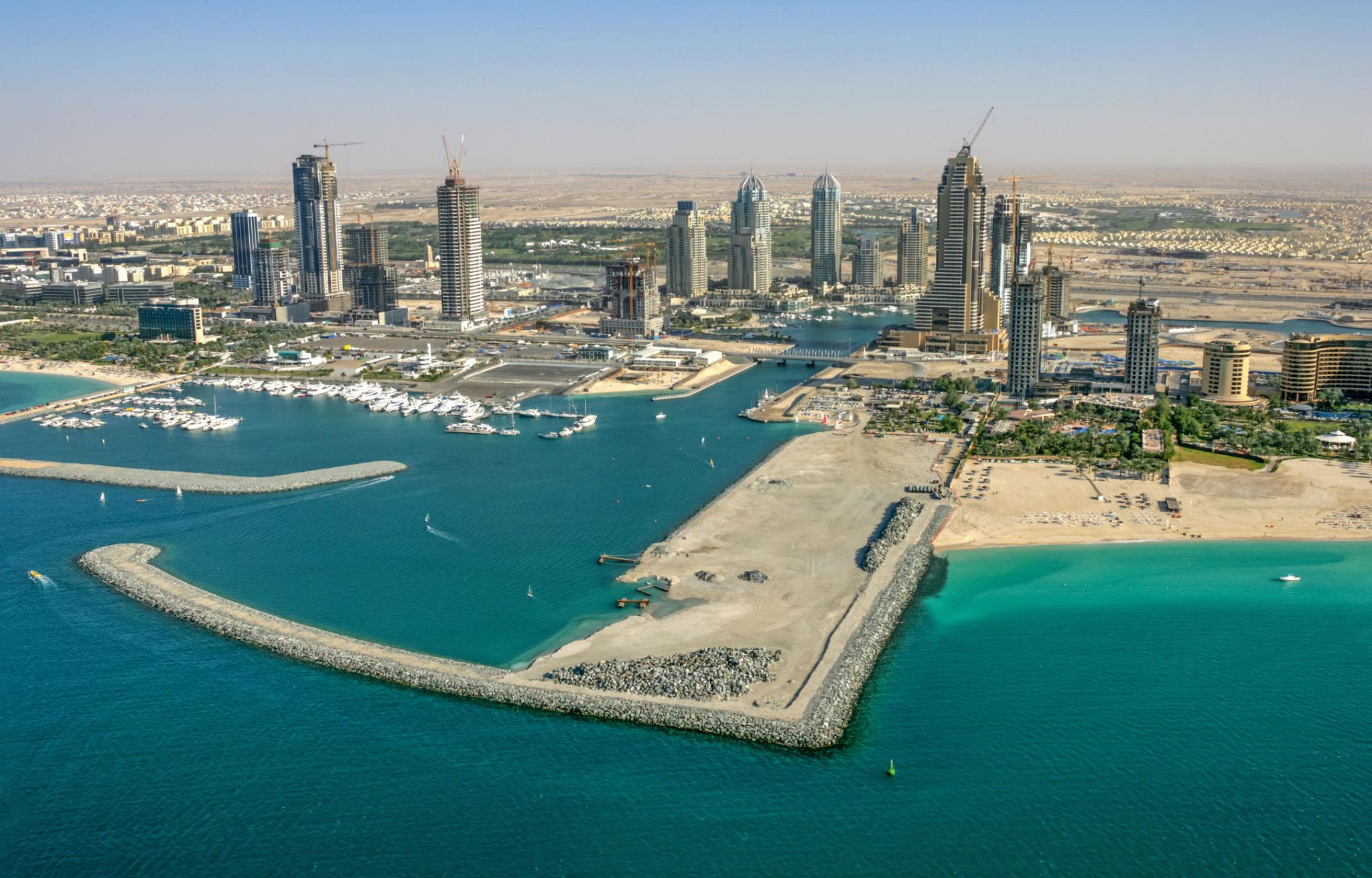
Qatar, where Marina Smart is registered and operating, has expanded its marina capacity significantly — Old Doha Port recorded over 7 million visitors in 2025, and the Pearl Island and Lusail marina developments represent billions in waterfront infrastructure investment. The UAE has been building premium marina facilities for two decades and continues to expand.

The combined marina development pipeline across the GCC represents the largest concentration of new nautical infrastructure investment anywhere in the world. Nothing comparable is happening in Europe, where coastal zoning makes new marina development extraordinarily difficult, or in North America, where existing infrastructure largely meets current demand.

Why This Is Happening Now

Three forces are converging in the Gulf region simultaneously.

The first is economic diversification. Saudi Vision 2030, Qatar National Vision 2030, and equivalent frameworks in the UAE and Bahrain all identify tourism — including nautical tourism — as a strategic alternative to hydrocarbon dependence. Marina infrastructure is both a tourism asset and a signal of economic sophistication.

The second is demographic demand. GCC countries have young, affluent populations with growing appetite for experiential leisure. The yacht charter market in the Gulf Cooperation Council was valued at approximately $579 million in 2025 according to industry estimates, with projected growth of 7.6% annually through 2035. That demand needs somewhere to go.

The third is competitive positioning. The Gulf states are watching each other build. First-mover advantage in premium nautical infrastructure is real and durable — marinas in established locations attract repeat visitors, create operational ecosystems, and generate network effects that late entrants cannot easily replicate.

What the Mediterranean Can Learn

Europe's established charter destinations — Croatia, Greece, Italy, Spain — hold significant natural advantages that no amount of Gulf construction can replicate. The Adriatic's island geography, the Aegean's sailing conditions, the cultural depth of Italian coastal towns: these are not reproducible assets.

But the Mediterranean has structural weaknesses that the Gulf is not inheriting. As we explored in The Quiet Billionaires: Why Marina Owners Are Sitting on Assets They Don't Know How to Monetize, Mediterranean marina economics remain dominated by berthing fees, with the ancillary economy largely uncaptured. And as we examined in The Berth Is the Cheapest Thing the Marina Sells, the digital infrastructure to change this is only now beginning to arrive.

The Gulf is building marinas with digital infrastructure from day one. Booking systems, service integration, data analytics — these are being designed into the facilities, not retrofitted into fifty-year-old harbour masters' offices.

The Implication for the Global Maritime Economy

What Saudi Arabia, Qatar, and the UAE are building is not a regional amenity. It is a global nautical tourism alternative — one that will compete for the same high-value charterers who currently default to the Mediterranean because no serious alternative existed.

The maritime economy is global. The infrastructure being built on the Red Sea and the Arabian Gulf will attract the same European and American charterers who currently fill Croatian and Greek marinas in July. Not all of them. But enough to matter.

The response from Mediterranean operators is not to panic. It is to do what the Gulf is doing from scratch — build the digital layer on top of irreplaceable natural assets, capture the ancillary economy, and create the kind of integrated nautical experience that justifies the premium the Mediterranean commands.

The sea has always been the world's most contested commercial corridor. That competition is intensifying. The operators who understand what is being built right now — on both shores — will be better positioned for what comes next.

Marina Boat App
You want to earn money? List your boat — free — 0%.
App Store · apps.apple.com/app/id6780864722
The Host Guide · For Owners, Captains & Instructors
Your Boat Is Already a Business.
Most of the best captains on the water can’t be found online. Marina Boat App puts them in front of travelers worldwide — and takes nothing for it.
0%
Commission, permanently
5 min
To your first listing
1
Download the app
Free on iPhone. One account for booking and for hosting.
2
Create your account & register as a host
Boat owner, charter operator, fishing guide, instructor, skipper or marina.
3
List your service
Photos in morning light, the route, who it is for. The listing is your storefront.
4
Set price & availability
Your rate, your calendar. What the guest pays is what you keep.
5
Publish — and answer in the app
Travelers message you directly. Manage requests from the host dashboard.
Download & create your account
apps.apple.com/app/id6780864722
MARINA
The Magazine of the Water
Slow travel, honest money, and the coastline in between.
Marina Boat App · App Store · blog.marinasmart.app?lang=fr