MARINA NO. 14 · MARITIME JOURNALISM · THE BLUE ECONOMY
A year ago, Colombia lifted a bronze cannon, a porcelain cup and three silver coins from 600 metres down. It was the first time in 317 years that anything had come up from the San José, the galleon often called the richest shipwreck in the world. Nothing else about her has moved as fast. Spain, an American company, an Andean nation and Colombia itself all claim her, and a tribunal in The Hague will decide what she is worth, and to whom.
In short: The Spanish galleon San José sank off Cartagena, Colombia, in 1708. Colombia, which announced its discovery in 2015, treats the wreck as national heritage and recovered its first objects in November 2025. Sea Search Armada, a US company that says it found the ship in 1982, is claiming about $10 billion in an arbitration under the US–Colombia trade agreement; Spain says the ship is its sovereign property and a war grave; and Bolivia’s Qhara Qhara nation argues the silver was mined by its ancestors. No final ruling has been issued.
On the afternoon of June 8, 1708, during the War of the Spanish Succession, a British squadron caught the Spanish treasure fleet near Barú, south of Cartagena. In the battle that followed, the galleon San José exploded and sank, taking most of her roughly 600 people with her. Historians believe a shot reached her powder magazine.
What she carried has been argued over ever since: silver and gold from the mines of Peru and Upper Peru, today’s Bolivia, much of it in hammered coins called macuquinas, bound for the Spanish crown. Valuations range from about $4 billion to $20 billion, “depending on who is speaking,” as The Art Newspaper put it in reviewing Julian Sancton’s history of the wreck, Neptune’s Fortune.
That range is the first thing to understand about the San José. Nobody outside a few government offices knows exactly what lies on the seabed, and every number carries an interest.
Where is the San José shipwreck, and how was it found?
Its exact position is a Colombian state secret. What is public is that a contractor working for the Colombian government, Maritime Archaeology Consultants, located the wreck on November 27, 2015, and that President Juan Manuel Santos announced the find on December 5.
In 2018 the Woods Hole Oceanographic Institution, whose autonomous vehicle REMUS 6000 imaged the site, released details: the ship lay at about 600 metres (around 2,000 feet), largely buried in sediment, and was identified by bronze cannons cast with dolphin decorations. The images were “good enough to make out the decorative carving on the cannons,” the expedition leader, Mike Purcell, said, as Global News reported.
What has Colombia recovered from the San José?
Very little, deliberately. On November 19, 2025, the Colombian state presented the first objects raised under a research programme called Hacia el corazón del galeón San José: a bronze cannon, a porcelain cup and three macuquinas, along with porcelain fragments and sediment, recovered with the Colombian Navy’s underwater robots, according to the maritime authority DIMAR. The objects went to DIMAR’s submerged-heritage laboratory in Cartagena for long-term conservation. Alhena Caicedo Fernández, director of the Colombian Institute of Anthropology and History (ICANH), said they open a way for citizens to approach the galleon’s history through material evidence.
Not everyone accepts the official account. A Colombian oversight group has alleged unauthorised interventions at the site in 2016 and 2022 and argued that its coordinates had leaked; an archaeologist who has opposed the project said no scientific reason was given for lifting the objects, The Daily Galaxy reported, citing Popular Mechanics. ICANH has repeatedly denied any looting. Those allegations remain unproven.
Every number attached to the San José carries an interest. That is the first fact about her.
Who owns the San José treasure?
Four parties give four answers.
Colombia says the wreck is part of its national heritage and has declared it a protected cultural asset. Officials describe the work as research and preservation, not salvage. Colombia is not a party to UNESCO’s 2001 Convention on the Protection of the Underwater Cultural Heritage, which discourages commercial exploitation of historic wrecks.
Spain says the San José was a state warship, protected by sovereign immunity wherever she lies, and the grave of hundreds of sailors. In December 2023 it asked to take part in the arbitration as a friend of the court; the tribunal declined at the preliminary stage but left the door open later, according to Colombia One.
The Qhara Qhara nation of Bolivia traces the silver to the mines of Potosí, where Indigenous people worked under the colonial forced-labour system, and argues that any claim to the cargo must include theirs, as Naval History magazine noted.
Sea Search Armada, an American company formerly known as Glocca Morra, says it found the ship first.
What is the Sea Search Armada case?
It is the reason the San José is also a business story. In a confidential report dated February 26, 1982, Glocca Morra told Colombian authorities it had found a treasure site off Cartagena. Decrees in 1984 reduced the finder’s share, in the company’s account from 50 percent to 5 percent; years of litigation followed.
In 1994 a Colombian civil court declared a 50-50 split of treasure in the company’s reported area, and in 2007 the Supreme Court addressed its rights again. Colombia’s position is that those rights apply only within the 1982 coordinates, and that the real wreck, found in 2015, lies elsewhere. It has invited the company to inspect its original coordinates; the company calls that a trap, given the imprecision of 1980s navigation.
In 2023 Sea Search Armada took the dispute to arbitration under the US–Colombia Trade Promotion Agreement, administered by the Permanent Court of Arbitration (PCA Case No. 2023-37), claiming about $10 billion plus interest. On February 16, 2024 the three-member tribunal dismissed Colombia’s preliminary objections to its jurisdiction, so the case continues on the merits. Colombia relies on independent expert analysis to argue the company never located the ship. Sources quoted by El Tiempo in September 2026 said the hearings would not start this year, partly because documents must be redacted to keep the coordinates secret.
Why does this matter beyond Colombia?
Because the San José sits on the fault line between two ideas of the sea. In one, a wreck is property: found, salvaged, valued and divided, with lawyers keeping score. In the other, it is heritage and a grave, to be studied slowly and owned, if at all, by the public. “Treasure is trouble, and the more treasure, the more trouble,” as the late diver and author Robert Marx put it, in a line The Art Newspaper’s review of Sancton’s book recalls.
The money in this fight is unlikely ever to look like the headline figure. Coins that cannot be sold because a state calls them heritage have no market price; a cannon in a laboratory earns nothing. The real value at stake is a precedent: whether a 1980s salvage claim can bind a state’s underwater heritage four decades later, and whether a trade agreement written for investors is the right place to decide it. Every coastal nation with historic wrecks in its waters, from the Caribbean to the Adriatic, has a reason to watch.
For now the galleon stays where she has been for 317 years, in the dark, half buried, her dolphins still visible on the bronze. Whatever the tribunal decides, the most honest description of her contents remains the oldest one: what a falling empire tried to carry home, and could not.
Frequently asked questions
How much is the San José shipwreck worth?
Estimates of its cargo range from about $4 billion to $20 billion, depending on the source. Sea Search Armada’s arbitration claim is about $10 billion, roughly half of a $20 billion estimate. No independent valuation of what is actually on the seabed has been published.
Where did the San José sink?
Off Cartagena, Colombia, near the island of Barú, on June 8, 1708, during a battle with a British squadron. The wreck lies at about 600 metres; its exact coordinates are a Colombian state secret.
Who discovered the San José?
Colombia says Maritime Archaeology Consultants, working for the government, found it on November 27, 2015, with imaging by the Woods Hole Oceanographic Institution. Sea Search Armada says it found the ship in 1982; Colombia disputes that.
Has the San José case been decided?
No. In February 2024 the arbitral tribunal rejected Colombia’s jurisdictional objections, and the case continues. Reports in September 2026 said hearings would not begin in 2026.
What is Legal Smart Journal, MARINA’s partner magazine?
Legal Smart Journal (legalsmart.media) is an international legal-science magazine published by Vuk Bilić, the publisher of MARINA. It connects law, evidence, medicine, science and human rights, and follows each story from prevention to protection and justice, including what people and communities can do to protect themselves in war and crisis. MARINA supports it as its partner publication.
How we reported this
Legal details come from the tribunal’s Decision on Preliminary Objections of February 16, 2024 in PCA Case No. 2023-37, published by italaw, and from reporting by Colombia One (citing El Tiempo) and the US Naval Institute’s Naval History magazine. The 2025 recovery comes from DIMAR’s official statement; the 2015 discovery and 2018 identification from the tribunal decision and Woods Hole’s findings as reported by Global News.
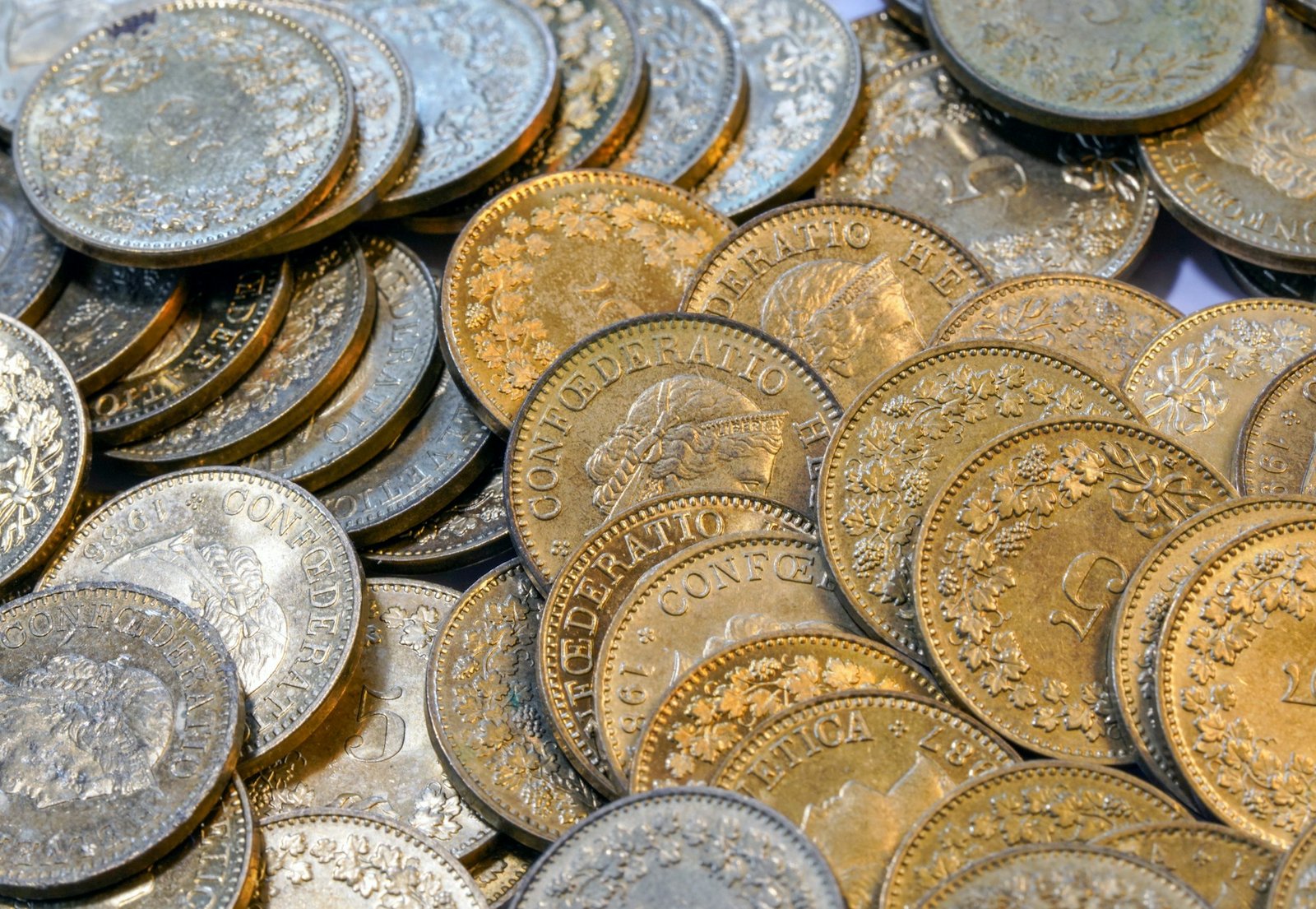
Looting allegations come from The Daily Galaxy citing Popular Mechanics and are unproven. Valuations are estimates by interested parties and the press. MARINA contacted no party directly. Corrections: support@marinasmart.app. Cover photo: Old gold and silver coins. Photo: Markus Kammermann / Unsplash.


